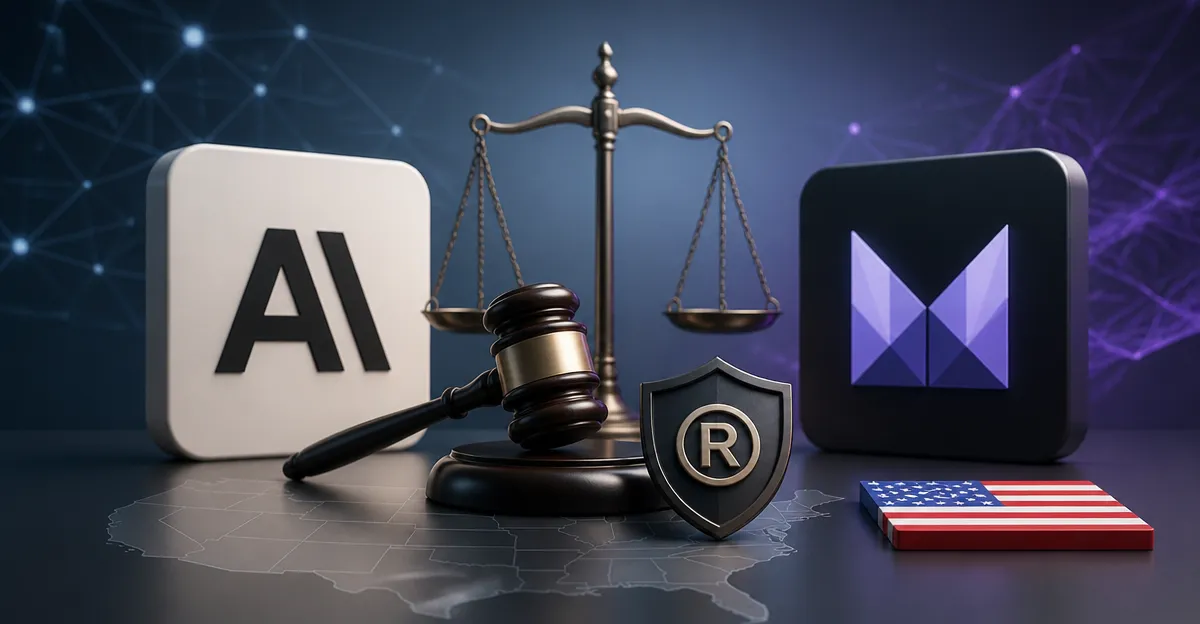
November 14, 2026, (Inside AI) — A small software company named Mythos has filed a trademark infringement lawsuit against Anthropic, the AI developer behind the Claude chatbot, in a Virginia federal court. The suit, filed Friday, alleges that Anthropic's use of the name "Mythos" for an AI model violates Mythos's established trademark rights. The case is Global Printing Inc d/b/a Mythos v. Anthropic PBC, US District Court for the Eastern District of Virginia, No. 1:26-cv-03756.
The plaintiff, Global Printing Inc., operates under the trade name Mythos and claims prior rights to the mark. The defendant, Anthropic PBC, is a leading AI research company valued at tens of billions of dollars. The lawsuit does not specify which Anthropic product uses the "Mythos" name, but the filing comes amid heightened scrutiny of AI companies' branding practices as they race to release new models. The outcome could set a precedent for how AI firms navigate trademark law when naming generative models.
The legal action arrives as Anthropic expands its model lineup and faces increasing competition from rivals like OpenAI and Google. Trademark disputes in the AI sector are becoming more common as companies seek distinctive names for their offerings. Mythos, a software company with a long-standing presence, argues that Anthropic's use of the name creates confusion in the marketplace. The case has been assigned to the Eastern District of Virginia, known for its speedy "rocket docket."
Why A Small Software Firm Is Taking On An AI Giant
The lawsuit highlights a growing tension between traditional software businesses and AI developers. As AI companies release models with increasing frequency, they often choose evocative names that may conflict with existing trademarks. Mythos, which has operated under its name for years, likely sees Anthropic's use as a threat to its brand identity. The case could hinge on whether the two companies operate in related markets and whether consumer confusion is likely.
Read: Anthropic Must Face Lawsuit
Anthropic has not yet commented on the lawsuit, and attorney information for the company was not immediately available. The plaintiff is represented by Adam Hess of Squire Patton Boggs (US). The filing does not specify damages, but trademark infringement cases can result in injunctions and monetary awards. The AI industry has seen similar disputes, such as when OpenAI faced challenges over its use of "GPT" and other marks. However, this case is notable because it pits a smaller, established software firm against a well-funded AI unicorn.
Legal experts suggest that the outcome may depend on the strength of Mythos's trademark and the likelihood of confusion. If Anthropic's "Mythos" model is marketed to a different audience, the court may find no infringement. But if the names overlap in the software space, Anthropic could face an injunction requiring it to rebrand. The case is in its early stages, and no trial date has been set.
Anthropic's rapid growth has made it a target for intellectual property claims. The company recently secured major funding and launched new models, but it now must defend its branding choices. This lawsuit could prompt other AI firms to conduct more thorough trademark searches before naming their models. It also raises questions about whether generic or mythological names can be protected in the AI context.
For now, the case is a reminder that even the most advanced AI companies are not immune to traditional legal challenges. As the AI sector matures, expect more of these disputes to surface. The Eastern District of Virginia's reputation for efficiency means the case could move quickly, potentially setting an early benchmark for AI trademark litigation.
Read: Nonprofits Sue Anthropic
Anthropic's legal team will likely argue that "Mythos" is a common term and that no confusion exists. The plaintiff will need to prove that it owns a valid trademark and that Anthropic's use is likely to cause confusion. The court will consider factors such as the similarity of the marks, the relatedness of the goods, and the defendant's intent. The outcome will be closely watched by both the AI and legal communities.

Sofia spent years studying how machines parse human language before pivoting to cover the systems now rewriting it. She reads technical papers the way others read news and looking for what the numbers are actually saying beneath the headlines.