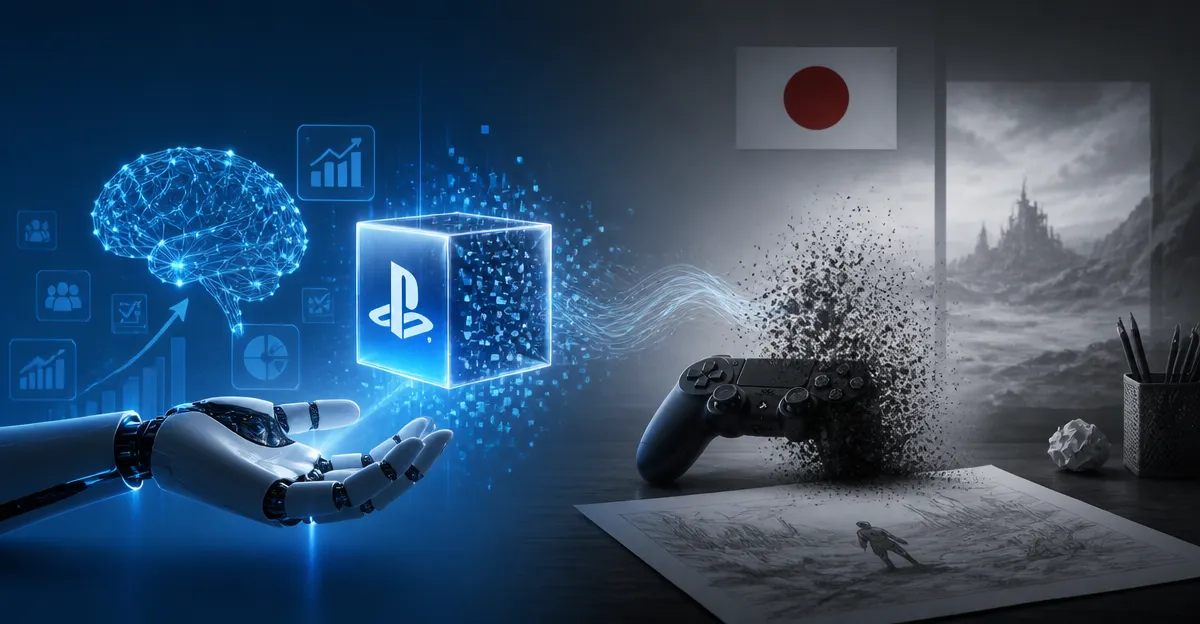
November 22, 2026, (Inside AI) — Hideo Kojima, the renowned Japanese game director behind the Metal Gear and Death Stranding franchises, has warned that while artificial intelligence can boost business efficiency, it risks diminishing the joy of creation for artists and developers. Kojima made the remarks during a recent event in Tokyo, where he appeared alongside acclaimed filmmaker Mamoru Oshii, known for Ghost in the Shell. The two creators discussed AI's growing role in imaginative work, with Kojima emphasizing that the technology's business benefits may come at a cost to creative fulfillment.
Kojima's comments arrive as AI tools increasingly permeate the creative industries, from game development to film production. His warning underscores a growing tension: AI promises to streamline workflows and cut costs, but it may also erode the intrinsic satisfaction that comes from hands-on creation. For an industry that thrives on innovation and personal expression, that trade-off could have lasting consequences.
AI's Double-Edged Sword For Creatives
Kojima, a visionary known for his narrative-driven games, did not dismiss AI outright. Instead, he highlighted a nuanced view: AI can be a boon for business, but it may sap the joy of creation. This perspective resonates with many in the creative sector who see AI as both an enabler and a potential threat. Oshii, similarly, has explored the intersection of technology and humanity in his films, and his presence at the event added weight to the discussion.
The event, held in Tokyo, brought together two figures who have shaped Japanese pop culture and beyond. Their dialogue reflects broader concerns about AI's impact on artistic integrity and the human touch. As AI tools become more sophisticated, capable of generating art, music, and even game levels, the question of what remains uniquely human in creation looms large.
Inside AI could not independently verify the exact remarks made by Kojima and Oshii, but their public statements align with a growing debate. The game industry, in particular, has seen mixed reactions to AI. Some studios embrace it for tasks like procedural generation and testing, while others fear it could lead to homogenized content and job losses.
Kojima's warning also touches on a paradox: AI may make businesses more efficient, but efficiency is not the same as creativity. The joy of creation often comes from overcoming challenges, experimenting, and personal investment. If AI removes those aspects, the final product might be technically polished but lack soul. This concern is not new; similar debates arose with the advent of digital tools in the 1990s, though AI's autonomy presents a different scale of disruption.
Read: AI Chatbots May Narrow Human Knowledge, Study Finds
The discussion in Tokyo is part of a larger conversation about AI's role in society. Japan, with its aging population and labor shortages, has been proactive in adopting AI across sectors. However, the creative industries have been more cautious, valuing tradition and craftsmanship. Kojima and Oshii, as elder statesmen of their fields, lend a credible voice to this cautionary perspective.
As AI continues to evolve, the balance between business gains and creative fulfillment will be a key challenge. Kojima's remarks serve as a reminder that technology should serve human creativity, not replace it. The coming years will likely see more creators grappling with this dilemma, shaping how AI is integrated into the creative process.

Sofia spent years studying how machines parse human language before pivoting to cover the systems now rewriting it. She reads technical papers the way others read news and looking for what the numbers are actually saying beneath the headlines.