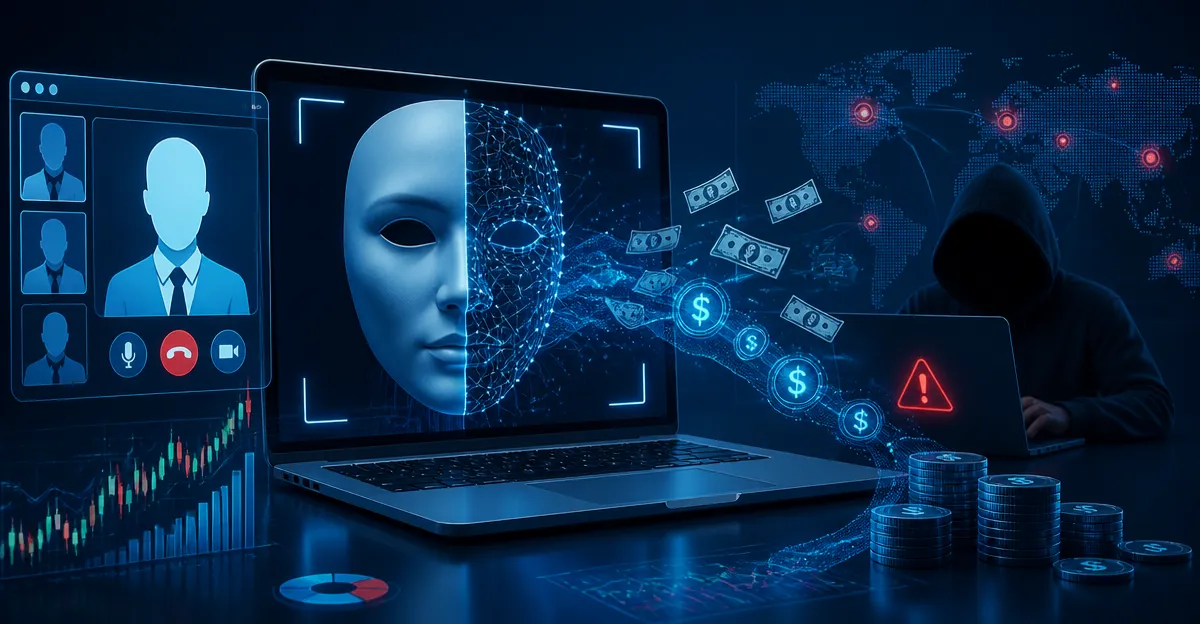
November 21, 2026, (Inside AI) — A businessman from Kozhikode, Kerala, lost approximately Rs 1.45 crore after clicking on an AI-generated video of Union Finance Minister Nirmala Sitharaman promoting a fictitious investment platform on Facebook. The case, which involved 30 separate bank transfers, highlights a rapidly expanding threat: cybercriminals are using deepfake technology to lend false credibility to investment scams, and the financial and psychological damage is mounting.
The fraud began when the victim saw a video, likely manipulated using AI, in which Sitharaman appeared to endorse an online trading scheme with promises of high returns. Convinced by the familiar face, he clicked the accompanying link and followed instructions from people posing as investment advisers. He never recovered his principal or the promised profits. The incident is not isolated. Across India and Asia-Pacific, fraudsters are weaponizing AI to create convincing videos of politicians, celebrities, and business leaders, then funneling victims into fake trading platforms that display fabricated gains.
This is a trust-based fraud, amplified by technology that makes impersonation cheap and scalable. Deepfakes can now be produced in minutes with minimal technical expertise, and they spread through social media ads on platforms like Facebook and Instagram, as well as messaging apps. The entry point is often a polished video, but the operation behind it is far more elaborate: fake news articles, professional-looking websites, fabricated testimonials, and investment dashboards showing fictitious profits. Some victims are even allowed to withdraw small amounts early on to build trust before being persuaded to invest larger sums.
Vikram Raichura, Founder-MD of Helo.ai, an AI-powered enterprise communication platform, told sources, "One of the biggest concerns is that many people are still not familiar with AI-generated deepfake videos or how convincing they can be. Fraudsters are using AI to recreate the faces and voices of political leaders and other public figures, making it appear as though they are endorsing investment schemes. The familiarity of these individuals makes the message seem credible, especially to someone who may not know how convincing deepfakes have become."
Read: AI Voice Scam Costs Intesa Sanpaolo €95 Million
Thanh Tai Vo, Director Marketing Planning - Fraud and Identity, Asia-Pacific, LexisNexis Risk Solutions, a global data analytics and risk-management company, said, "We are seeing this trend across regions, where criminals exploit the likeness of trusted and influential individuals -- whether politicians, personal finance experts, social media influencers or other popular public figures -- to promote fraudulent investment schemes. The objective is to create a false sense of credibility and legitimacy."
The mechanics of the scam follow a predictable but effective pattern. After clicking the ad, victims are redirected to fake investment websites, WhatsApp groups, or phone calls where fraudsters collect personal information and money. Raichura noted that fraudsters rarely rely on a single deepfake video. "They may also impersonate financial advisers or representatives of recognised institutions to gain trust. Some even allow small withdrawals initially to encourage larger investments. All these elements are somehow made to work together. By the time someone is asked to transfer money, they may have already seen several things that make the opportunity appear genuine. This makes it much harder for an ordinary person to question the offer," he added.
Vo pointed out that AI is also making fake investment websites and advertisements look increasingly authentic. "Traditional red flags, such as spelling mistakes and poor translations, are becoming less reliable, making scams harder for consumers to identify," he said. The technology has lowered the barrier to entry for criminals, who can now mass-produce personalized video content and distribute it to thousands of potential victims at once.
Why Familiar Faces And Urgency Override Caution
The psychological triggers are well understood. Raichura observed, "These scams work because they play on things people naturally respond to. A familiar face creates trust, promises of high returns generate interest, and limited-time offers create pressure to act quickly. The promise of easy money is often what first attracts people. Fraudsters also use fabricated testimonials, apparent profits and online communities to make it look as though others are already benefiting. When people repeatedly encounter similar claims, the opportunity can begin to feel legitimate."
Vo added that fear of missing out is a major factor. "Fraudsters create a sense of urgency, making victims believe they must act quickly to secure high returns or risk losing an exclusive opportunity. They further exploit trust by using familiar faces, fake testimonials and fabricated success stories to make schemes appear legitimate," he said. "The promise of quick gains and pressure to act can override rational judgement, causing people to overlook warning signs they might otherwise recognise."
For consumers, the warning signs of a deepfake video include unnatural facial movements, lip-syncing inconsistencies, lighting irregularities, and unusual voice patterns. But experts caution that visual detection is becoming less reliable as AI models improve. The more robust defense is independent verification: checking whether the endorsement appears on the public figure's verified social media accounts or official website, and verifying the investment provider's registration with the Securities and Exchange Board of India (SEBI).
Read: AI Lowers Barriers for Cybercriminals in South Korea and Japan Attacks
In India, the Reserve Bank of India and SEBI have repeatedly warned about unauthorized investment schemes, but deepfake-driven fraud adds a new layer of complexity. The Securities and Exchange Board of India has not yet issued specific guidance on deepfake endorsements, though its existing investor protection framework requires intermediaries to be registered. The onus remains on individuals to verify before transferring funds.
Victims of such fraud should act immediately. The national cybercrime helpline (1930) and the National Cyber Crime Reporting Portal (cybercrime.gov.in) are the primary channels for reporting. Notifying the bank promptly can help freeze accounts and block further transactions. Preserving evidence, including transaction IDs, screenshots of advertisements, and chat logs, is critical for investigation. Recovery is not guaranteed, and victims should beware of recovery scams that demand advance fees.
As AI tools become more accessible, the scale of deepfake investment fraud is likely to grow. Regulators and platforms face mounting pressure to detect and remove manipulated content faster, but the cat-and-mouse game is intensifying. For now, the most effective defense is public awareness: understanding that a convincing video is not proof of a genuine endorsement, and that any investment offer promising high returns with low risk warrants deep skepticism.

Tobias is less interested in what a robot or a prompt can do today than in what it means for tomorrow. He writes about prompt engineering and robotics for readers who want context, not just specs.