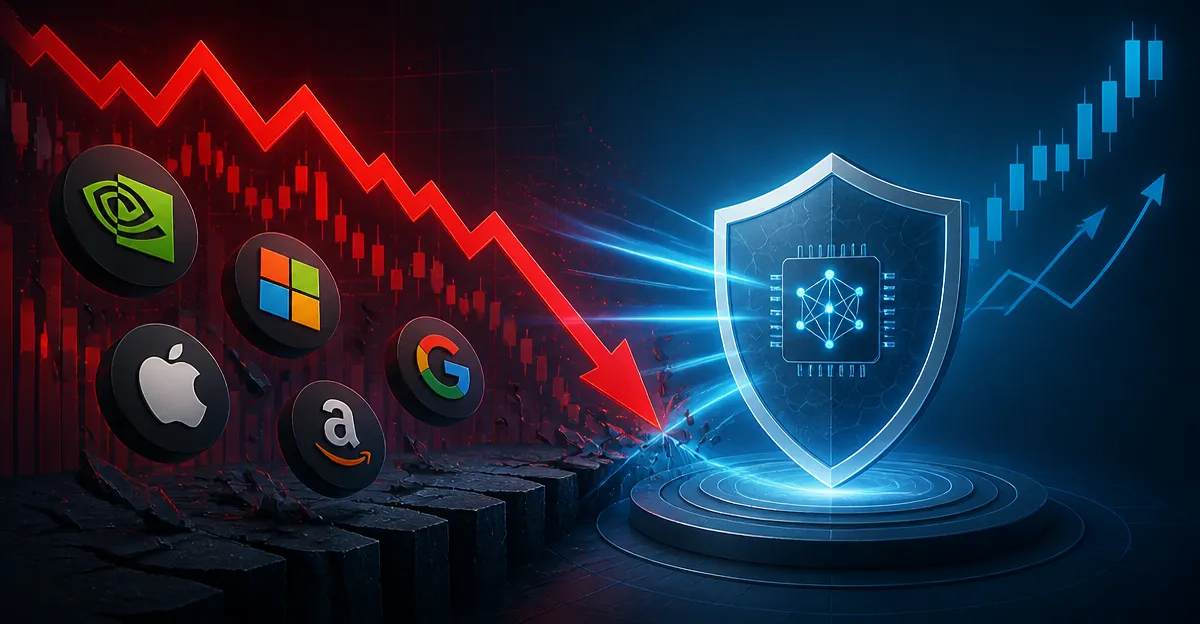
November 23, 2026, (Inside AI) — Global stock markets entered a critical week under severe pressure, still reeling from the worst sell-off since the early days of the pandemic. The rout, driven by growing skepticism over the massive borrowed sums funding the artificial intelligence infrastructure boom, has forced authorities in Asia to prepare emergency support measures. Investors now question whether data centers and chipmakers can generate returns fast enough to service their debt. The tech-heavy markets of South Korea and Taiwan bore the brunt, with South Korean stocks, which had doubled earlier this year, now almost completely flat.
The scale of the sell-off marks a definitive shift in the AI trade that had powered markets through the first half of the year. "I think it's clear that the artificial intelligence trade that had been driving markets for especially the first half of this year is, if not in full retreat, entering some sort of new phase," said Tom Westbrook, financial markets editor. "We're starting to see signs of stress in pockets of the credit market and money just moving into different sectors of stocks, so more defensive plays like energy companies, healthcare."
Governments in North Asia are taking aggressive steps to stem the bleeding. Taiwan has imposed curbs on short selling, while South Korea is discussing a stock stabilization fund, a tool last deployed during the 2008 global financial crisis. These measures have slowed the decline but have failed to reverse the negative sentiment. "That is kind of keeping markets from falling further, but it's hardly driving a turnaround in sentiment," Westbrook noted.
Wall Street Faces A Shortened, Volatile Week
Despite the gloom, US futures pointed higher on Monday morning, offering a sliver of hope for a rebound. However, analysts warn that the holiday-shortened trading week, with thin volumes, creates a perfect environment for extreme volatility. The week's major economic data point, the PCE inflation report, could further fuel expectations for Federal Reserve interest rate policy. "When you have a lot of companies under scrutiny, whether that's Nvidia, AMD or others, that definitely raises the risk for negative news," said Anna Szymanski of Morning Bid.
This market turmoil is not just a reaction to abstract fears. It signals a fundamental reassessment of the AI business model. The assumption that limitless capital expenditure on data centers would quickly translate into profit is now being tested by the bond market. The stress in credit markets suggests lenders are growing wary of financing an arms race with an uncertain timeline for returns. If this credit tightening continues, it could starve the AI sector of the very fuel that has driven its rapid expansion, forcing a consolidation that would reshape the entire industry landscape.
The immediate focus remains on whether the sell-off has bottomed out. While Wall Street futures are up, the underlying anxiety persists. The risk of more negative news from major AI players like Nvidia and AMD remains high, and any disappointing earnings or guidance could trigger another leg down. The market is at a crossroads, trying to determine if the AI revolution is a sustainable engine of growth or a bubble that is finally starting to deflate.
In a separate development, a scandal involving Nvidia has taken a new turn. Alice Huang, a central figure in the controversy, was reportedly in contact with an officer from China's top spy agency for over a year during her affair with former CEO Jensen Huang. US officials have not concluded that she engaged in espionage, and both the attorney general and the Director of National Intelligence have urged caution pending the investigation's outcome.
Meanwhile, the ripple effects of the AI boom are being felt far beyond the trading floor. This Black Friday, shoppers may find discounts less generous than in previous years. Major retailers are increasingly deploying AI-powered pricing tools that analyze demand, inventory, and competitor prices in real time. According to interviews with five software providers, these tools often reveal that retailers have been over-discounting. "There's this tension for retailers between really needing to offer value, with also now having these increasingly sophisticated AI-powered tools that allow them to really pinpoint demand for products at specific prices," said Danielle Kaye, a reporter covering the retail sector.
The use of AI in pricing is a direct application of the technology that is currently roiling markets. It demonstrates how AI can deliver tangible, near-term value by optimizing operations and maximizing margins. However, it also creates a new dynamic where consumers, already facing economic uncertainty, may find fewer bargains. This could dampen holiday sales and further complicate the economic outlook, creating a feedback loop where the very technology driving market volatility is also influencing consumer behavior and inflation data.
As investors navigate this turbulent period, the coming weeks will be crucial in determining the trajectory of the AI trade and its broader impact on the global economy.

Shamil has a low tolerance for AI that only works in controlled demos. He covers agentic systems and generative AI with the skepticism of someone who has seen too many “revolutionary” tools quietly disappear six months after launch.