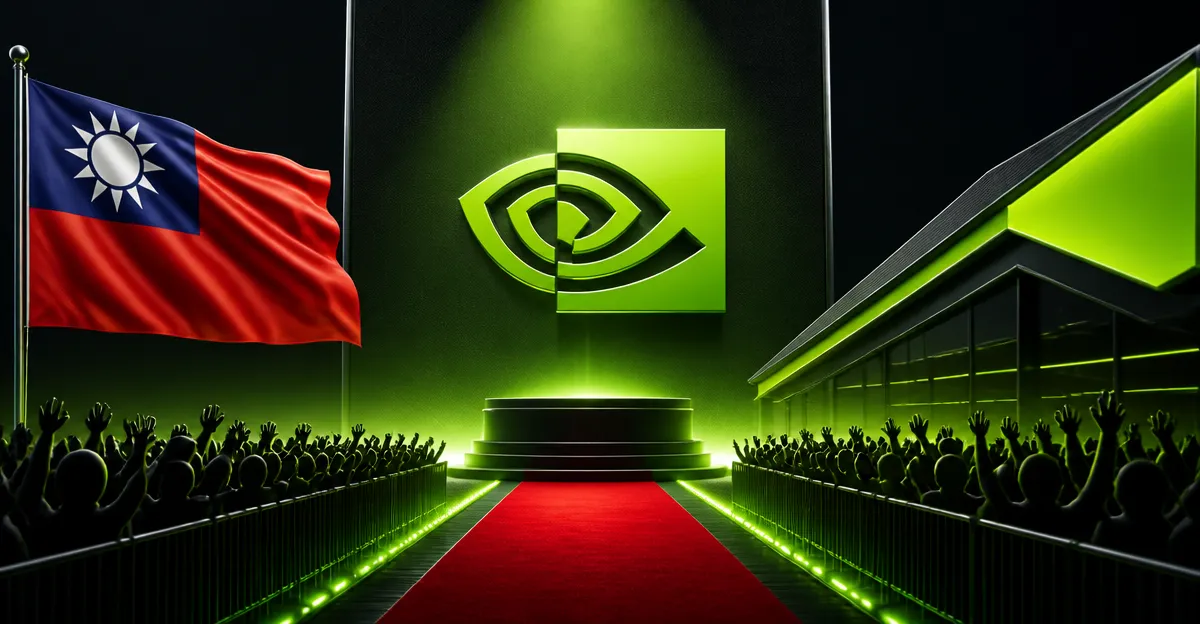
November 24, 2026, (Inside AI) — Jensen Huang returned to Nvidia's Santa Clara headquarters as CEO on Monday, receiving a hero's welcome from employees weeks after a scandal forced him out. Videos circulating on social media show staff cheering, chanting his name, and one employee running up to hug him.
Huang, who was reinstated by the board, addressed the crowd with humility and humor. He thanked employees for a second chance and promised to become a better CEO. The scandal that led to his departure has not been publicly detailed, but his return marks a dramatic reversal for the chipmaker.
The welcome underscores Huang's enduring popularity inside Nvidia, even after a period that he described as riddled with "very terrible mistakes." His reinstatement also drew praise from US President Donald Trump, who called him a "Great Patriot and National Treasure."
A Comeback Fueled By Employee Loyalty
Inside Nvidia, the mood was electric. Employees chanted "Jensen! Jensen! Jensen!" as Huang placed his hand over his heart. One shouted, "We love you, Jensen!" The scene, captured in multiple videos, shows a workforce eager to move past the turmoil.
Huang acknowledged the gravity of the moment. "Thank you all for the second chance. I am going to be a better CEO the second time around," he said. He also joked about his first day back: "This is my first day of work. I don't have a computer, so the IT department is going to give me a new PC. I'm hoping it's an RTX Spark." The remark drew laughter and highlighted his knack for connecting with staff.
In a more serious tone, he added: "I want to thank all of you. I'm terribly sorry for putting all of you through all of this. I've made some very terrible mistakes, and I'm going to work on coming back." The apology, delivered without specifics, suggests a desire to focus on the future rather than re-litigate the past.
Huang's return comes at a critical juncture for Nvidia. The company dominates the market for AI accelerators, with its GPUs powering everything from data centers to autonomous vehicles. His leadership has been central to that success, and his absence, even brief, raised questions about strategic continuity.
The board's decision to reinstate him likely reflects both his track record and the lack of a clear successor. Nvidia's stock has been volatile during the scandal, and investors seem to welcome his return. The president's endorsement adds a political dimension, signaling that Huang's standing extends beyond Silicon Valley.
The Road Ahead: Rebuilding Trust
In his first statement after reinstatement, Huang expressed gratitude to the board, employees, and shareholders. He said he was honored to lead Nvidia at the beginning of what he called a "new industrial revolution." "I am honoured to return to NVIDIA and lead one of the most consequential technology companies in the world at the beginning of a new industrial revolution," he said. He added that he takes on the responsibility with "the greatest humility and renewed commitment."
Huang also thanked his family: "Above all, I am grateful for the love and support of my family. I can't wait to get back to work." The statement strikes a personal note, perhaps aiming to humanize a leader who has been under intense scrutiny.
The scandal itself remains opaque. No official details have been released, and Inside AI could not independently verify the nature of the mistakes Huang referenced. However, his swift return suggests that the board and key stakeholders believe he is indispensable. The employee reaction supports that view.
Nvidia's competitors are watching closely. The AI chip race is intensifying, with rivals like AMD and Intel pushing their own accelerators. Huang's return could stabilize Nvidia's roadmap and reassure customers who rely on its technology for training and deploying large language models.
For now, Huang's focus is on the future. His promise to be a better CEO will be tested in the coming months. The warm reception is a start, but rebuilding trust with shareholders and partners will require more than cheers.

Shamil has a low tolerance for AI that only works in controlled demos. He covers agentic systems and generative AI with the skepticism of someone who has seen too many “revolutionary” tools quietly disappear six months after launch.