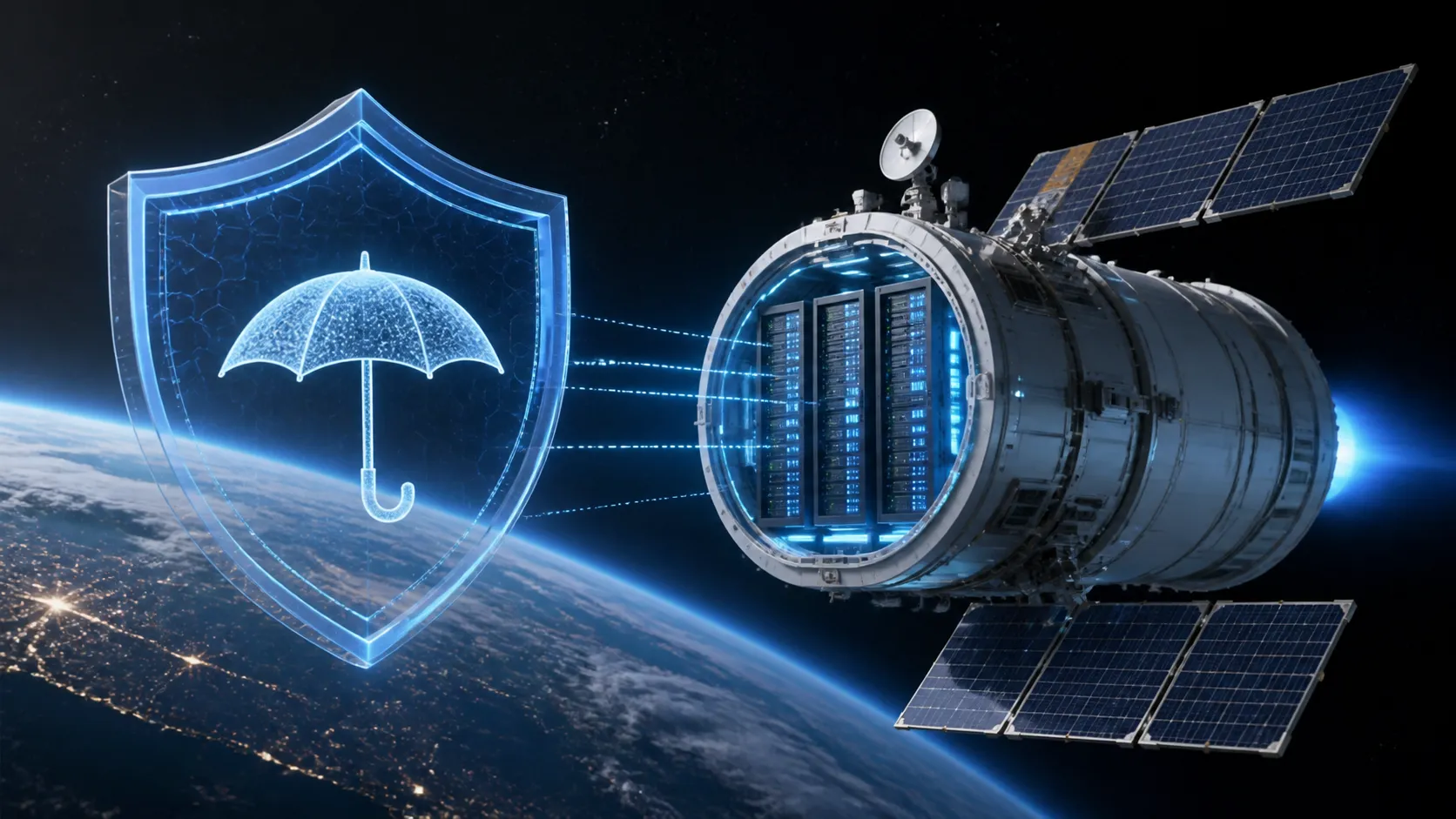
June 18, 2026, (Inside AI) — Space companies are in early-stage talks with insurers to cover orbital AI data centers, a critical step for an experimental sector backed by Elon Musk's SpaceX and Jeff Bezos' Blue Origin.
These data center satellites aim to sidestep Earth's power limits and have gained traction since Musk touted them as the future of AI development. Securing insurance is vital to unlock debt financing and move from concept to reality.
Blue Origin and startups like Orbital, Starcloud, Lonestar Data Holdings, and Cowboy Space have all signaled plans to launch space-based data centers. Reuters spoke to 4 brokers and underwriters and 3 space firms who confirmed preliminary talks.
Early Conversations Signal Market Curiosity
Insurance broker Marsh said several companies have approached insurers to explore future coverage without naming firms. The discussions remain nascent but indicate growing interest.
Patton Kline, U.S. aviation and space practice leader at Marsh, said:
"We're already starting to see companies that are focused on data centers and companies that are focused on digital infrastructure looking to the insurance community for support."
Lonestar recently held a briefing at Marsh's offices for Lloyd's of London, attended by about 25 insurers. SpaceX and Blue Origin did not respond to requests for comment.
Why Orbital AI Is a Blank Slate for Underwriters
Insurers already cover launch failures, satellite malfunctions, orbital debris, and space weather in a global market collecting roughly $500 million in annual premiums, per industry executives and Axa XL. But orbital AI infrastructure lacks historical data.
Kasey Roh, U.S. head of Upstage AI, noted:
"The conversations in the market are focused on whether the risk can be modeled, rather than what the premium should be."
Valuing rapidly advancing AI chips is a key hurdle. Euwyn Poon, CEO of Orbital, said the hardware could be vulnerable to harsh space conditions. This uncertainty complicates risk assessment.
Financing Hurdles Keep Insurance Needs Limited
David Wade, space underwriter at Atrium, cautioned that venture-capital-backed startups must scale before a major insurance market emerges.
"Until we get past that early round of financing and start seeing some of these companies expand by raising debt, I think the insurance needs are very limited at the moment."
The sector's reliance on equity funding means insurance demand stays low. Debt financing, which requires coverage, remains a future milestone.
Industry observers note that orbital data centers face unique exposures: radiation damage to chips, collision risks in crowded orbits, and regulatory uncertainty. Brokers are exploring parametric solutions and hybrid models that blend satellite and terrestrial coverage.
While no policies have been written, the talks mark a formative phase. As launch costs drop and AI demand surges, insurers are quietly building expertise to underwrite a market that could reshape both space and AI industries.