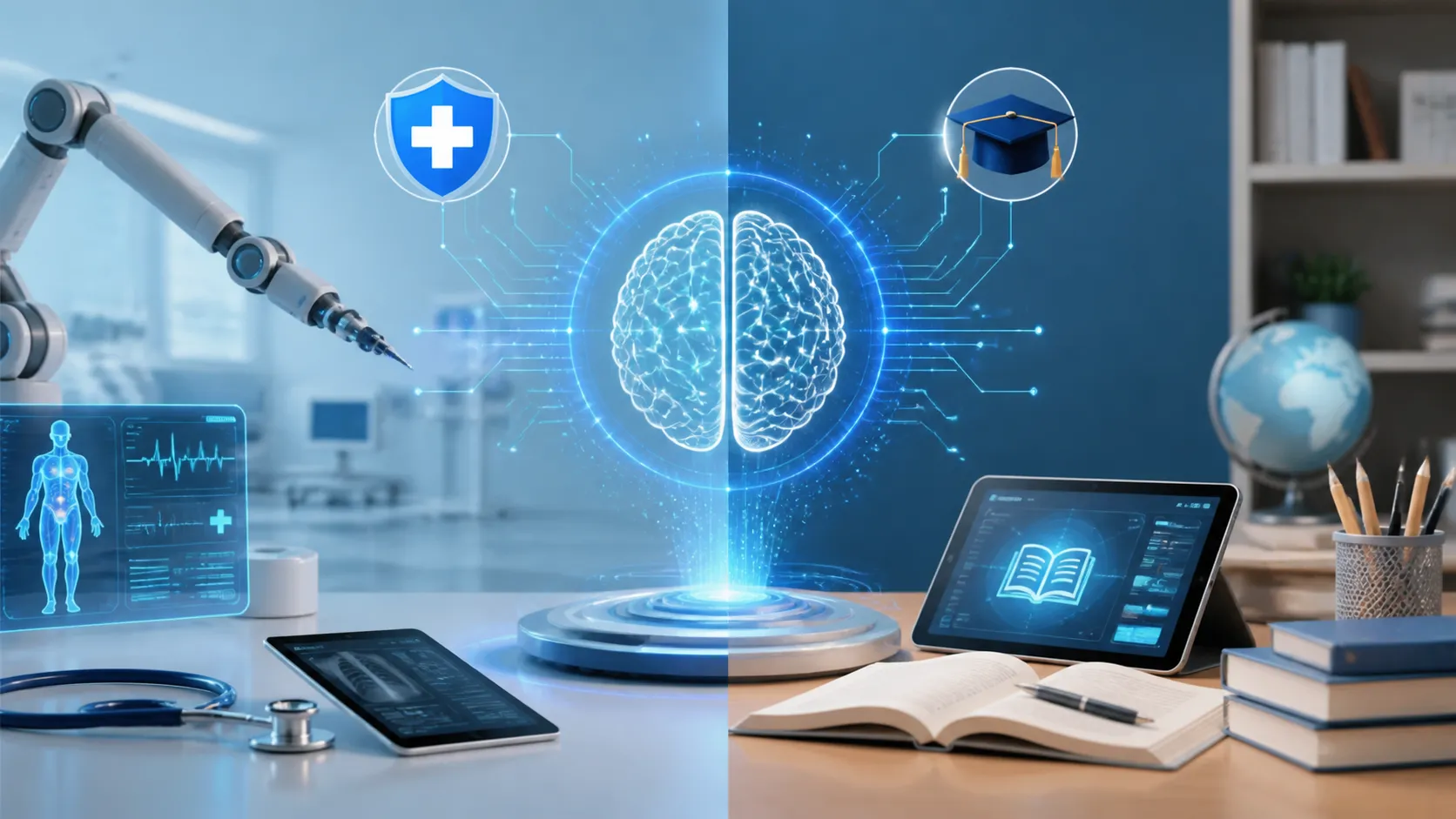
June 23, 2026, (Inside AI) — Huawei is pushing a new model for AI adoption that embeds the technology directly into university curricula and hospital operations, moving beyond isolated pilot projects. The company’s AI Practice Lab (AIPL) and Hospital AI Platform (HAIP) aim to fuse AI with discipline-specific teaching and clinical workflows across China.
At the Beijing Institute of Technology, AIPL launched last March as the world’s first showcase of its kind. It now supports fields from chemistry to law, letting students tackle real-world problems with field-relevant data. Hefei College of Economics and Applied Sciences adapted the model for “audit + AI” and “manufacturing + AI” courses, tying training to local industry needs.
In healthcare, HAIP targets data fragmentation and siloed computing that plague hospital AI efforts. Nanfang Hospital of Southern Medical University deployed AI for chronic kidney disease management, pathology diagnosis, and medical record quality control. West China Hospital of Sichuan University is next in line for adoption.
The shift reflects a broader industry realization: standalone AI tools yield limited returns. Huawei’s framework combines ICT infrastructure, shared model capabilities, and ecosystem partnerships to turn technical potential into institutional capacity.
Read: Hong Kong, Taiwan, and China Face AI Ethics Crisis in Schools
From Isolated Labs to Discipline-Embedded AI
Universities have long offered AI courses, but often disconnected from professional practice. AIPL’s “Discipline + AI” model integrates AI into core teaching, research, and innovation. It’s not about building a lab—it’s about weaving AI into academic workflows.
At Beijing Institute of Technology, the lab supports diverse disciplines simultaneously. Students in chemical engineering, economics, and education all use the same platform but with tailored datasets and scenarios. This breaks the mold of one-size-fits-all AI training.
Hefei College’s adoption proves the model’s adaptability. By aligning with regional manufacturing and auditing sectors, the college creates direct employment pipelines. The approach moves students from “learning AI” to applying it professionally from day one.
Unified Platforms for Hospital-Wide AI
Hospitals face a different hurdle: scaling AI beyond radiology or single departments. HAIP centralizes computing power, data assets, and model sharing. It allows applications to span diagnosis, treatment, research, and patient services without reinventing the wheel each time.
Nanfang Hospital’s smart AI center supports intelligent agent development across clinical and operational functions. Chronic disease management and perioperative care now run on shared infrastructure, reducing duplicated effort. The platform’s design emphasizes continuous operation, not one-off deployments.
West China Hospital’s planned adoption signals replication potential. By tackling data silos and fragmented governance, HAIP could set a standard for hospital-wide AI integration. The focus is on making AI a core institutional capability, not a collection of disconnected tools.
Read: Harvard Expert Warns AI-Driven Medicine in the US Risks Losing the Human Side of Care
The underlying vision is consistent: AI creates value when embedded into real-world decision-making. Huawei’s combination of infrastructure, engineering, and ecosystem collaboration aims to turn isolated experiments into systematic, organization-wide adoption. Both AIPL and HAIP are live examples of this transition in action.