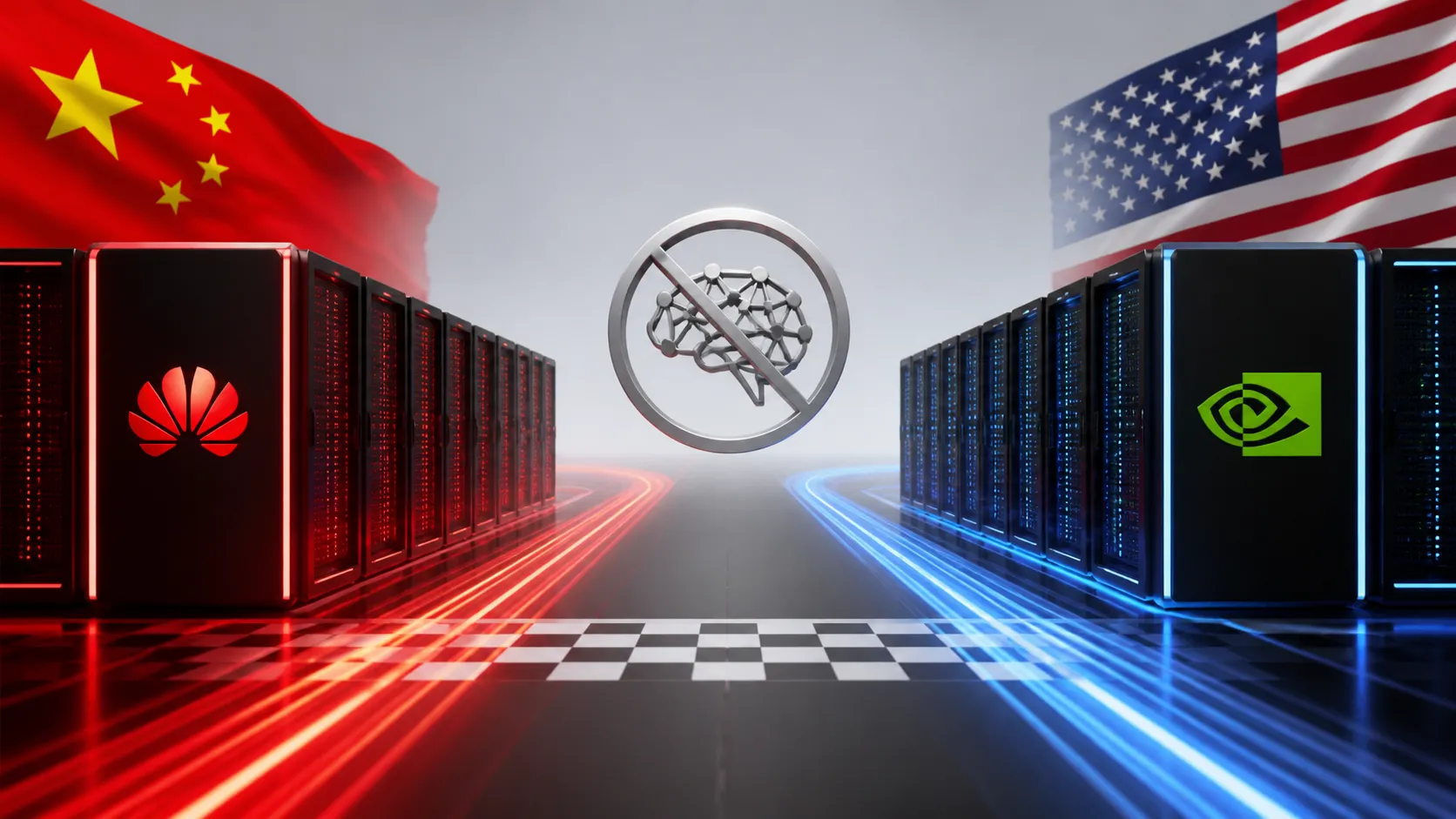
June 23, 2026, (Inside AI) — China’s LineShine system has claimed the top spot on the TOP500 list of the world’s fastest supercomputers, overtaking the U.S. Department of Energy’s El Capitan. The ranking, released in the June 2026 edition, marks China’s first submission to the list in three years.
The system, housed at the National Supercomputing Centre in Shenzhen, runs on domestically designed chips. Its debut comes amid escalating U.S.-China technology tensions, with President Trump signing an executive order on Monday to advance American quantum computing leadership.
But experts caution the victory reveals more about geopolitical signaling than AI prowess. The TOP500 benchmark simulates traditional scientific workloads, not the large-scale AI training that dominates modern computing. LineShine placed fourth on a test designed to mimic AI-like tasks.
“If the hyperscalers submitted their systems, this ‘world’s fastest’ would not crack the top five,” said Jimmy Goodrich, a senior fellow at the University of California’s Institute for Global Conflict and Cooperation.
Read: US and China’s Outdated AI Arms Race Mindset Ignores the Real Bottleneck
For decades, supercomputers were built by national labs for physics simulations. The TOP500 ranking reflects that legacy. But cloud giants like Microsoft, Amazon, and Google now operate far larger AI-optimized clusters in secret. A 2025 study by researchers Konstantin Pilz, James Sanders, Robi Rahman, and Lennart Heim estimated that xAI‘s Colossus system already surpassed El Capitan in raw capability.
China first led the TOP500 in 2010, trading titles with the U.S. and Japan until 2023, when it stopped submitting systems amid tightening chip export controls. Its return signals a push for recognition of indigenous chip design.
“I’m not surprised it’s the number one system. What I’m surprised by is that they submitted it and want recognition for it,” said Addison Snell, CEO of Intersect360 Research.
LineShine contains no advanced AI accelerators, according to disclosed specifications, likely because manufacturing tools remain under U.S. export restrictions. Goodrich added, “China is hoping to convince the world export controls are useless by hoping we ignore the details.”
Read: America’s Biggest AI Risk Is China Getting Ahead, Says Treasury Secretary Bessent
The National Supercomputing Centre did not respond to a request for comment. The TOP500 list, while prestigious, increasingly diverges from real-world AI computing power, where undisclosed corporate clusters dominate.