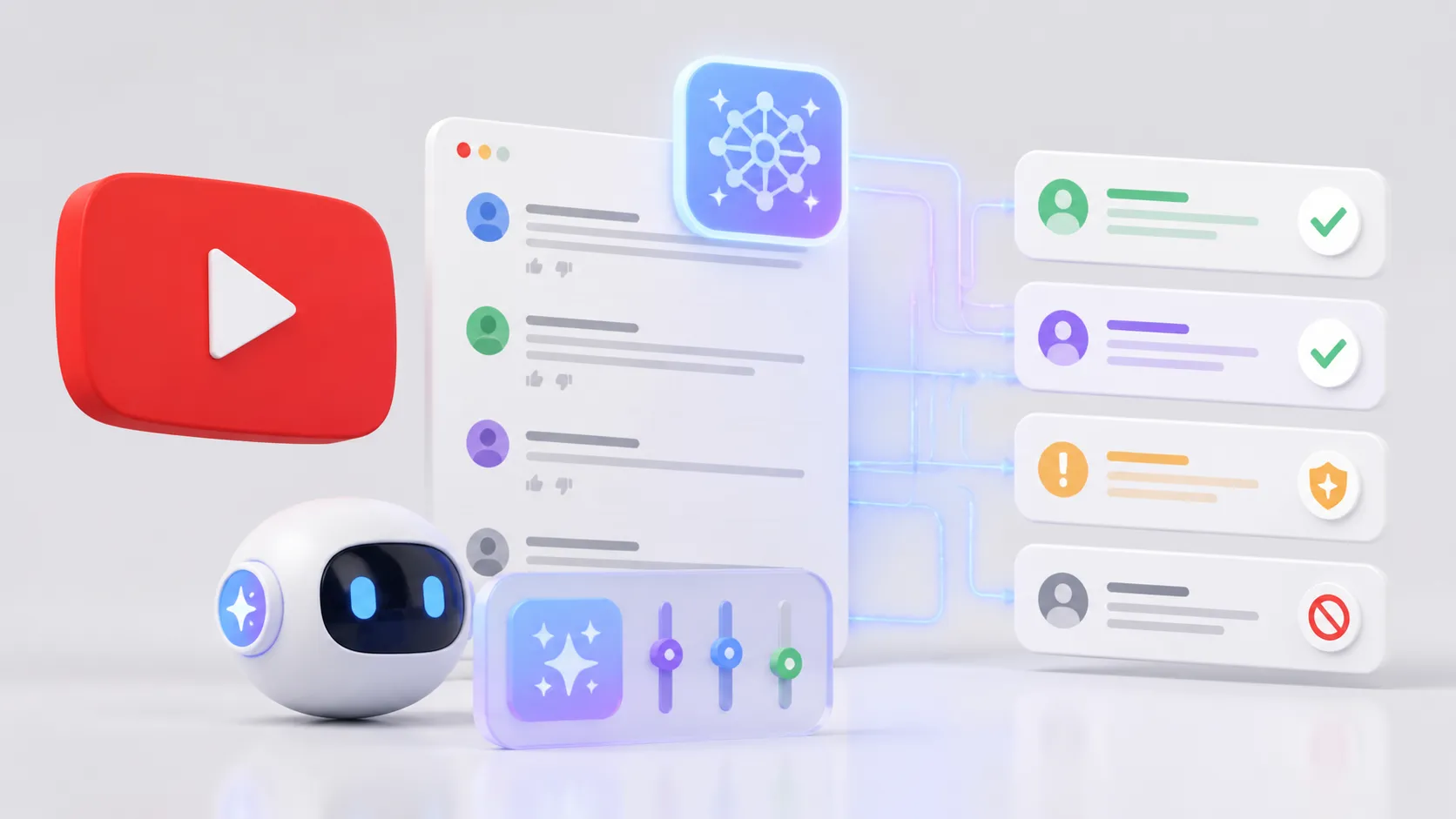
June 29, 2026, (Inside AI) — YouTube is rolling out AI-powered comment management tools inside YouTube Studio, changing how creators handle viewer feedback at scale. The new system moves beyond keyword search, using semantic understanding to group and filter comments by meaning.
Creators can now surface replies by topic, not just exact words. A “Search” filter sits alongside the relabeled “Keywords” field, letting channel managers type phrases like “questions about my gear” to instantly bundle related comments. The AI clusters remarks thematically, pulling together praise, questions, or criticism without manual scrolling.
YouTube confirmed the shift in a statement, noting the old exact-match search has been renamed to avoid confusion. The dual-filter design lets creators toggle between broad semantic search and precise keyword matching, a first for the platform’s native moderation tools.
How Semantic Grouping Reshapes Comment Moderation
The AI categorizes comments into suggested topics such as excitement, enthusiasm, or negative feedback. A “find similar comments” feature, accessible from any comment’s three-dot menu, surfaces replies with analogous meaning. This accelerates moderation for channels flooded with thousands of responses.
Read: Facebook Launches AI-Powered Creator Studio App in India to Boost Creator Growth
YouTube explained the practical use: “For example, if there are remarks about your personal appearance you don’t want to see, type a phrase like ‘comments about my appearance’ to quickly group them together for review. Or find specific comments, such as ‘questions about my gear’ or ‘people asking for a part 2 video.'”
The tools also serve as a research aid. By revealing dominant themes, creators can gauge audience interests and adjust content strategies. Industry observers note this mirrors trends in enterprise social listening, where AI clusters unstructured feedback into actionable insights.
However, the system’s reliance on AI interpretation raises questions about accuracy. Semantic grouping can misclassify sarcasm or nuanced language, potentially burying critical feedback or amplifying harmless jokes as negative. YouTube has not disclosed the underlying model or its training data, leaving transparency gaps.
Competing platforms like TikTok already offer AI-driven comment filtering, but YouTube’s integration within Studio centralizes analytics and moderation. This could reduce reliance on third-party tools, though creators with highly specific needs may still prefer external solutions for finer control.
Read: LinkedIn Leads Social Platforms with 40% AI-Generated Long Posts, Study Finds
YouTube’s move reflects a broader industry push to automate creator workflows. As comment volumes grow, manual moderation becomes untenable. The new filters save time and help creators focus on engagement rather than administrative drudgery, but the true test will be how well the AI handles diverse languages and cultural contexts.