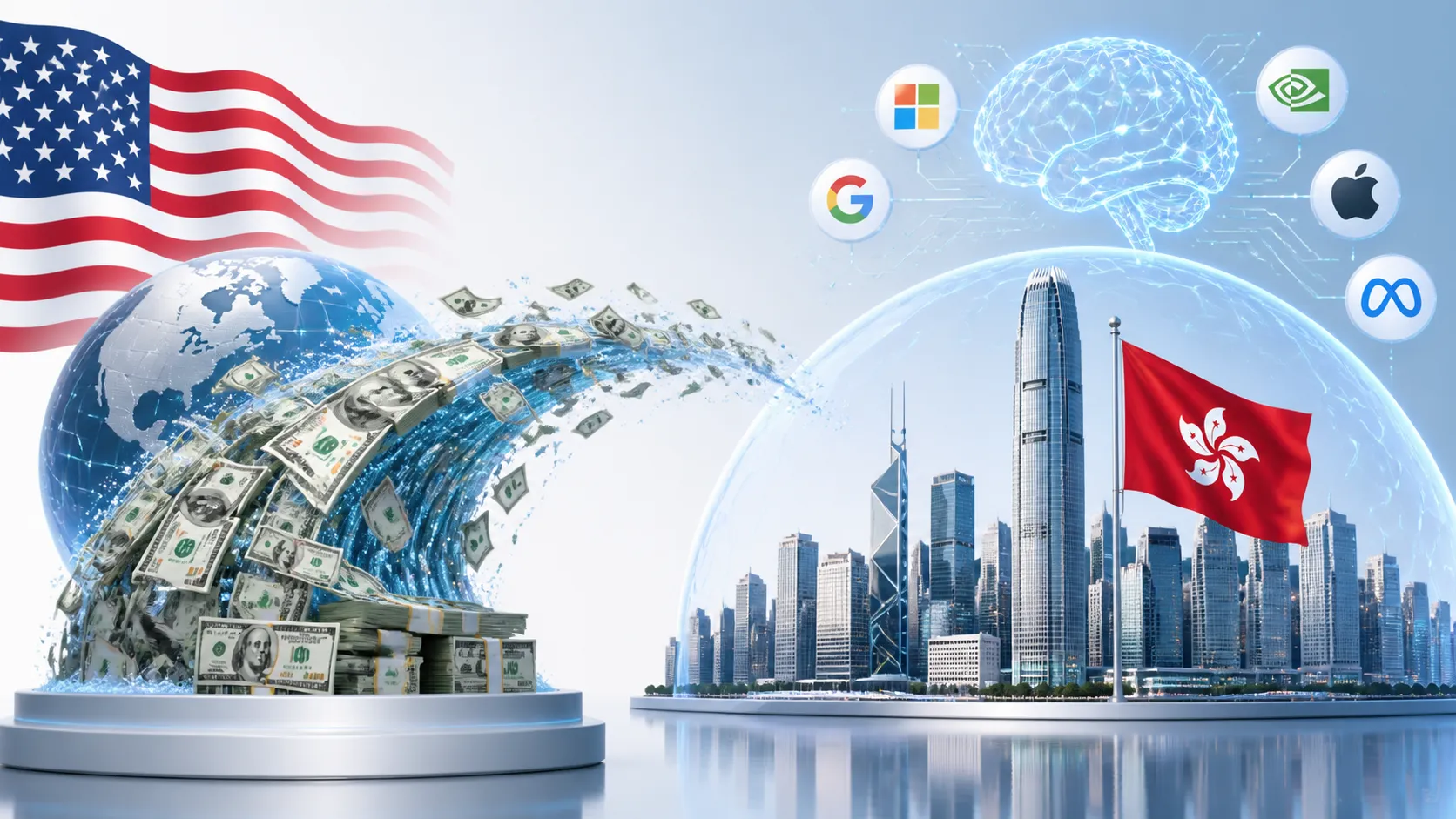
July 2, 2026, (Inside AI) — Hong Kong’s equity market is bracing for a historic wave of share unlocks that could unleash up to US$100 billion in fresh stock onto the exchange. The deluge comes just as global investors funnel record capital into artificial intelligence plays in rival markets, threatening to deepen the city’s underperformance.
The flood stems from the expiration of lock-up periods on a cluster of mega IPOs and secondary listings from the past two years. Analysts estimate that between now and year-end, roughly HK$780 billion worth of previously restricted shares will become tradable, testing the market’s capacity to absorb such volume without severe price dislocations.
Hong Kong’s benchmark Hang Seng Index has already lagged major global peers in the first half of 2026, weighed down by sluggish consumer spending on the mainland and an earnings recession among Chinese internet platforms. The index’s heavy concentration in tech names like Alibaba Group Holding and Meituan — both grappling with anaemic domestic demand — leaves it acutely vulnerable to any supply overhang.
The timing coincides with an intensifying global AI boom that is sucking capital toward markets with deeper exposure to the hardware and infrastructure layers of the technology. South Korea’s SK Hynix, a key supplier of high-bandwidth memory chips used in AI accelerators, plans a Nasdaq listing this month that is expected to further galvanize the AI trade and underscore the supply-demand imbalance in advanced semiconductors.
“Hong Kong’s market only has structural opportunities until expectations for corporate earnings improve noticeably,” said Zhang Sida, an analyst at Guoyuan International.
The lock-up expirations are not a uniform event but a staggered series of releases tied to dozens of companies. Many of these firms went public during the pandemic-era listing boom, when valuations were inflated and lock-up agreements typically ranged from six months to two years. Now, as those restrictions lapse, early investors, pre-IPO backers, and corporate insiders face a choice: hold or sell into a market already starved of liquidity.
Historical precedents offer little comfort. In 2021, a similar wave of lock-up expirations in Hong Kong contributed to a sharp correction in the Hang Seng Tech Index, as venture capital and private equity funds rushed to lock in gains. The current cycle, however, is larger in absolute terms and arrives against a far more challenging macro backdrop.
China’s retail sales unexpectedly contracted in May, according to data released last month, signalling that the consumer recovery remains fragile. That spells trouble for Alibaba and Meituan, which together account for a significant weighting in the benchmark index. Alibaba owns the South China Morning Post.
At the same time, the AI frenzy shows no signs of cooling. Global fund flows into AI-themed ETFs and stocks have accelerated, with the Nasdaq Composite repeatedly notching new highs. SK Hynix’s Nasdaq debut is expected to raise billions and could serve as a bellwether for investor appetite for pure-play AI hardware. The listing also highlights a structural disadvantage for Hong Kong: the city’s bourse lacks a critical mass of companies directly involved in AI infrastructure, leaving it on the sidelines of the boom.
Some market participants argue the share unlock could actually present a buying opportunity if prices fall far enough. Distressed valuations might attract long-only funds seeking exposure to Chinese tech at a discount. But that thesis hinges on a turnaround in earnings, which remains elusive. Without a catalyst to revive consumer and business confidence, the risk is that the supply overhang simply accelerates the exodus of capital to markets with clearer AI narratives.
Liquidity conditions add another layer of concern. Average daily turnover on the Hong Kong exchange has been trending lower, and the Hong Kong dollar’s peg to the US dollar forces the city to import the Federal Reserve’s tight monetary policy, even as China’s central bank eases. That dynamic squeezes local liquidity and raises the cost of carrying positions, making it harder for the market to digest a flood of new shares.
The lock-up expirations are expected to peak in the third quarter, with a second wave in the fourth quarter. Companies in sectors ranging from biotech to consumer internet will be affected, but the largest concentrations are in technology and new economy firms. How these shares are distributed — whether through block trades, gradual selling, or sudden dumps — will determine the market’s resilience.
For now, the divergence between Hong Kong and AI-driven markets looks set to widen. As SK Hynix prepares to tap US investors, the message is clear: the AI trade is not just about software and algorithms; it is about the physical hardware that makes it possible. Hong Kong, with its heavy reliance on Chinese consumer platforms, risks being left behind unless it can attract more listings from the semiconductor and infrastructure sectors that are powering the AI revolution.