July 2, 2026, (Inside AI) — Hong Kong’s stock exchange raised US$26.4 billion in the first half of 2026, an 84.3% jump from a year ago, securing the second spot globally by capital raised. The surge came from 84 new listings, with mainland Chinese firms contributing 98.5% of the total, concentrated in advanced technology and consumer staples.
This boom signals a broader pivot: China’s capital markets are aggressively funding tech supply chains and domestic champions amid global chip wars and food security pushes. The exchange’s performance contrasts with a sluggish global IPO scene, underscoring Hong Kong’s role as a gateway for Chinese companies seeking international capital while navigating geopolitical headwinds.
The Five Mega-Listings That Defined the Half
Victory Giant Technology led the pack, raising US$2.73 billion. The Shenzhen-listed electronics manufacturer makes printed circuit boards and components for smartphones and consumer devices. Its Hong Kong debut, underwritten by J.P. Morgan, China Securities, GF Securities, ABCI Capital, CICC, and Huatai Financial, positions it against US-listed Jabil in a market hungry for hardware resilience.
Muyuan Foods, China’s top hog producer by volume, secured US$1.55 billion. Already traded in Shenzhen, the agricultural giant tapped Hong Kong with backing from Morgan Stanley, CLSA, Goldman Sachs, CICC, Merrill Lynch, and CMB International. The move reflects capital needs for scaling protein production amid Beijing’s food self-sufficiency drive.
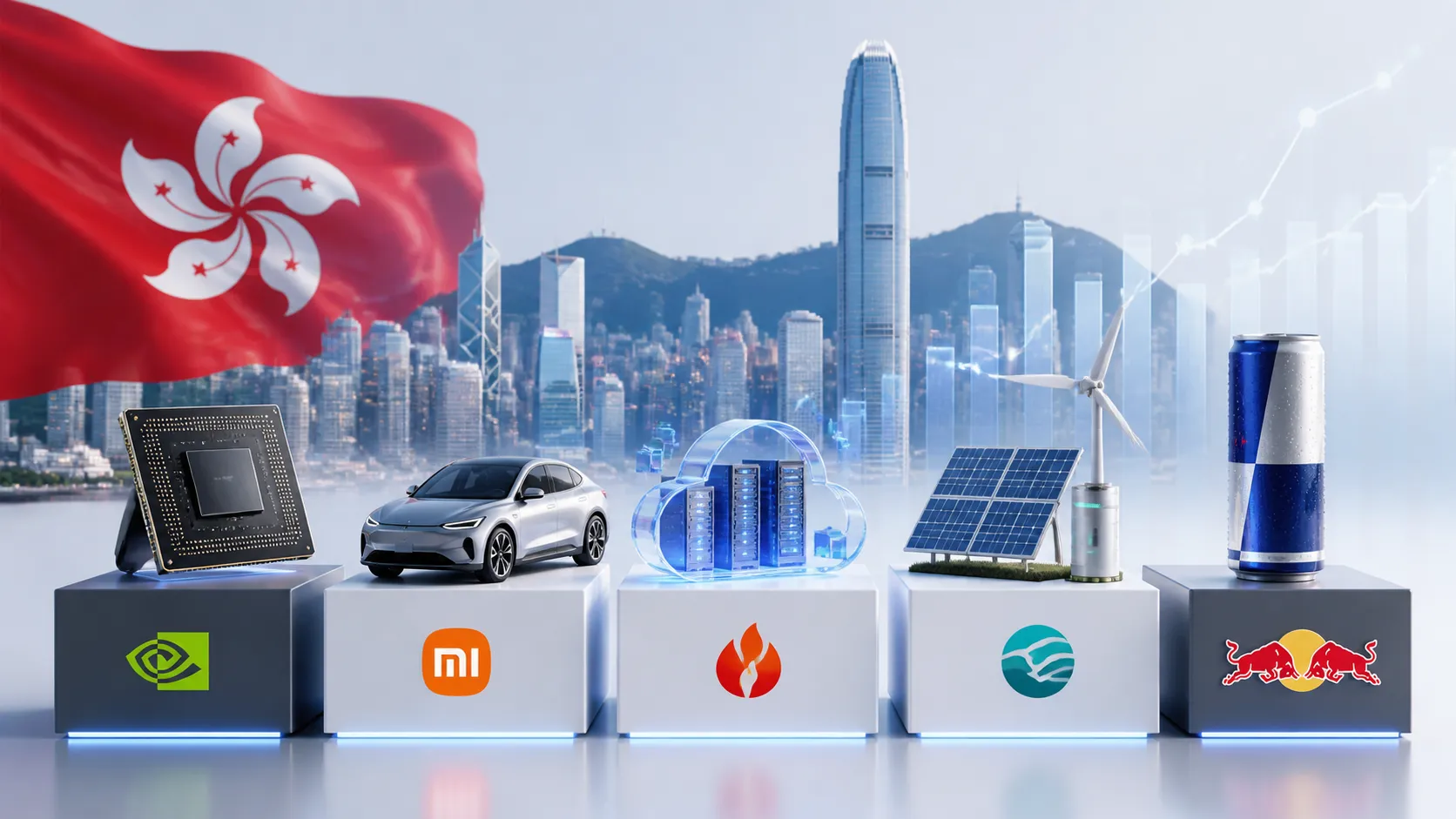
Other top deals include a US$1.2 billion listing by a major AI chip designer, a US$980 million float from an energy drink maker, and a US$890 million raise by a biotech firm. The chip designer’s debut highlights Hong Kong’s growing allure for semiconductor firms facing US export restrictions, while the energy drink listing taps into China’s booming functional beverage market.
The dominance of mainland issuers isn’t new, but the sector mix reveals strategic priorities. Advanced technology listings, especially in semiconductors, align with China’s self-reliance goals. Consumer staples like food and beverages draw defensive investors amid economic uncertainty. Yet, the heavy tilt toward Chinese firms raises questions about market concentration and global investor appetite for non-tech sectors.
Why Hong Kong’s IPO Engine Roars Despite Geopolitical Noise
Hong Kong’s resurgence as a listing hub defies expectations. After years of regulatory crackdowns and pandemic disruptions, the exchange has bounced back, fueled by China’s policy support and a pipeline of state-backed enterprises. The 84.3% proceeds surge outpaces global peers, with the exchange trailing only one other venue worldwide.
Analysts point to several drivers: eased listing rules for pre-revenue tech firms, a stable regulatory environment, and the city’s unique position under “one country, two systems.” For Chinese companies, Hong Kong offers access to international investors without the compliance risks of US listings. For investors, it provides exposure to China’s growth story with legal safeguards.
However, the reliance on mainland issuers is a double-edged sword. While it ensures deal flow, it exposes the exchange to China’s economic cycles and policy shifts. The technology focus, while lucrative, could face headwinds if US sanctions tighten further. Conversely, consumer staples provide stability but may lack the explosive growth of tech.
The AI chip designer’s listing is particularly notable. As Washington restricts advanced chip exports to China, domestic designers are turning to Hong Kong to fund expansion and R&D. This mirrors a broader trend: Chinese semiconductor firms raised over US$5 billion in Hong Kong IPOs since 2024, according to exchange data. The city is becoming a critical node in China’s tech supply chain financing.
Looking ahead, the pipeline remains robust with several mega-IPOs expected in the second half. Market observers caution that global rate cuts and geopolitical tensions could sway investor sentiment. Still, Hong Kong’s first-half performance cements its status as a top destination for Chinese capital raising, blending technology ambitions with consumer resilience.