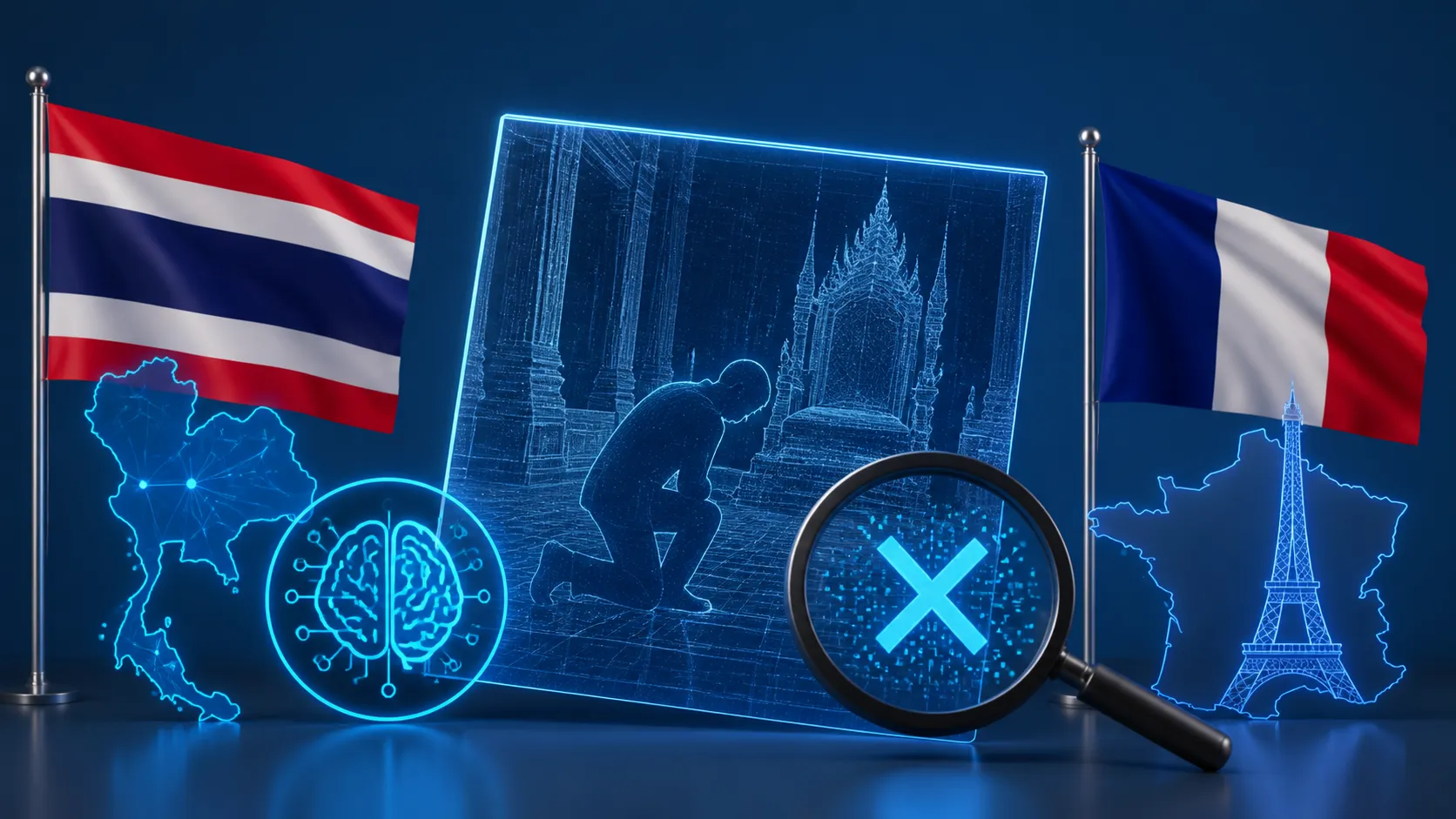
July 2, 2026, (Inside AI) — A digitally fabricated image of French President Emmanuel Macron kneeling before Thailand’s King Maha Vajiralongkorn ignited a firestorm online this week, forcing Bangkok’s foreign ministry to issue a rare denial. The AI-generated picture, which surfaced during the Thai monarch’s historic state visit to Paris, was widely shared on social media, racking up over 40,000 likes and 2,000 shares on a single Thai-language post by Wednesday. The incident underscores the growing weaponization of synthetic media to distort diplomatic events and inflame nationalist sentiment.
The king and Queen Suthida visited France to mark the 170th anniversary of formal diplomatic ties between the two nations—the first official visit by a Thai monarch since 1960. During a state dinner at the Élysée Palace, Macron awarded the 73-year-old king the Grand Cross of the Legion of Honour, France’s highest award, and Queen Suthida the Grand Cross of the National Order of Merit. No kneeling occurred, Thai officials stressed.
Yet the manipulated image spread rapidly, amplified by a page with over 2 million followers known for pro-military and nationalist commentary. The foreign ministry’s statement, issued Thursday, called the picture “AI-generated” and warned against sharing false information that could damage bilateral relations. This is not an isolated case: deepfake incidents targeting political figures have surged globally, from fake videos of Ukraine’s president surrendering to manipulated audio of Slovak politicians.
The Anatomy of a Diplomatic Deepfake
The Macron-kneeling image exploited a potent cultural symbol. In Thai tradition, prostration before the monarch is a sign of utmost respect, but a foreign leader kneeling would be seen as a national triumph by ultranationalists. Experts note that such fakes often prey on existing political tensions. “AI-generated disinformation is most effective when it aligns with pre-existing beliefs,” said Dr. Sarah Chen, a digital forensics researcher at Stanford University. “This image tapped into a narrative of Thai superiority that certain groups want to promote.”
Read: Trump Shares AI-Altered Obama Images in US Political Deepfake Escalation
Technical analysis suggests the image was likely created using a generative adversarial network (GAN) or diffusion model, tools now accessible to amateurs. Watermarking and detection efforts by companies like Google DeepMind and Adobe remain inconsistent, and social platforms struggle to remove fakes before they go viral. In this case, the image remained online for over 24 hours before the ministry’s rebuttal.
When Pixels Become Propaganda
The incident mirrors a broader pattern of state-linked actors using synthetic media for influence operations. A 2025 report by the European External Action Service documented how AI-generated content was deployed in 17 countries to sway elections or discredit opponents. Thailand itself has a history of strict lèse-majesté laws, making the fake image not just a diplomatic irritant but a potential legal trigger. Authorities have not announced any arrests, but the digital ministry said it is investigating the source.
Macron’s office declined to comment, but a French diplomatic source told AFP the incident was “regrettable” and stressed the importance of media literacy. Meanwhile, Thai netizens expressed mixed reactions: some condemned the fake, while others questioned the timing of the denial. “The government is more worried about a picture than real issues,” one user posted on X, reflecting a cynical public mood.
Read: How AI Deepfakes Are Fueling Punjab’s Political Firestorm Ahead of 2027 Elections
As AI tools grow more sophisticated, distinguishing fact from fabrication will only get harder. The Macron-kneeling deepfake is a stark reminder that in the age of generative AI, a single image can undermine decades of diplomacy—and that the truth often arrives too late.