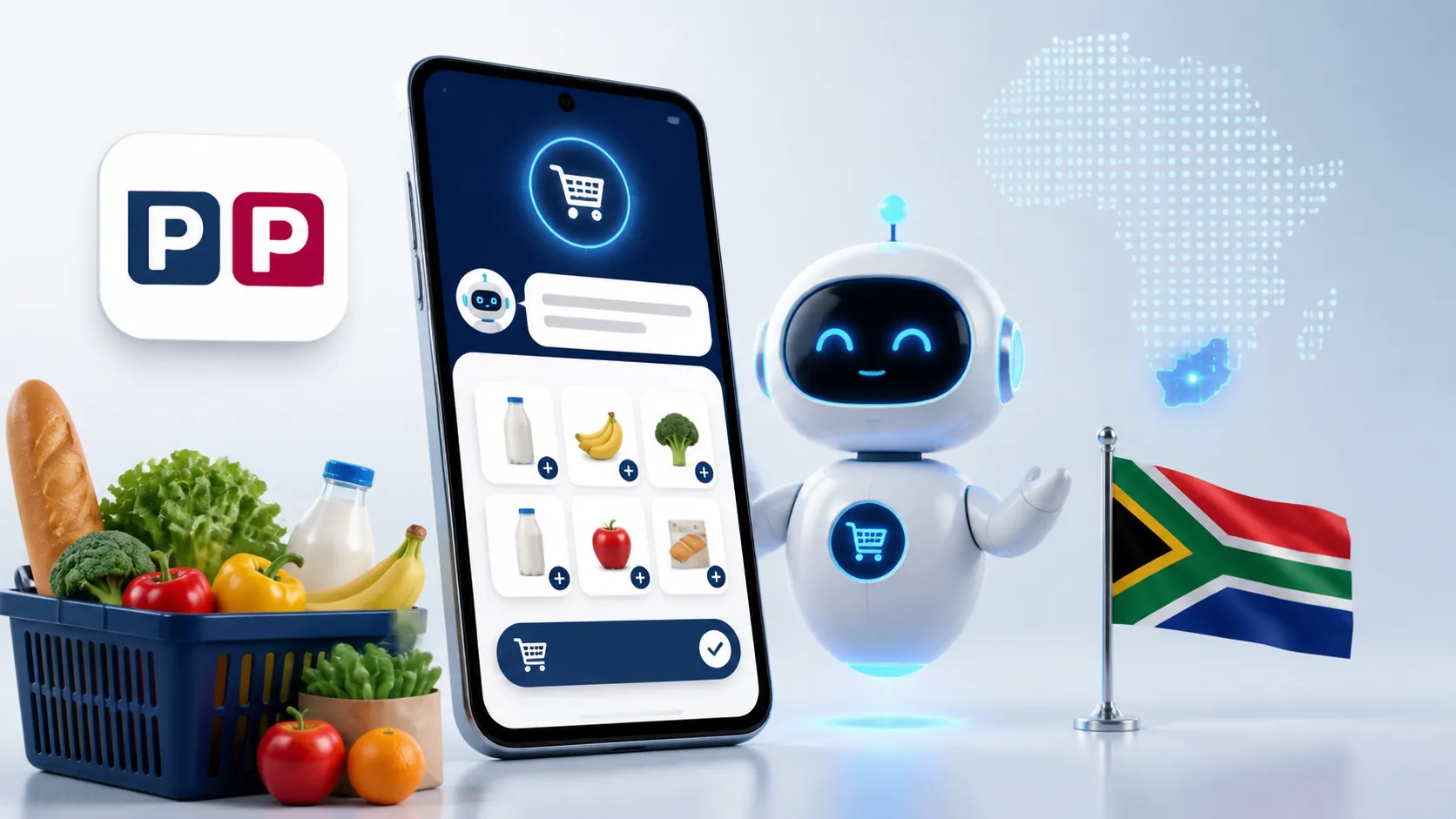
July 3, 2026, (Inside AI) — South African retailer Pick n Pay launched an AI-powered grocery shopping assistant called Penny on Thursday, aiming to modernize its online experience and challenge rival Shoprite’s dominance. The assistant, built on Google’s Gemini AI models, will begin rolling out on July 6, allowing customers to build orders using voice, text, or photos.
The launch comes as Pick n Pay fights to regain market share after years of losses to Shoprite, whose Checkers Sixty60 platform leads South Africa’s on-demand grocery market. By integrating generative AI, Pick n Pay hopes to differentiate its digital offering and drive sales growth.
Penny accepts voice notes, text prompts, and images—including handwritten lists and recipes—to generate orders conversationally in multiple languages. It also suggests recipes, ingredient substitutions, meal plans, and budget-friendly options, while offering personalized product recommendations.
Enrico Ferigolli, omnichannel retail executive at Pick n Pay, told reporters at the launch event:
Read: Google Launches Gemini-Powered Ask Ad Manager to Answer Ad Questions
“On-demand delivery changed how people shop. AI is now changing how they order.”
He added:
“Consumers no longer just want speed, they want shopping apps to think for them … By helping customers, our sales will grow.”
Ferigolli confirmed more AI features are coming in the next months, signaling a deeper commitment to AI-driven retail. The assistant’s multimodal capabilities—processing voice, text, and images—reflect a broader industry shift toward natural, intuitive e-commerce interfaces.
South Africa’s AI Grocery Race Intensifies
Pick n Pay’s move directly counters Shoprite’s earlier AI assistant launch, which focuses on replenishment purchases and personalized deals. Both retailers are leveraging generative AI to reduce friction in online shopping, a critical battleground as smartphone penetration and data costs improve across Africa.
Globally, retailers from Walmart to Carrefour are testing similar tools, but South Africa’s unique multilingual landscape and high mobile-first usage make voice and image inputs especially relevant. Penny’s support for multiple languages could capture a wider demographic than text-only interfaces.
Read: Why LLMs Misunderstand Luxury Brands and How to Fix It
However, challenges remain. AI hallucination risks in product recommendations, data privacy concerns, and the need for seamless integration with inventory systems could slow adoption. Pick n Pay must also ensure the assistant performs reliably across South Africa’s varied network conditions.
Industry analysts note that while AI can boost engagement, the ultimate test is whether it converts to higher basket sizes and customer retention. Shoprite’s early lead gives it a data advantage, but Pick n Pay’s multimodal approach might appeal to less tech-savvy shoppers.
The launch underscores a pivotal moment for African retail, where AI is moving from back-end logistics to front-end customer experience. As Ferigolli hinted, the race is just beginning.