July 16, 2026, (Inside AI) — President Donald Trump promoted at least 20 companies on his Truth Social platform after his investment portfolio had already acquired stakes in those firms, a CNN investigation revealed on Thursday. The report raises fresh concerns about potential conflicts of interest between the president’s public office and private wealth.
The investigation found that Trump’s social media endorsements often coincided with—or were followed by—government policy announcements that could benefit the same companies. In one notable instance, Trump touted Nvidia‘s plan to build AI supercomputers in the United States without disclosing he had purchased between $200,000 and $500,000 of the chipmaker’s shares days earlier.
On April 15, 2025, Trump posted to his 9 million followers: “Nvidia Commits 500 billion dollars to build AI Supercomputers…All necessary permits will be expedited and quickly delivered to NVIDIA, as they will to all companies committing to be part of the Golden Age of America!” The post omitted any mention of his personal financial interest.
The White House has denied any wrongdoing, asserting that Trump’s investments are managed independently and that he never uses his office for financial gain. Spokesperson Anna Kelly stated that Trump’s assets are “held in fully discretionary accounts managed by independent third-party financial institutions.”
Read: US Commerce Official Says New AI and Chip Regulations Are Coming
“President Trump only acts in the best interests of the American public—which is why they overwhelmingly re-elected him to this office, despite years of lies and false accusations against him and his businesses from the fake news media. There are no conflicts of interest,” Kelly added.
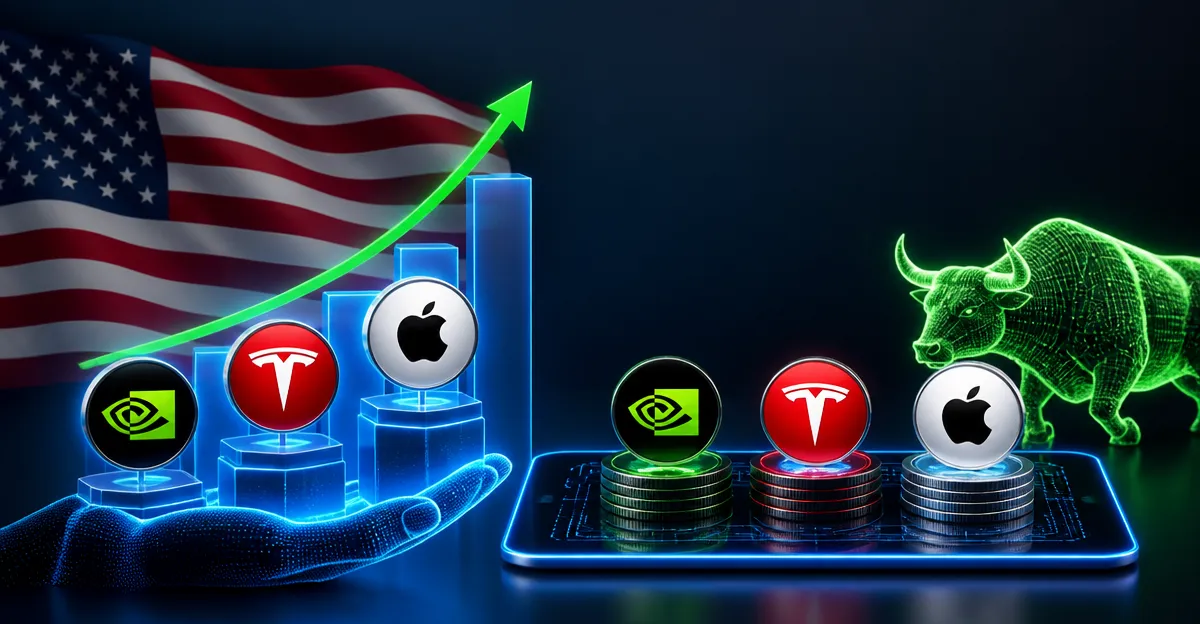
The CNN report identified a pattern stretching beyond Nvidia. Trump purchased shares in companies including Tesla, Apple, and others, then subsequently promoted them on Truth Social or announced favorable government measures. The exact timeline of trades and posts suggests a potential overlap between his public communications and portfolio movements.
This is not the first time Trump’s business entanglements have drawn scrutiny. During his first term, ethics watchdogs repeatedly flagged his refusal to divest from his businesses, though no formal charges were brought. The current situation differs because it involves direct stock purchases rather than passive ownership of his brand.
Legal experts note that while the STOCK Act prohibits members of Congress from trading on nonpublic information, the president is exempt from many conflict-of-interest laws. However, the appearance of using official actions to boost personal holdings could violate the Emoluments Clause or federal bribery statutes, depending on intent.
“The timing here is problematic,” said Richard Painter, former White House ethics lawyer under George W. Bush. “If a government official promotes a company after buying its stock, that’s classic market manipulation—regardless of whether a third party executes the trade.”
Critics argue that the discretionary account defense is insufficient. “A blind trust only works if the official doesn’t know what’s in it. Trump clearly knows he owns these stocks, so the conflict remains,” said Kathleen Clark, a government ethics expert at Washington University in St. Louis.
The investigation also highlights the role of Truth Social itself. Trump’s posts on the platform have moved markets before, and his ability to reach millions directly amplifies the impact of his statements. The platform’s terms of service do not require disclosure of financial interests.
Read: Silicon Valley Pours Hundreds of Millions into Super Pacs to Sway AI Regulation Elections
For the AI industry, the Nvidia episode is particularly significant. Trump’s explicit promise to expedite permits for Nvidia’s supercomputer project could have given the company a competitive edge. The $500 billion commitment—if realized—would mark one of the largest private investments in U.S. AI infrastructure.
Meanwhile, the White House has not indicated whether it will release a full list of Trump’s stock trades or the timing of his social media posts. The CNN report relied on public financial disclosures and Truth Social archives to establish the pattern.
As the 2026 midterm elections approach, the revelations could fuel Democratic efforts to tighten ethics rules for the executive branch. However, Republican leaders have largely dismissed the report as another partisan attack.
The broader implication is a blurring of lines between presidential communication and personal profit—a dynamic that watchdog groups say erodes public trust. With AI and tech stocks increasingly sensitive to government policy, the stakes for market integrity are higher than ever.