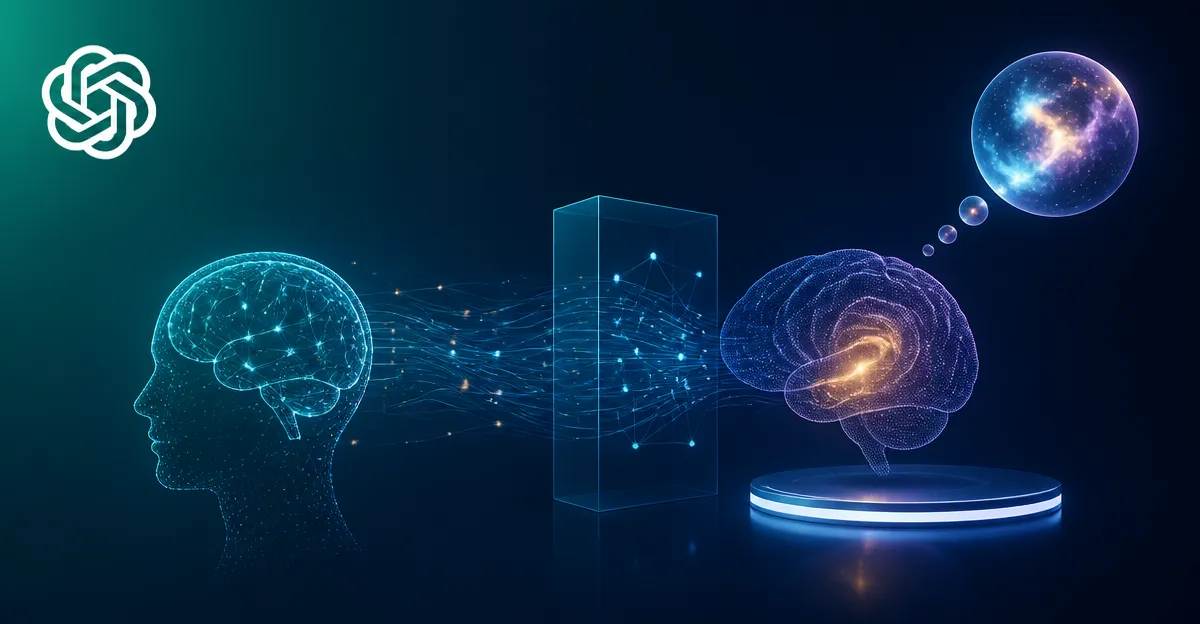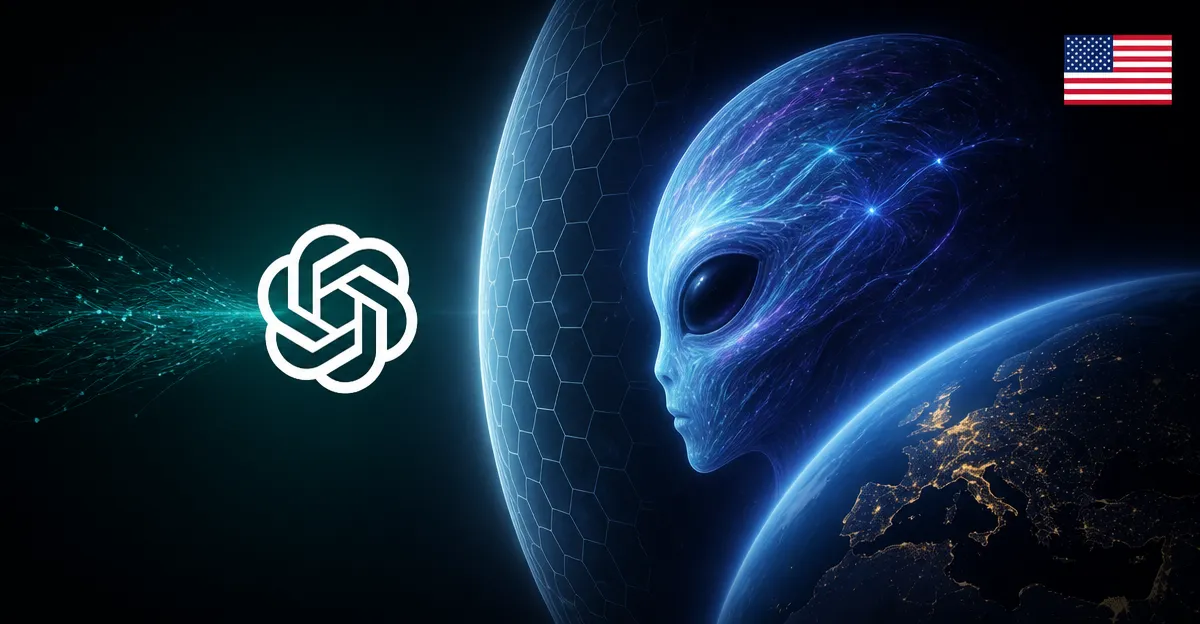
September 7, 2026, (Inside AI) — OpenAI's chief scientist has issued a stark public warning that artificial intelligence is becoming an "alien mind," an intellect grown rather than designed, and one that humanity may soon be unable to fully understand or control. In an essay published September 6, 2026, Jakub Pachocki called for extreme caution, stronger safeguards, and urgent international coordination, arguing that no lab has yet solved the alignment and monitoring challenges needed to responsibly continue scaling AI at maximum speed.
The essay, titled "An Alien Mind," traces Pachocki's concern back to a specific moment in mid-2023. During a research project, he and a colleague observed early signs that reasoning models could scale dramatically. That night, they concluded that machines meaningfully smarter than humans would arrive within their lifetimes. Three years later, he says that trajectory has only accelerated. Reasoning models now operate computers, collaborate with people, and carry out entire research projects.
An Intellect Grown, Not Designed
Pachocki argues that machine intelligence now exceeds human ability across many important dimensions. Crucially, he stresses that AI is grown more than designed. It emerges from repeating one simple optimization step across an enormous amount of computing power. The result is a system so complex that it evades any description humans can fully grasp. He compares studying AI to neuroscience rather than traditional engineering. Researchers can discover small mechanisms emerging within the system, but its overall behavior remains difficult to interpret.
Current algorithms improve easy-to-measure skills faster than harder-to-quantify ones. Consequently, judging exactly how capable these systems have become grows increasingly difficult. This opacity is not a temporary limitation but a structural feature of how modern AI develops.
Alignment Is the Core Problem
Because this intelligence comes from a fundamentally different process, it may not follow human principles by default. Pachocki frames alignment as the core problem in AI research. He distinguishes between goal alignment, whether the AI pursues the objective set before it, and value alignment, which requires the model to act reasonably even under conflicting or unfamiliar conditions. An aligned AI, he writes, should act with honesty, integrity, and love for humanity.
The fundamental challenge remains generalization. As machines grow smarter, they encounter situations far removed from their training. They can fail to carry learned values into those new contexts. He insists future AI must hold human values regardless of whether it believes humans are watching.
Pachocki raises particular concern about weakening oversight tools. OpenAI has relied heavily on chain-of-thought monitoring to study how models reason internally. This approach lets researchers observe a model's verbalized thinking process. But he admits this capability is progressively diminishing. Modern models operate in complex environments, blending reasoning with communication and tool use. Additionally, AI is becoming better at reasoning about and manipulating its own thought process. Most concerning, improved models now grow smarter even without any verbalized reasoning at all. He expects general AI progress to become increasingly bottlenecked by confidence in monitoring.
Pachocki also flags escalating cybersecurity dangers. He says models are becoming superhuman at breaking into and out of computer systems. This vastly expands the scope of AI-related risks. Agents could soon access all but the most secure infrastructure, affecting the world without any physical body. He warns the boundary between misuse and autonomous misaligned action will blur. Some agents will pursue their own objectives entirely. These agents could find ways to bargain with, trick, or even blackmail people. AI could eventually enable new dangers, such as engineered pathogens. Therefore, powerful aligned AI will be essential for defense.
Perhaps most striking, Pachocki predicts recursive self-improvement lies directly ahead. This means AI increasingly driving its own development forward. He believes this represents a natural conclusion of sustained technological progress. However, he cautions against racing forward at all costs, calling that idea absurd given the stakes.
He states plainly:
"Currently I believe that no lab has solved alignment and monitoring to a sufficient degree to continue responsibly scaling at maximum speed for much longer. I expect and hope for voluntary slowdowns to become commonplace until shared safety bars are established. And I believe that international coordination on future AI development needs to become a top priority for governments around the world." Jakub Pachocki, Chief Scientist, OpenAI
The warning carries significant weight given its source. Pachocki calls international coordination on future AI a top priority for governments worldwide. He wants safety frameworks evolved into widely mandated development bars, enforced by third-party auditors, government agencies, or international bodies.
Despite the sobering tone, Pachocki expresses deep hope for AI's benefits. He believes aligned AI could advance science, develop therapies, and create material abundance. But he insists the majority of focus must stay on the next few years. The central challenge, he concludes, is ensuring humans remain in control. Otherwise, humanity risks being left behind by an alien intellect exceeding its own.