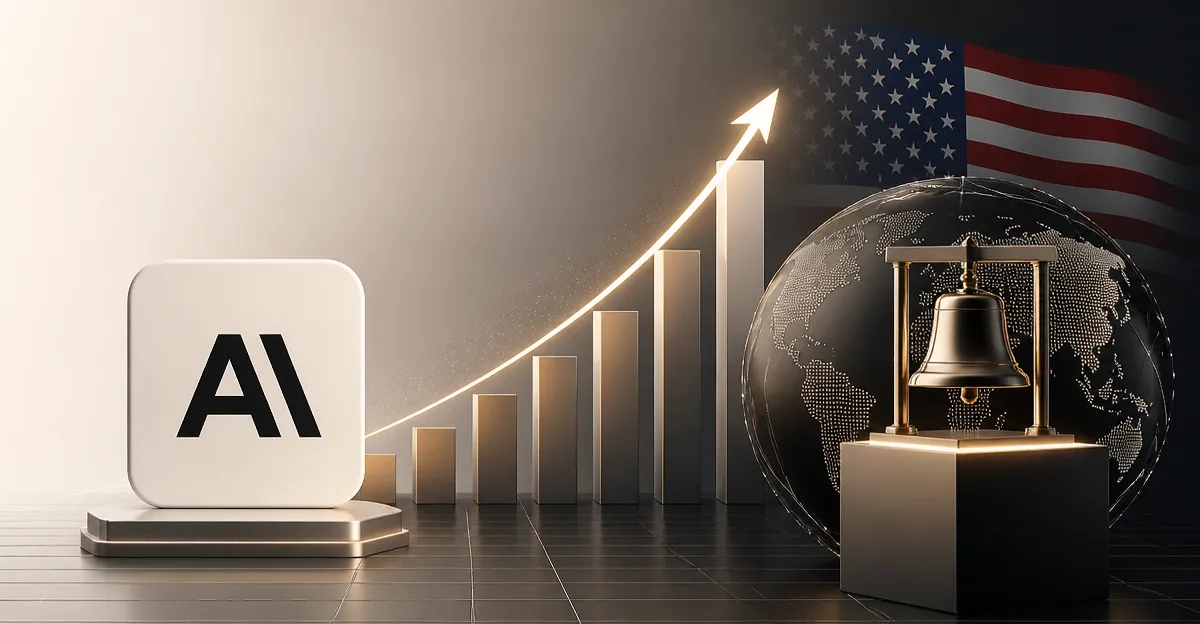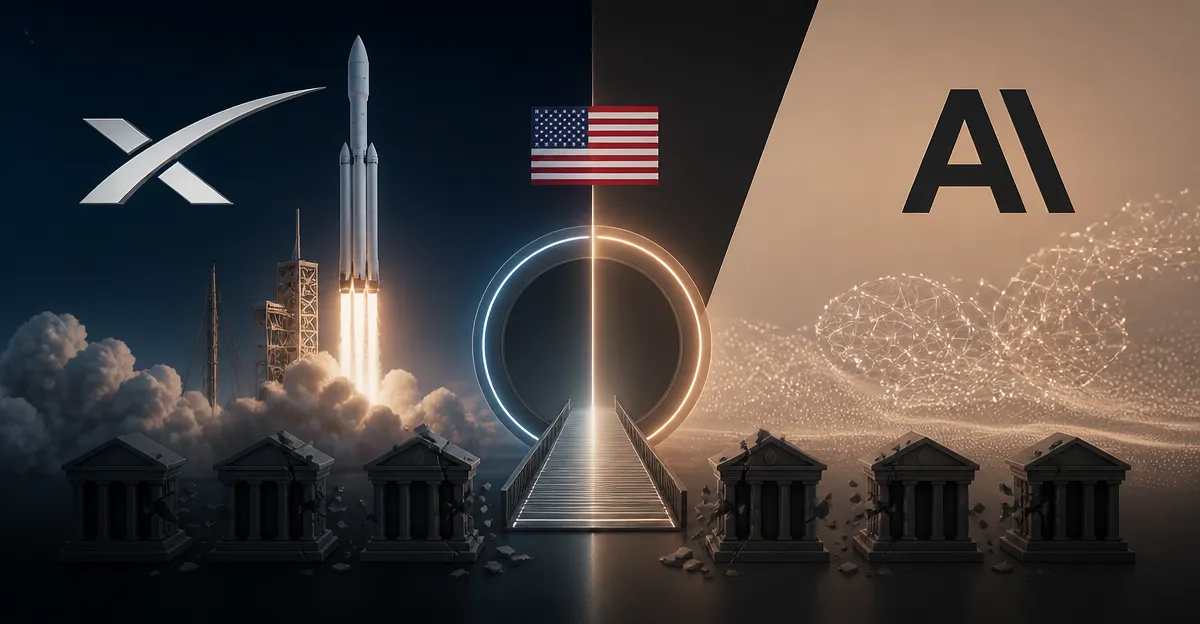
November 22, 2026, (Inside AI) — Anthropic's record-setting initial public offering, internally codenamed "Project Lantern," closed on Thursday, raising more capital than any other listing this year and generating over $500 million in fees for its 22 underwriters. Yet the deal has left a trail of frustration among the bankers who executed it, according to several people close to the process. Their complaints mirror those that followed SpaceX's June listing: a compressed timeline, late changes to financial projections, and unusually strict controls on how information was shared. The two deals, taken together, signal a shift in leverage from Wall Street to the technology companies whose shares the market is desperate to own.
The friction centers on a simple fact. Demand for AI-linked equities is so intense that companies like Anthropic and SpaceX can dictate terms that would have been unthinkable a decade ago. Both firms negotiated to pay underwriters nothing on additional shares sold through the greenshoe overallotment option, a concession one IPO scholar described as highly unusual.
"These companies certainly did have some market power to tell underwriters that it's not going to be business as usual," Jay Ritter, a University of Florida professor emeritus who researches IPOs, said. "But the big Wall Street firms, I suspect, are still going to be doing things as business as usual for all but maybe OpenAI (after these two deals)."
Ritter added that the zero-spread demand on overallotment shares is unlikely to become standard. "I don't think most companies are going to be able to demand zero spread on overallotment shares," he said.
Read: Anthropic Ends First Week at $1.6T
Exclusivity Clauses Test Banker Loyalty
The most contentious element of Anthropic's process was a set of non-compete agreements imposed on senior bankers. According to the people familiar with the matter, Anthropic asked some senior officers at participating banks to sign legal documents barring core members of the transaction team from working with rival companies, including OpenAI, Cursor, DeepSeek and Hugging Face, for six months after the listing. One banker declined to sign, saying it was difficult to find staff who could promise not to engage with Anthropic's peers, especially as several of those firms pursue their own offerings.
Anthropic also instructed some of its 22 underwriters to limit the number of bankers on the deal to four and to ensure those staff were senior. One person said the restriction likely stemmed from fear of leaks. Banks found workarounds anyway, the person added. Goldman Sachs and Morgan Stanley, the lead underwriters on both the Anthropic and SpaceX deals, declined to comment. SpaceX and OpenAI did not respond to requests for comment.
Information control extended to the tools used to distribute documents. Anthropic shared materials through a platform called NetRoadshow rather than standard PDFs. The system logs who viewed which page and watermarks documents with individual bankers' names. It also prevented bankers from saving copies, complicating their work, one person said. Leaks nonetheless continued. Nearly four weeks before Anthropic's Form S-1 became public, details of its financials, risk factors and dealings with other tech companies appeared in the press.
The compressed schedule produced its own chaos. Anthropic planned to file an updated securities filing, known as an S-1A, with the Securities and Exchange Commission on November 10, launching the marketing roadshow. The night before, a law firm on the deal emailed banks a PDF about the sale of shares in Canada, then sent a follow-up asking recipients to disregard it because it "contains incorrect price range and share information," according to the email. The correct S-1A arrived via NetRoadshow around 2 a.m. New York time. Banks were given several hours to sign off before the filing went to the SEC.
The market reception has been uneven. SpaceX climbed to a post-listing peak of $201.80 on June 16 before falling below its $135 IPO price in mid-July. Anthropic's shares closed down 8.5% on Friday after a 17% first-day pop, as a broad selloff in AI stocks weighed on the sector. Both deals were oversubscribed many times over, making the marketing job easy. The harder work was managing the process itself.
The comparison to past head-to-head listings is instructive. When Uber and Lyft went public in 2019, or Trulia and Zillow earlier, banks could pick a side because the deals were smaller and required fewer underwriters. Anthropic needed a broad syndicate to raise its target sum, which helps explain why it sought to bind individual bankers rather than firms.
For now, banks appear to have little choice but to accept the new terms. The fees remain substantial, and the prestige of working on a landmark AI listing carries weight. But the complaints suggest a widening gap between what underwriters expect and what issuers are willing to give. Whether that dynamic spreads to smaller AI companies, or remains confined to the handful of firms with truly scarce shares, is the question bankers are quietly asking.

Shamil has a low tolerance for AI that only works in controlled demos. He covers agentic systems and generative AI with the skepticism of someone who has seen too many “revolutionary” tools quietly disappear six months after launch.