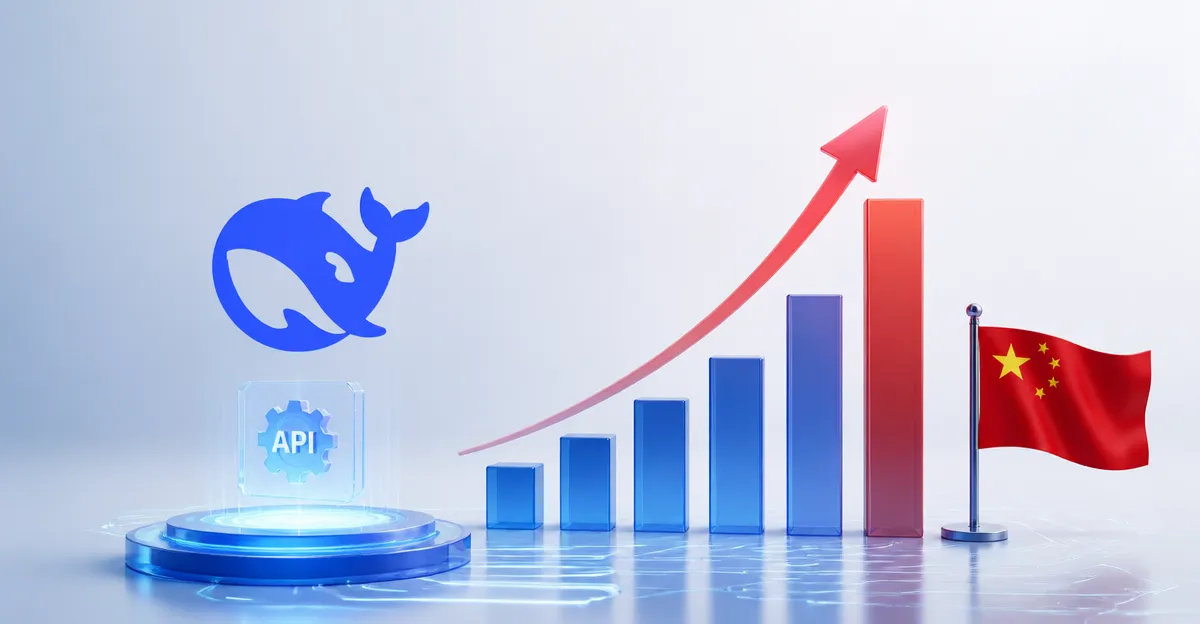
August 6, 2026, (Inside AI) — DeepSeek, the Chinese AI lab known for its aggressive pricing, is preparing to hike its API rates substantially. The company issued a notice warning users that the increase could be significant, though it has not yet published a new price schedule or an effective date.
The move signals a strategic shift for a firm that has long undercut competitors on cost. DeepSeek’s current API pricing distinguishes between input and output tokens, as well as cached and uncached requests, a granular model that has attracted developers seeking affordable access to large language models.
This planned price adjustment comes amid intensifying competition in the AI API market, where providers like OpenAI, Anthropic, and Google have been engaged in a race to the bottom on pricing while simultaneously investing billions in infrastructure. DeepSeek’s notice, reported by IT Home, lacked specifics, leaving the developer community to speculate on the magnitude and timing of the change.
Industry analysts note that sustained low pricing is difficult to maintain given the soaring costs of compute. DeepSeek’s current rates were seen as unsustainably low, potentially below cost, as a tactic to capture market share.
The notice did not detail whether the increase would apply uniformly across all token types or if cached requests, which are cheaper to serve, would see a smaller hike. Developers relying on DeepSeek for production workloads now face uncertainty, as the lack of a published schedule leaves them unable to forecast expenses.
This is not the first time an AI provider has abruptly shifted pricing. OpenAI has repeatedly adjusted its API costs, most notably with the release of GPT-4o, which offered lower prices but restricted certain features to higher tiers. Anthropic’s Claude models have also seen tiered pricing based on context window and capability. Such moves often reflect the underlying cost of serving increasingly complex models.
DeepSeek’s decision may also be influenced by regulatory and market pressures within China, where AI firms must balance state mandates for affordable technology with the need for financial sustainability. The company has not commented on whether the price increase is tied to new model releases or infrastructure upgrades.
Why DeepSeek’s Pricing Pivot Matters Now
The timing is critical. Global demand for AI inference is skyrocketing, and providers are grappling with supply chain constraints for GPUs and custom silicon. DeepSeek may be preemptively adjusting to secure margins before these costs escalate further.
For developers, the warning serves as a reminder to architect systems with model portability in mind. Those locked into DeepSeek’s ecosystem could face difficult choices if the new rates prove prohibitive. Competitors may seize the opportunity to attract defectors by emphasizing stable pricing or long-term contracts.
The AI API landscape is maturing, and pricing strategies are becoming as critical as model performance. DeepSeek’s move could trigger a broader reevaluation of how AI services are valued, especially as enterprises demand more predictable cost structures for scaling AI applications.