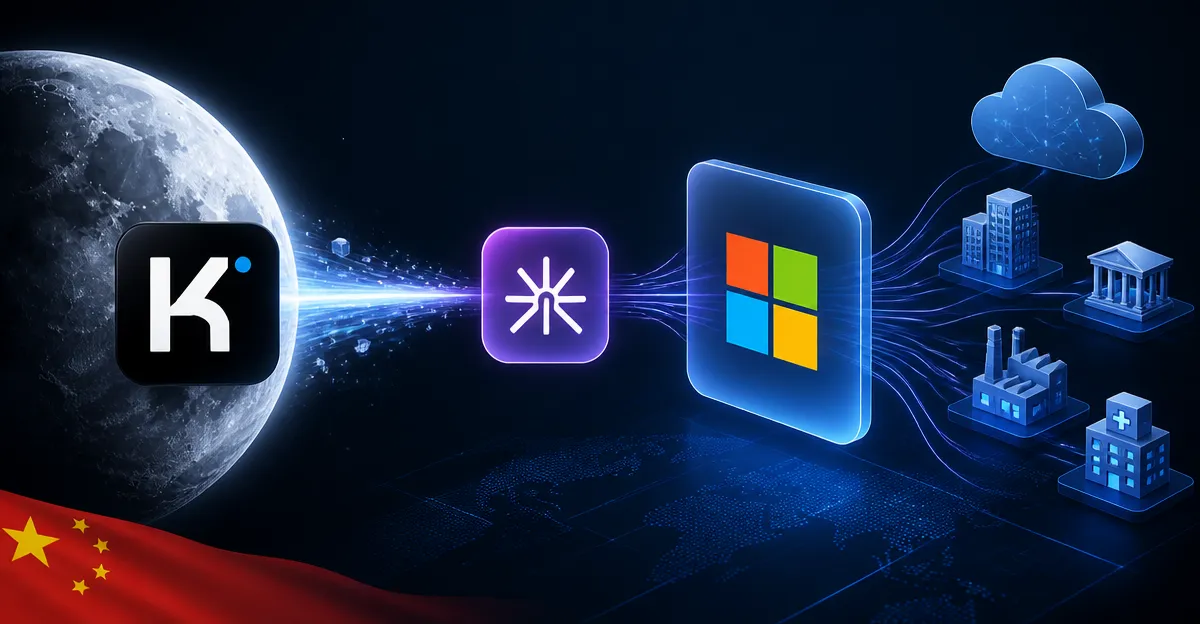
July 30, 2026, (Inside AI) — Enterprise developers on Microsoft Azure can now access Moonshot AI’s Kimi K3 large language model through Fireworks AI, a managed inference service now integrated with Microsoft Foundry. The arrangement gives Azure customers a streamlined path to run Kimi K3 via OpenAI-compatible Chat Completions and Responses APIs, without provisioning their own GPU clusters.
Fireworks lists Kimi among more than 20 open models served through Foundry, positioning the model alongside other enterprise-grade options. The integration combines Microsoft’s Azure-native environment for procurement, identity, billing, and governance with Fireworks’ inference engine and dedicated capacity.
The move expands Kimi K3’s distribution channels rather than introducing a new model. Moonshot AI already offers the Kimi K3 API directly through its Kimi platform, and technical documentation details self-hosted deployment paths using vLLM and SGLang. This Foundry availability marks a significant step in enterprise accessibility, particularly for organizations locked into the Azure ecosystem.
“Moonshot remains the model provider: its Kimi platform offers the Kimi K3 API, while its technical documentation lists self-hosted deployment paths including vLLM and SGLang. The new development is therefore an expansion of enterprise distribution and deployment channels, rather than a new model launch.” Fireworks AI
Enterprise Inference Without Infrastructure Overhead
By offloading inference to Fireworks, enterprises avoid the complexity of managing GPU fleets. Microsoft Foundry handles the operational layer, while Fireworks ensures consistent latency and throughput. This setup mirrors a broader industry trend toward serverless model access, where companies consume AI through APIs rather than hosting models themselves.
Kimi K3’s architecture, detailed in Moonshot’s technical documentation, supports long-context windows and efficient token generation. The model has gained traction in Asian markets for its strong performance on Chinese-language benchmarks, though comparative evaluations against models like GPT-4o and Claude 3.5 remain limited in Western contexts.
Distribution Shifts and Open Model Economics
The Fireworks-Foundry partnership underscores how open model distribution is evolving. Instead of every provider building their own cloud infrastructure, specialized inference companies like Fireworks are becoming the middleware layer. This allows model developers like Moonshot to focus on research while relying on partners for enterprise sales and deployment.
However, questions linger about data residency and compliance. Azure’s regional data centers can address some sovereignty concerns, but enterprises must still evaluate whether Kimi K3’s training data and Moonshot’s corporate jurisdiction align with their regulatory requirements. The model’s availability through Foundry does not automatically resolve these governance challenges.
For Azure customers, the integration simplifies procurement. They can access Kimi K3 through existing Azure commitments, with billing consolidated under their enterprise agreements. This reduces friction compared to negotiating separate contracts with Moonshot directly, a common barrier for smaller AI labs seeking enterprise adoption.
Fireworks’ broader catalog on Foundry includes models from Meta, Mistral, and Stability AI, indicating a growing marketplace for open-weight models served through managed APIs. The economic model typically involves revenue sharing between the inference provider and model developer, though specific terms for Kimi K3 were not disclosed.
As enterprises increasingly adopt multi-model strategies, distribution deals like this one may become as important as raw benchmark scores. The ability to test and deploy models within existing cloud environments could dictate which AI labs capture enterprise market share in the coming years.