August 19, 2026, (Inside AI) — Erin Kistler, a product manager with nearly 20 years of experience, applied for thousands of jobs at PayPal, Microsoft, and Netflix. She never received a single interview. Now she is suing Eightfold AI, the Silicon Valley hiring software maker, in a class action lawsuit filed in January in California court.
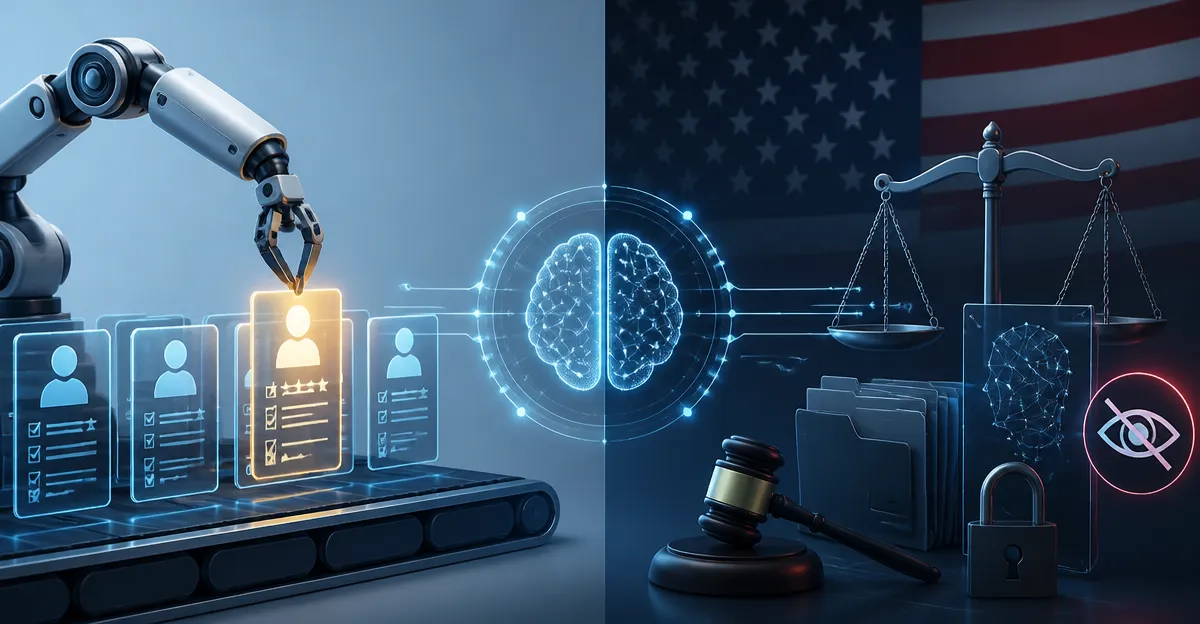
The case argues that automated screening functions as an undisclosed consumer report, ranking applicants on their likelihood of success without giving them the chance to see or challenge the results. It is one of several new legal battles over AI use in employment decisions, including suits against Meta and IBM.
Last year, 90% of employers used some form of automation in hiring, according to the World Economic Forum. These tools range from basic filtering to AI-conducted assessments and initial phone interviews. Eightfold AI maintains a database of over 1 billion workers, scoring applicants on a scale of 0 to 5 to predict job performance.
“There’s actually no law requiring a notice or disclosure of the use of these AI hiring systems,” said Ifeoma Ajunwa, professor at Emory University School of Law. “So companies are not necessarily telling workers when they’re being evaluated with AI.”
Read: India’s AI Pipeline Loses Women at Every Stage: Only 12% in Advanced Roles
Rachel Dempsey, an attorney representing Kistler, argues job applicants deserve the same transparency into hiring processes that Americans get in credit reports. “The concept of a black box is very scary,” she said.
Eightfold AI denied the allegations in a statement. “We believe the claims asserted are without merit and intend to defend ourselves vigorously,” a spokesperson wrote. IBM denied using AI to automatically screen out candidates. Meta did not respond to a request for comment.
Algorithmic bias amplifies hidden hiring harms
Experts say AI can exacerbate biases. Amazon once used an AI tool that downranked women’s résumés because top performers were men. Ajunwa found AI scored applicants with southern accents poorly during voice interviews.
“The magnitude of bias is even stronger [with AI],” said Xuechunzi Bai, assistant professor at the University of Chicago. Her study found newer AI models produced more biased hiring decisions than older ones.
“We were quite shocked to see this result,” Bai said. “In the context of hiring, exploration is quite important, but these models are not trained to do it.”
The consequences can extend beyond one job. When a worker is rejected by an algorithmic system used across companies, the system “remembers the decision that was already made and makes it again for the sake of efficiency”, said Ajunwa. “In reality, you’ve been algorithmically blackballed.”
Read: One in Five Older Australians Who Contested AI Home Support Funding Got More After Human Review
Katie Creel, co-author of a study on algorithmic monoculture, warned that negative flags could make it much harder for candidates to get any job. “People are going to be shut out of jobs more than they would have otherwise been,” she said.
Regulators push transparency while loopholes persist
In New York City, a 2023 law requires bias audits and candidate notification for automated hiring systems. But it only applies to software that “substantially assists” or replaces decision-making, creating a loophole for cases where humans are part of the process. Illinois and Colorado have also passed laws prohibiting AI tools that result in unlawful discrimination.
Iman Abuzeid, CEO of Incredible Health, said hiring managers should not let AI make decisions. His platform’s AI agent conducts phone interviews but does not autoreject, score, or rank candidates. About 10% of those AI interviews are audited for bias by a human.
“It’s about collecting information from the candidates so a human is better armed to make the decision,” Abuzeid said.
Jenny Yang, a partner at Outten & Golden, the firm representing plaintiffs against Eightfold AI, said transparency into algorithmic dossiers is essential. “This initial transparency is helpful in better identifying where there may be problems,” Yang said. “There’s a lot of growing concern among workers that they may be denied opportunity for reasons that no one understands.”