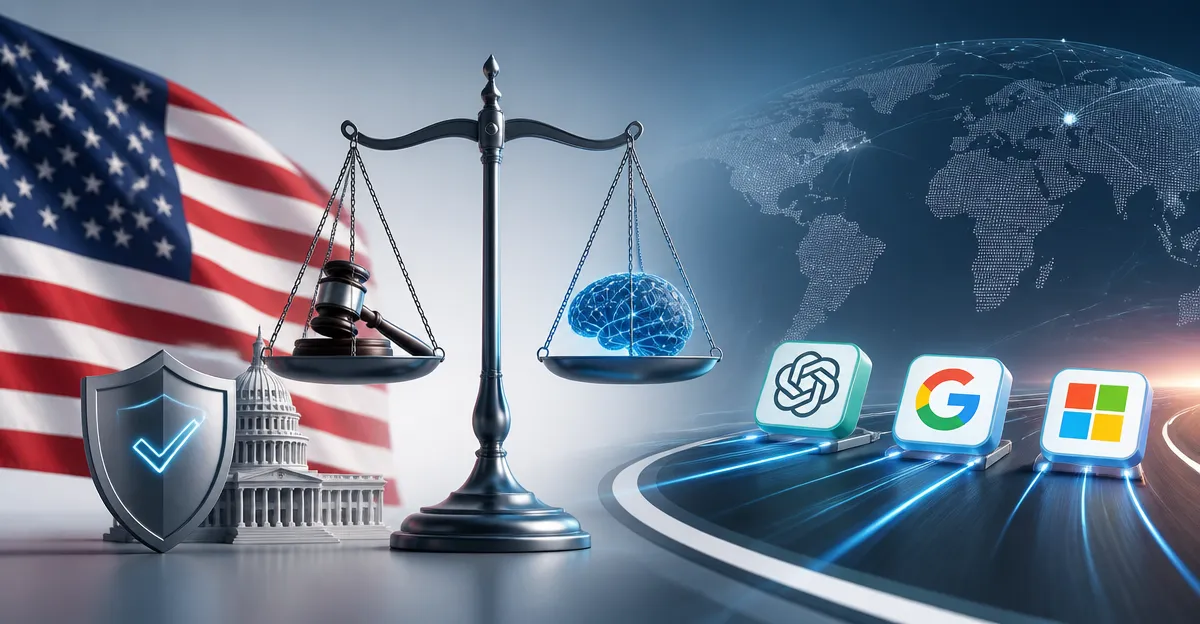
October 2, 2026, (Inside AI) — A new opinion piece argues that the United States can regulate artificial intelligence without losing its competitive edge, drawing parallels to how safety rules shaped the banking and nuclear industries. The article, published as an opinion contribution, contends that government oversight can strengthen rather than cripple American AI leadership.
The central claim rests on a striking comparison: a new heartburn pill must undergo months or years of government testing before reaching consumers, yet the most powerful technology ever developed can be released with no preliminary government review. The author calls this disparity bizarre, noting that AI systems can break into banks, shut down power grids, or assist in building bioweapons.
The argument arrives as Washington debates whether to impose binding safety requirements on AI developers. The piece does not propose specific legislation but uses historical precedent to suggest that regulation and innovation can coexist. It points to banking and nuclear power as sectors where safety rules ultimately strengthened American industry rather than hobbled it.
Inside AI could not independently verify the specific regulatory timelines cited for heartburn medications, though the broader contrast between pharmaceutical and AI oversight is well documented. Prescription drugs typically require years of clinical trials and FDA approval, while most AI models reach the public through commercial APIs with minimal pre-deployment scrutiny.
Read: AI Liability Debate Intensifies as OpenAI Faces Lawsuits and Investigations
The opinion piece does not name the author in the provided excerpt, but the argument aligns with a growing chorus of voices calling for a middle path between laissez-faire and heavy-handed regulation. The piece avoids specifying which agency should oversee AI or what penalties non-compliant companies might face.
What makes the argument notable is its framing: regulation as a competitive advantage, not a burden. That runs counter to the dominant narrative in Silicon Valley, where many executives warn that strict rules would hand AI leadership to China. The author implicitly rejects that zero-sum logic.
Historical precedent offers some support. The Nuclear Regulatory Commission and the Federal Reserve both emerged from crises and initially faced industry resistance. Over time, however, they provided predictability that allowed long-term investment. Banks and utilities could plan without fearing sudden rule changes. The same logic could apply to AI, though the technology evolves far faster than either sector.
The piece does not address enforcement challenges. AI models can be trained in one country and deployed globally. A US-only rule might simply push development offshore. The author also does not mention open-source models, which cannot be easily recalled or licensed.
Still, the core observation stands. A heartburn pill faces more pre-market scrutiny than a system capable of writing malware or designing pathogens. That asymmetry has persisted for years despite repeated warnings from researchers and national security officials.
The opinion piece stops short of endorsing a specific bill or agency. It functions more as a philosophical nudge, reminding policymakers that safety and prosperity are not opposites. Whether Congress heeds that nudge remains to be seen. The AI race will not wait for a perfect regulatory framework.