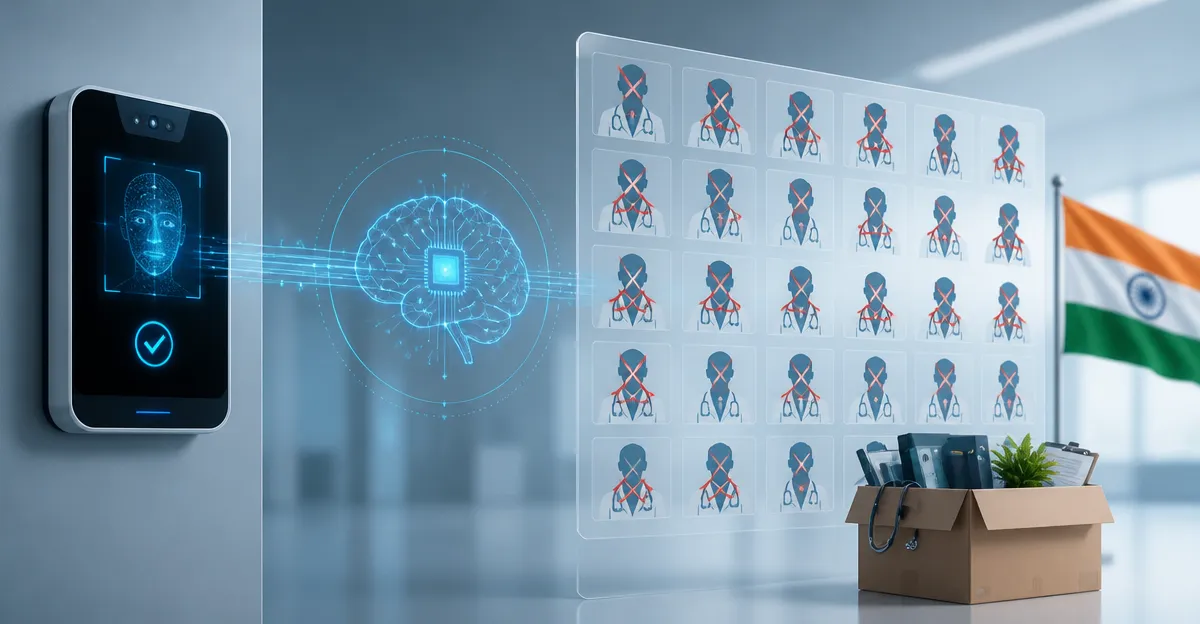
October 31, 2026, (Inside AI) — The Balochistan Health Department has dismissed 72 doctors for prolonged unauthorized absence, bringing the total number of health department employees removed from service to 200. The dismissals, announced on Saturday, were executed under an artificial intelligence-based attendance system introduced by the provincial government to enforce regular attendance among medical staff.
The action underscores a growing trend in public administration: using AI to monitor and discipline government employees. Balochistan, Pakistan's largest province by area but one of its least developed, has turned to automation to tackle chronic absenteeism in its healthcare system. The move raises questions about the balance between accountability and workforce morale, and whether AI-driven oversight can deliver better public services without alienating frontline workers.
According to an official notification issued by the Balochistan health secretary, the dismissals were carried out under Section 4(B)(viii) of the Balochistan Employees Efficiency and Disciplinary Act (BEEDA), 2011. The dismissed personnel include medical officers (BPS-17) and senior medical officers (BPS-18), and the orders took effect immediately.
Health department officials said Rs410 million has so far been deducted from salaries over absenteeism. Notices seeking explanations for attendance and disciplinary violations have been issued to 11,000 employees, while departmental action is under way against another 800.
Read: AI Welfare System Suspends Pensions
Balochistan Health Minister Bakht Muhammad Kakar said the doctors had been repeatedly directed by notice to report for duty but failed to respond. He said their continued absence and failure to reply compelled the government to act.
"We have zero tolerance for absenteeism and negligence among medical staff and doctors in the performance of their official duties," he said. He added that the department was working to provide people with the best possible healthcare facilities at their doorsteps.
Kakar said reforms to improve the department's performance were being carried out on the instructions of Chief Minister Mir Sarfraz Bugti, and that attendance at government hospitals and health centres was being monitored through the AI-based system.
Can AI Fix a Broken Health System?
The scale of the crackdown is notable. Dismissing 200 employees and issuing notices to 11,000 more suggests a systemic problem, not isolated cases. Balochistan's healthcare system has long struggled with doctor shortages, especially in rural areas. Many doctors are assigned to remote facilities but prefer to live in urban centres, leading to widespread absenteeism. The AI system, which likely uses biometric or location data to verify presence, aims to close that gap.
But the approach carries risks. Mass dismissals could worsen staffing shortages if replacements are not hired quickly. The government has not detailed how it will fill the vacancies. Moreover, the use of AI for disciplinary action may face legal challenges. The BEEDA law allows dismissal for inefficiency, but employees could argue that the AI system's accuracy has not been independently verified.
This is not the first time technology has been deployed to monitor public workers. Similar systems exist in India for rural health workers and in some African countries for teachers. However, few have led to such large-scale dismissals. The Balochistan case could set a precedent for other provinces in Pakistan and beyond.
Read: AI Readiness Gaps in Pakistan
The government's focus on attendance is understandable. Public frustration with absent doctors is high, and salary deductions of Rs410 million indicate significant lost productivity. Yet, attendance alone does not guarantee quality care. Doctors may show up but lack medicines, equipment, or support staff. The AI system addresses one symptom of a deeper malaise.
Kakar's statement about providing healthcare "at their doorsteps" reflects the political pressure to deliver visible results. The chief minister's involvement signals that this is a flagship reform. But without investment in infrastructure and incentives for doctors to serve in rural areas, the AI system may become a tool for punishment rather than improvement.
For now, the dismissals have been carried out. The 72 doctors join 128 others already removed. The remaining 11,000 employees face an uncertain future as they respond to notices. The AI system will continue to monitor attendance, and further actions may follow. The world will watch whether Balochistan's experiment yields a healthier workforce or a more demoralized one.