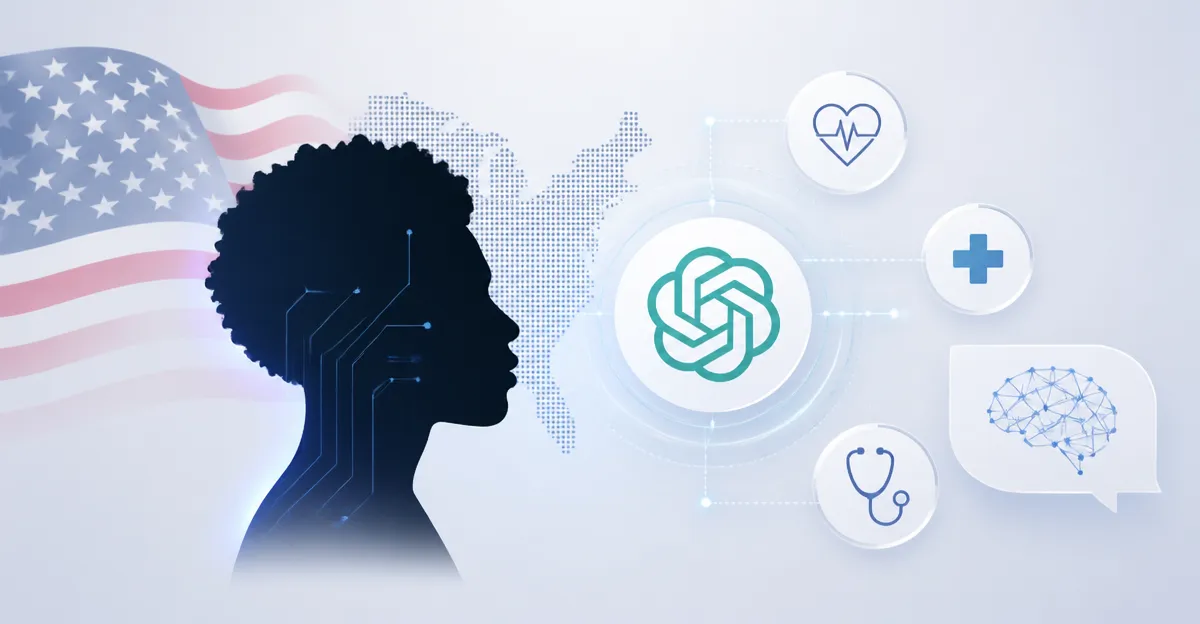
July 30, 2026, (Inside AI) — A new call for public testimony is seeking to understand how Black Americans are turning to artificial intelligence for health and spiritual guidance, a trend that highlights both the promise and peril of AI in marginalized communities.
The Guardian has issued an open invitation for Black respondents to share their experiences with AI tools, including AI-generated social media influencers, as these technologies become more prevalent in healthcare and wellness. The publication aims to gather firsthand accounts of how Black individuals are using AI to navigate a medical system historically marred by racism and mistrust.
This initiative comes at a critical juncture. AI's role in healthcare is expanding rapidly, from diagnostic algorithms to mental health chatbots, yet evidence shows these systems often replicate societal biases. Black Americans, who face persistent disparities in healthcare access and outcomes, are increasingly seeking alternative sources of information, including AI-powered platforms that promise personalized, anonymous advice.
The Guardian's outreach specifically mentions “Black AI-generated health and spiritual influencers,” pointing to a growing phenomenon of virtual personas designed to offer culturally tailored guidance. These digital figures, sometimes with names and backstories, can provide a sense of connection and understanding that traditional healthcare settings may lack. However, experts warn that without rigorous oversight, such AI could spread misinformation or reinforce stereotypes.
Research underscores the stakes. A 2019 study in Science found that a widely used algorithm exhibited racial bias, leading to Black patients receiving less care than white patients with the same level of need. More recently, a 2022 paper in the New England Journal of Medicine highlighted how AI models can perpetuate health inequities if not carefully designed and validated across diverse populations.
Yet, for some Black communities, AI may fill a void left by a healthcare system where 22% of Black adults report experiencing discrimination, according to a 2020 survey by the Kaiser Family Foundation. AI chatbots and virtual assistants offer 24/7 availability and a perceived lack of judgment, which can be particularly appealing for sensitive topics like mental health or spiritual crises.
The Guardian's call for stories is part of a broader journalistic effort to document this shift. By collecting narratives, the publication seeks to illuminate the real-world impacts of AI on health-seeking behavior among Black Americans, a group often underrepresented in tech development and policy discussions.
Industry responses to bias in AI have been mixed. While companies like Google and Microsoft have pledged to improve fairness, critics argue that systemic change requires more than technical fixes. A 2022 analysis in Health Affairs called for a national framework to ensure health AI advances equity rather than exacerbating divides.
Meanwhile, the rise of AI-generated influencers raises novel questions. These virtual beings, often created by companies or individuals, can amass large followings on social media, offering everything from diet tips to prayer guidance. Without clear disclosure, users may not realize they are interacting with an algorithm, not a human. The Federal Trade Commission has issued guidelines on AI endorsements, but enforcement remains limited.
As AI becomes more embedded in daily life, understanding its role in health and spirituality for Black Americans is not just a matter of curiosity but a necessity for building equitable systems. The Guardian's project invites those with direct experience to contribute their voices, potentially shaping how technologists and policymakers address these deep-rooted challenges.