July 30, 2026, (Inside AI) — India’s plan to acquire a 1-2% equity stake in AI startup Sarvam under the IndiaAI mission has ignited a debate on state involvement in private tech ventures. The move, linked to a subsidy covering 40% of a Rs 246.71 crore compute bill for Nvidia GPUs, mirrors a global trend but carries distinct risks for fair competition.
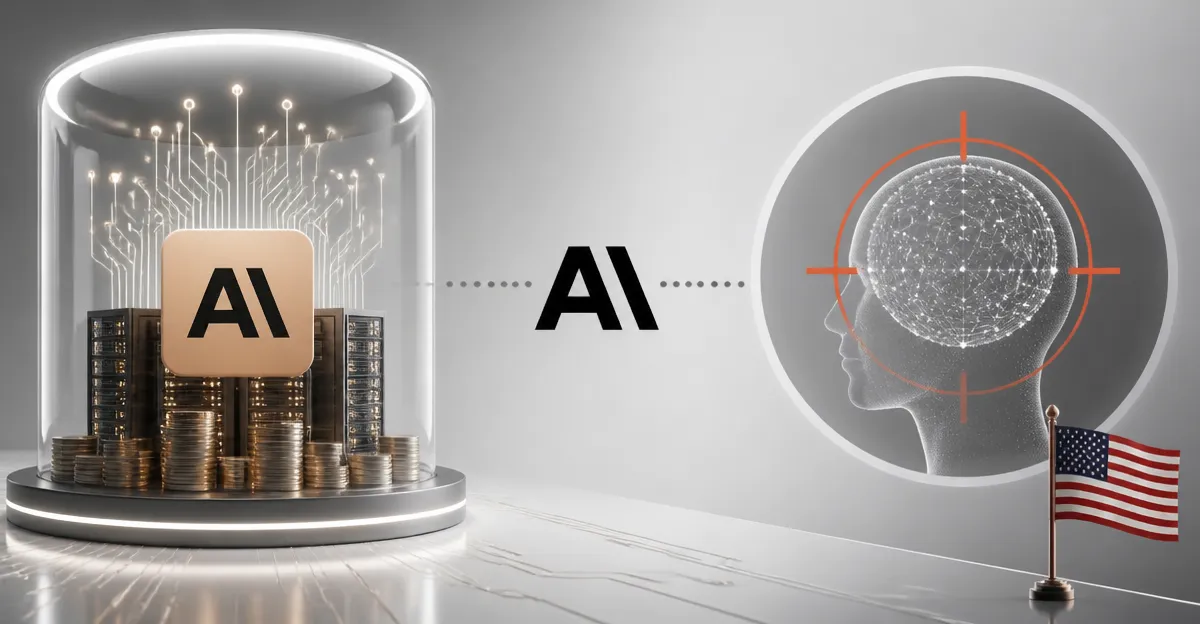
In the United States, Sam Altman has offered the government roughly 5% of OpenAI, structured like a sovereign wealth fund. The Financial Times reports that sources see it as an effort to secure political goodwill ahead of an IPO. While both cases involve state equity, their rationales diverge sharply.
The Indian government’s stake in Sarvam is framed as value capture, recovering public money spent on derisking innovation. This aligns with the Research Development and Innovation fund, which targets early-stage deep-tech startups. However, critics argue that equity ownership introduces conflicts that subsidies alone do not.
State equity creates a web of conflicting roles. The Ministry of Electronics and Information Technology (MeitY) writes AI rules, runs the subsidy mission, is a customer for AI products, and would now be a shareholder. A procurement decision favoring Sarvam could inflate the value of the state’s holding, while regulation disadvantaging a competitor could do the same.
Read: India Needs $10 Billion AI Investment to Join Global Front Ranks, Says Expert
These dynamics distort capital allocation. Investors may interpret government selection as an implicit guarantee, lowering Sarvam’s cost of capital unfairly. This tilts the playing field against other startups that did not receive similar backing. As one analyst noted, failure becomes politically sensitive, undermining the market’s ability to shift resources from mediocre to capable firms.
Strategic Overreach and Expanding State Interests
The rationale for state equity often starts with strategic sectors. Semiconductors, critical minerals, and telecom equipment are classic examples. The U.S. government’s stake in Intel, its position in rare-earth company MP Materials, and the golden share in U.S. Steel illustrate this trend. But the list keeps growing, from chips to steel in under two years.
In a contested technological order, the definition of “strategic” becomes elastic. Foundation models, satellite launch, and pharmaceutical precursors could all qualify. This expansion risks a state that takes equity wherever it feels exposed, not just where it is essential. For India, the question is whether Sarvam’s AI models meet that threshold.
The OpenAI proposal rests on a third rationale: public wealth creation through sovereign wealth funds. Altman’s stated goal is to share AI’s upside with ordinary Americans. But the Financial Times’ sources suggest the real intent is to blunt political blowback. This “purchase of goodwill” lacks both national security and fiscal justifications.
India’s case is different. The value capture argument has merit, as governments often subsidize risk while private firms reap returns. But equity is not the only tool. Repayable advances or milestone-linked grants can recover public money without the baggage of ownership. These instruments avoid the conflicts that come with being a shareholder.
Can Guardrails Make State Equity Viable?
If equity is unavoidable for strategic control, conditions are critical. The state should hold stakes through an independent, professionally managed fund, not a line ministry. It should be a passive investor with no board seats or veto rights. The regulating ministry must be separated from the holding entity.
Read: India’s AI Data Centre Boom Risks Water and Power Crises Amid Global Regulatory Shift
Every stake should have an exit horizon published at entry and performance conditions with real withdrawal provisions. Holdings and valuations must be disclosed annually. These measures do not make state equity a good idea, but they may render it viable where absolutely necessary.
For India, the Sarvam deal is a test case. The IndiaAI mission aims to build a sovereign AI ecosystem, but the means matter. As the global AI race intensifies, the line between strategic support and market distortion will be scrutinized. The government’s next moves will signal whether it prioritizes fair competition or picks winners through equity.