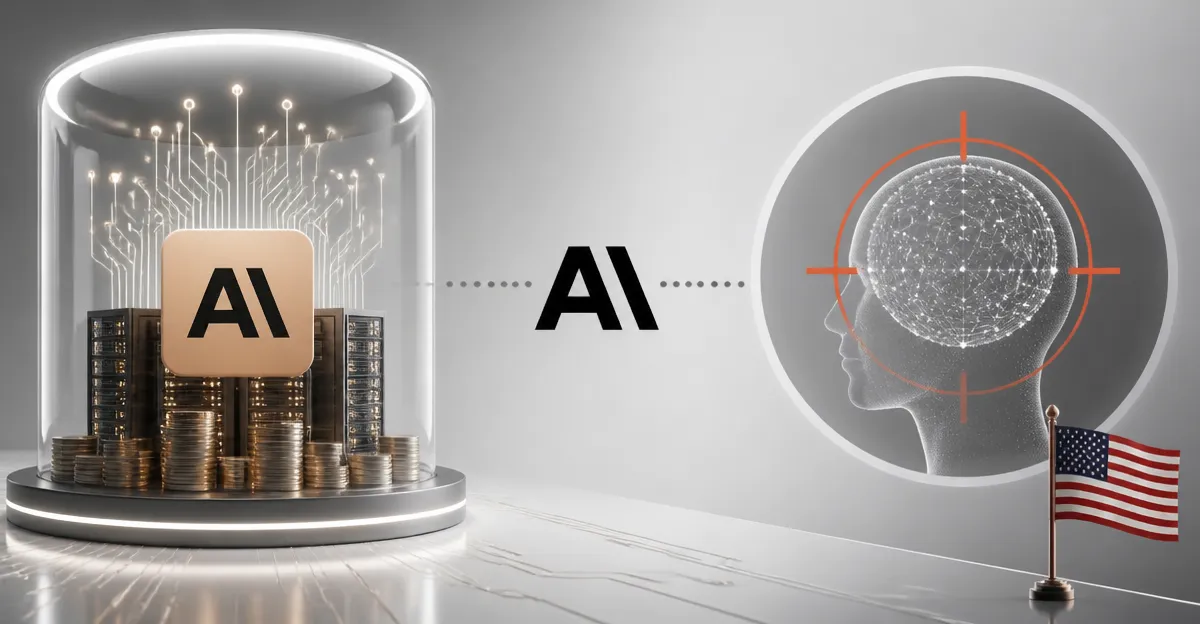
October 30, 2026, (Inside AI) — Anthropic's public filing for its planned initial public offering reveals a striking imbalance: the AI lab spent $9.7 billion on research and development in the first half of 2026, a 427% increase from the same period a year earlier. Yet within that surging budget, personnel costs appear to be growing faster than computing expenses, now accounting for perhaps a third of the research budget. For a company that sells automated coding tools, that ratio raises uncomfortable questions about efficiency and the role of human labor in AI development.
The S-1 registration statement, filed on October 26, comes as Anthropic positions itself as a leader in AI safety and enterprise applications. But the spending pattern suggests that building frontier AI remains a human-intensive endeavor, even as the company touts rising efficiency in its products. The prospectus does not break down personnel versus compute costs explicitly, but the implied shift toward human capital is notable. It challenges the narrative that AI companies can scale primarily through cheap computing power.
Why Human Costs Matter In An AI Boom
Anthropic's R&D spending surge mirrors the broader AI arms race, where firms compete for scarce talent and massive compute. But the company's emphasis on personnel may reflect the complexity of aligning advanced AI systems. Safety research, red teaming, and policy work require specialized experts who command high salaries. As Anthropic prepares for a public offering, investors will scrutinize whether these human costs translate into durable competitive advantages or become a drag on margins.
Industry observers note that Anthropic's approach differs from rivals like OpenAI, which has leaned heavily on Microsoft's cloud infrastructure. Anthropic's reliance on human expertise could be a differentiator in safety-critical applications, but it also exposes the company to talent market risks. The S-1 filing does not specify headcount, but the spending trend suggests aggressive hiring.
Read: AI boom reality check
"The AI lab's IPO prospectus touts rising efficiency, which makes sense for a firm selling robot coders," wrote Stephen Gandel in a Breakingviews commentary. "But spending on personnel seems to be rising relative to computing expenses, accounting for perhaps a third of 2026's research budget. It's a glass half empty for the humans."
Gandel's analysis highlights a paradox: Anthropic sells AI that automates coding, yet its own research budget is increasingly weighted toward human workers. That tension could intensify as the company scales. If AI tools become more capable, Anthropic might reduce its reliance on human coders, but for now, the human element remains central to its R&D.
The filing also comes amid heightened scrutiny of AI companies' financials. With Anthropic's R&D spending up 427%, investors will want to see a path to profitability. The company has not disclosed revenue figures, but its enterprise offerings and API access generate income. Balancing massive R&D outlays with revenue growth will be a key challenge post-IPO.
The Talent War's Hidden Costs
Anthropic's spending pattern is not unique. Across the AI industry, companies are paying premium salaries for machine learning engineers, researchers, and safety specialists. The demand for top talent has driven compensation packages into the millions for senior roles. For Anthropic, which emphasizes safety and reliability, the need for experts in alignment and ethics adds another layer of cost.
This human-centric spending could also signal that AI development is not yet as automated as some hype suggests. Despite advances in automated machine learning and AI-assisted coding, human oversight remains essential. Anthropic's own products, such as Claude, assist with coding but still require human direction and validation. The company's R&D budget reflects that reality.
As Anthropic moves toward its IPO, the market will weigh these human costs against the promise of AI-driven efficiency. If the company can demonstrate that its human-heavy R&D leads to superior products and safety, investors may reward it. But if personnel costs continue to outpace compute, margins could suffer. The S-1 filing provides the first detailed look at Anthropic's financials, and the spending mix will be a focal point for analysts.
Anthropic declined to comment beyond the filing. The company's IPO timeline has not been finalized, but the public filing suggests a listing could occur in the coming months. The AI sector's volatility and regulatory uncertainty add risk to the offering. Still, Anthropic's strong reputation in safety and its enterprise traction may attract investors.
For now, the prospectus paints a picture of a company investing heavily in its human capital, even as it builds tools to reduce human effort. That contradiction may be the defining challenge for Anthropic and its peers. As Gandel notes, it's a glass half empty for the humans, but for investors, the question is whether that glass will fill with profits or drain with costs.