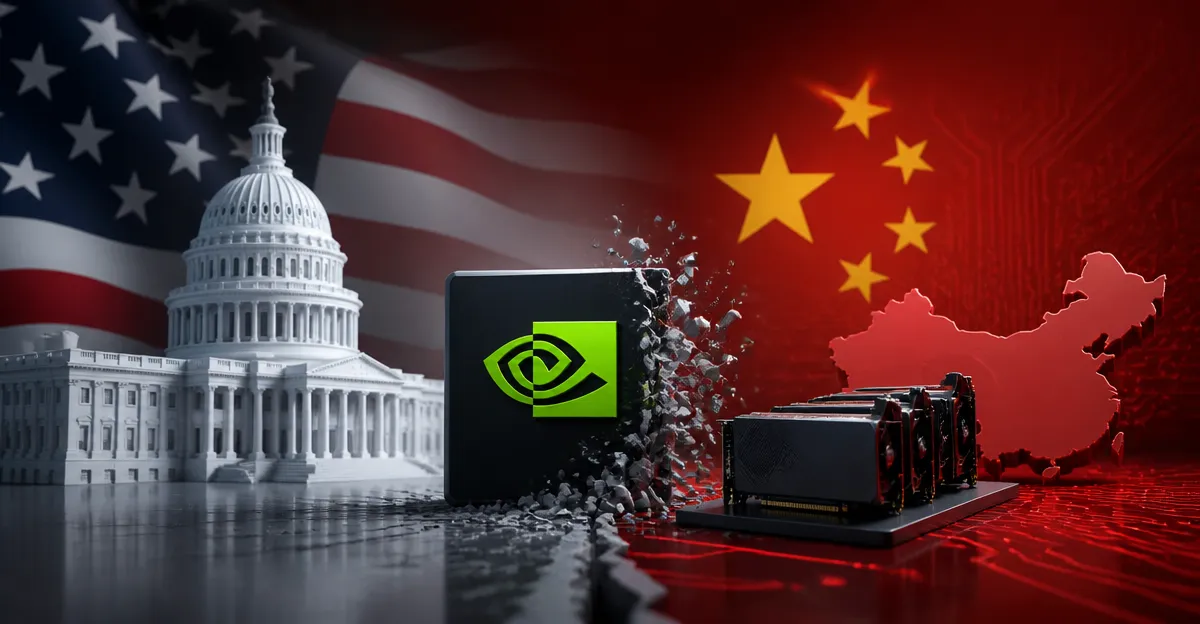
November 14, 2026, (Inside AI) — A scandal involving former Nvidia chief executive Jensen Huang and a woman suspected of being a Chinese intelligence operative has triggered a blame game in Washington, with lawmakers and officials now pushing for tighter restrictions on advanced chip exports to China. The affair, first disclosed in recent weeks, has raised questions about whether it exposed sensitive Nvidia information or created leverage that could have been exploited by foreign actors.
The central question under scrutiny is whether the relationship allowed a Singapore-based cloud provider to gain access to advanced Nvidia hardware that would otherwise be restricted under U.S. export controls. That detail has turned a personal scandal into a national security flashpoint, drawing in the Commerce Department, congressional committees, and industry rivals who have long argued that export loopholes are too wide.
Washington has spent four years tightening rules on the sale of high-end AI chips to China, including multiple rounds of restrictions on Nvidia's most powerful processors. The Bureau of Industry and Security has expanded licensing requirements and closed several workarounds involving third countries. Yet enforcement has lagged. The scandal now gives critics a concrete case to cite.
Nvidia has declined to comment on the personal matter. The company said in a brief statement that it maintains strict compliance with all export regulations and cooperates fully with government inquiries. Inside AI could not independently verify the identity or affiliations of the woman involved.
Several officials have spoken on condition of anonymity about internal discussions. One official described the affair as a security review trigger, not a criminal investigation at this stage. Another said the Commerce Department is examining whether the Singapore cloud provider received chips through a licensing exception or a re-export route.
The political reaction has been swift. Lawmakers from both parties have called for hearings. Some have demanded that Nvidia disclose any communications between Huang and the woman. Others want a broader review of how cloud providers in Southeast Asia obtain American AI chips.
Why Singapore Became The Export Loophole
Singapore has emerged as a major transshipment hub for advanced semiconductors. U.S. export rules allow chips to be sold to approved cloud operators in the city-state, but those operators must certify that the hardware will not be resold or accessed by restricted parties. Enforcement depends on self-reporting and periodic audits.
Critics argue that the model is too permissive. A single compromised executive relationship could undermine the entire certification chain. Nvidia's rivals, including AMD and Intel, have quietly lobbied for stricter cloud provider rules, though neither company has commented publicly on the Huang matter.
The scandal also revives a long-running debate about executive security. Former U.S. officials note that corporate leaders with access to sensitive technology are not subject to the same counterintelligence vetting as government employees. That gap has been flagged in previous cases involving chip executives traveling to Asia.
The timing is awkward for Nvidia. The company is navigating a leadership transition after Huang's departure, and it faces investor questions about governance. Shares have been volatile since the scandal broke. Analysts say the bigger risk is regulatory, not reputational.
One former Commerce official, who spoke on condition of anonymity, said the affair may accelerate a pending rule that would require cloud providers to disclose the identities of executives with access to controlled chips. The rule had been under review for months.
Inside AI's take: The real lesson here is not about one executive's private life. It is that export controls rely on trust in corporate gatekeepers, and a single personal vulnerability can expose a systemic gap. Washington has built a licensing regime that assumes good faith from cloud providers and chipmakers. The Huang affair shows that assumption is fragile. Expect lawmakers to use this case to push for mandatory disclosure and independent audits of cloud operators handling advanced AI hardware.
The White House has not issued a formal statement. The Commerce Department declined to confirm or deny any investigation. Nvidia's board has launched an internal review of executive security protocols. The woman at the center of the affair has not been publicly identified or charged.
For now, the blame game continues. Some point to Nvidia's lax internal controls. Others blame the Commerce Department for not closing the Singapore loophole earlier. A few argue that the media has overhyped a personal matter. What is clear is that the scandal has given new momentum to export control hawks in Congress.
Nvidia's next earnings call, scheduled for later this month, will likely face questions about the affair and its regulatory fallout. The company has not said whether Huang will participate. Industry groups are watching closely, aware that any new rule on cloud providers could affect sales across Southeast Asia.

Sofia spent years studying how machines parse human language before pivoting to cover the systems now rewriting it. She reads technical papers the way others read news and looking for what the numbers are actually saying beneath the headlines.