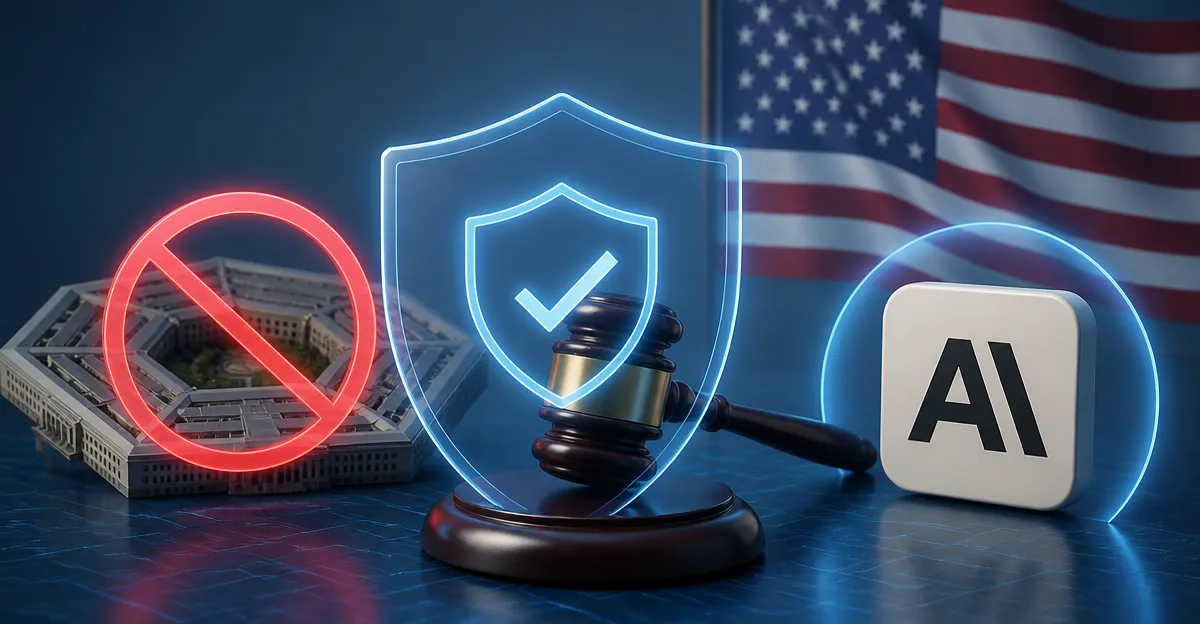
August 28, 2026, (Inside AI) — A federal judge has blocked the Pentagon’s blacklisting of Anthropic, the maker of the Claude AI chatbot, in a ruling that sharply curbs the military’s power to punish companies over their AI safety stances.
U.S. District Judge Rita Lin issued a 59-page order finding the Pentagon’s designation of Anthropic as a national security supply-chain risk was “illegal and baseless.”
The ruling marks a major setback for Defense Secretary Pete Hegseth, who took the unprecedented step after Anthropic refused to let the military use Claude for surveillance or autonomous weapons.
Anthropic had argued the designation was retaliation for its public opposition to battlefield AI, costing it billions in lost contracts and reputational harm.
First Amendment Shield Against Executive Overreach
Judge Lin rejected the government’s national security rationale, writing that “the empty invocation of national security is not a blank check to punish and retaliate against government critics.”
The judge found the Pentagon’s action likely violated Anthropic’s First Amendment rights by punishing the company for its stated views on AI safety.
Anthropic filed its lawsuit on March 9, alleging the government also denied it due process by not allowing the company to challenge the designation before it was applied.
The company said the label was inconsistent with the military’s own past praise of Claude, and that no U.S. company had ever been publicly designated under the obscure procurement statute before.
Contractual Dispute or Censorship by Another Name
The Justice Department countered that the designation stemmed from Anthropic’s refusal to accept contractual terms, not its views on AI safety.
Government lawyers argued that Anthropic’s restrictions could create uncertainty for the Pentagon and risk disabling military systems during operations.
But the court found the Pentagon’s justification unpersuasive, noting that the supply-chain risk label is designed to protect against foreign sabotage, not to compel private companies to abandon their ethical red lines.
Anthropic executives have said the blacklisting could cost the company billions of dollars and harm its reputation among enterprise and government clients.
The company maintains that current AI models are not reliable enough for autonomous weapons and that domestic surveillance would violate civil rights.
Anthropic has a second lawsuit pending in Washington, D.C. over a separate Pentagon supply-chain risk designation that could exclude it from civilian government contracts.
The ruling is likely to influence how the military approaches AI vendors that impose use restrictions, and it sets a precedent for judicial review of national security designations used against domestic companies.