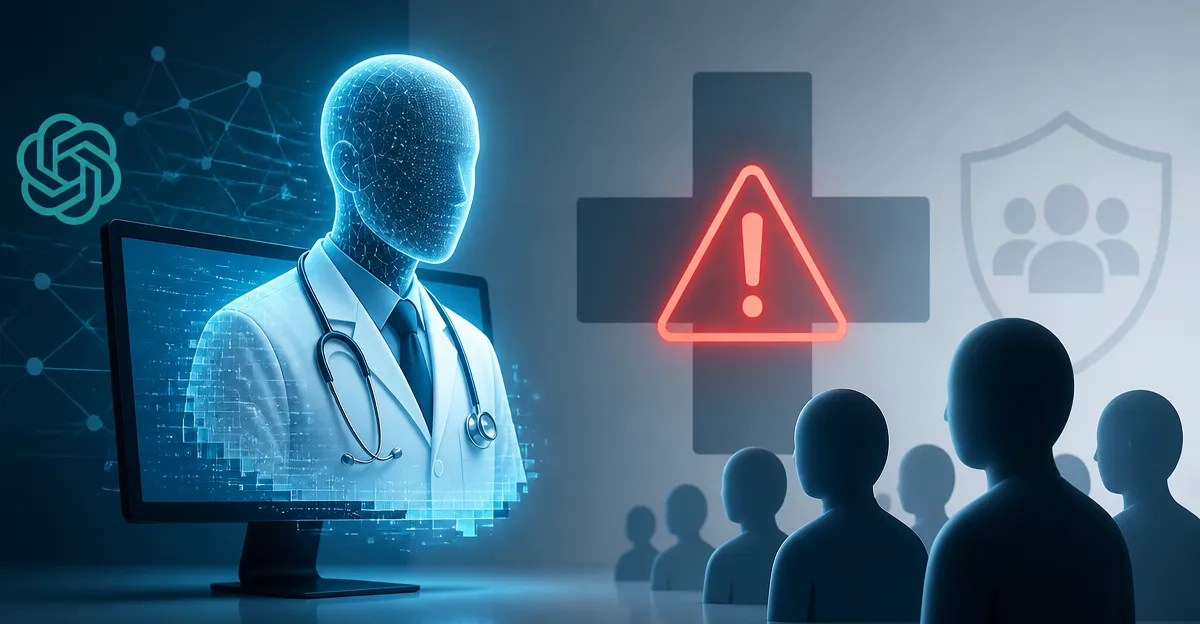
July 27, 2026, (Inside AI) — AI-generated doctors are flooding TikTok with dangerous medical myths, amassing millions of views and prompting urgent warnings from health leaders about a growing threat to public safety.
New research reveals that 40% of top health-related videos on the platform feature AI-generated content, with deepfake influencers posing as physicians to peddle disproven cancer claims and bizarre remedies. The findings, published this month by digital marketing agency Hallam, expose an industrial-scale exploitation of trust, where fabricated avatars push everything from microwaved plastic causing cancer to a fake anti-aging product called "Hyalethinap Plus Pro Max."
These accounts are not fringe outliers. For specific searches like “health tips,” 84% of top videos were AI-generated or AI-assisted. The average view count for these misleading clips hit 2.5 million, according to Hallam’s analysis of 1,198 videos across health, finance, and education topics.
Dr Emma Runswick, deputy chair of the British Medical Association council, warned that such accounts “peddle medical myths and promote so-called miracle cures.”
“Platforms like TikTok must do more to stop the rise of dangerous fake medical advice ... otherwise, it is the public who could be paying the price with their health and perhaps even their lives.” Dr Emma Runswick, deputy chair, British Medical Association council
The research highlights a disturbing trend: AI-generated physicians are co-opting the credibility of real doctors. One avatar claimed to have recommended “Hyalethinap Plus Pro Max” for years, asserting it combats “hair loss, skin weakening, brittle nails and joint pain” by boosting natural anti-aging molecules. The Guardian found no evidence such a product exists.
Other debunked myths include claims that deodorants and sleeping near phones cause cancer—all refuted by Cancer Research UK. Yet these videos thrive on TikTok’s algorithm, which amplifies engagement over accuracy. The platform removed examples flagged by the Guardian, but the scale of the problem remains vast.
Prof Frankie Swords, national medical director at NHS England, said the trend is fueling patient anxiety. “Many clinicians are reporting an increasing number of patients who feel worried and confused due to false advice that has been made solely for clicks.” Prof Frankie Swords, national medical director, NHS England
This crisis didn’t emerge in a vacuum. Last year, a Healthwatch England poll of over 7,000 adults found one in five turn to social media for health information. William Pett, interim director of policy at Healthwatch England, stressed the stakes: “Without the skills to distinguish reliable information from commercial hype or misinformation, [people] risk being misled in ways that can seriously affect their health.” William Pett, interim director of policy and public affairs, Healthwatch England
The findings align with broader concerns about health misinformation online, which the World Health Organization has labeled a global risk. TikTok says it partners with the WHO and NHS to provide reliable information and invests in AI literacy tools. A spokesperson dismissed Hallam’s report, calling it “not an accurate reflection of our platform,” but did not provide alternative data.
Deepfakes Exploit the Doctor-Patient Trust Gap
The core danger lies in the weaponization of trust. Alex Ruani, a health misinformation researcher at University College London, described the phenomenon as an “industrialised exploitation of trust.” She told the Guardian, “We're looking at industrialised exploitation of trust.” Alex Ruani, health misinformation researcher, UCL
Unlike text-based misinformation, AI-generated videos use realistic avatars in white coats, blending seamlessly with legitimate medical content. TikTok’s own AI labeling policies require disclosure, but enforcement is inconsistent. The Hallam study found many deepfake accounts lacked clear labels, making it nearly impossible for average users to discern real from fake.
Prof Victoria Tzortziou Brown, president of the Royal College of GPs, said misleading AI content carries a “real risk” of harm. The remedies promoted—like Coca-Cola mixed with onion for pain relief—are not just ineffective; they can delay proper treatment, worsening outcomes.
The NHS has long warned that health misinformation on social media is a “real threat to public health.” Yet the proliferation of AI tools like deepfake generators has lowered the barrier for creating convincing medical content at scale. A single operator can now produce hundreds of videos featuring different fake doctors, each tailored to exploit trending health fears.
TikTok’s response—removing examples post-publication—highlights a reactive rather than proactive approach. The platform’s spokesperson emphasized existing partnerships and technologies, but critics argue that without pre-screening high-risk content, the damage is already done by the time videos are taken down.
The Hallam study also examined “life-impacting” advice on finance and education, suggesting the problem extends beyond health. However, the medical domain poses unique dangers, where false claims can directly lead to physical harm. Researchers are now calling for mandatory watermarking of AI-generated content and stricter verification for accounts posing as professionals.
As AI-generated content becomes more sophisticated, the line between authentic and synthetic media will blur further. For now, the onus remains on platforms to safeguard users—and on users to approach viral health advice with skepticism.