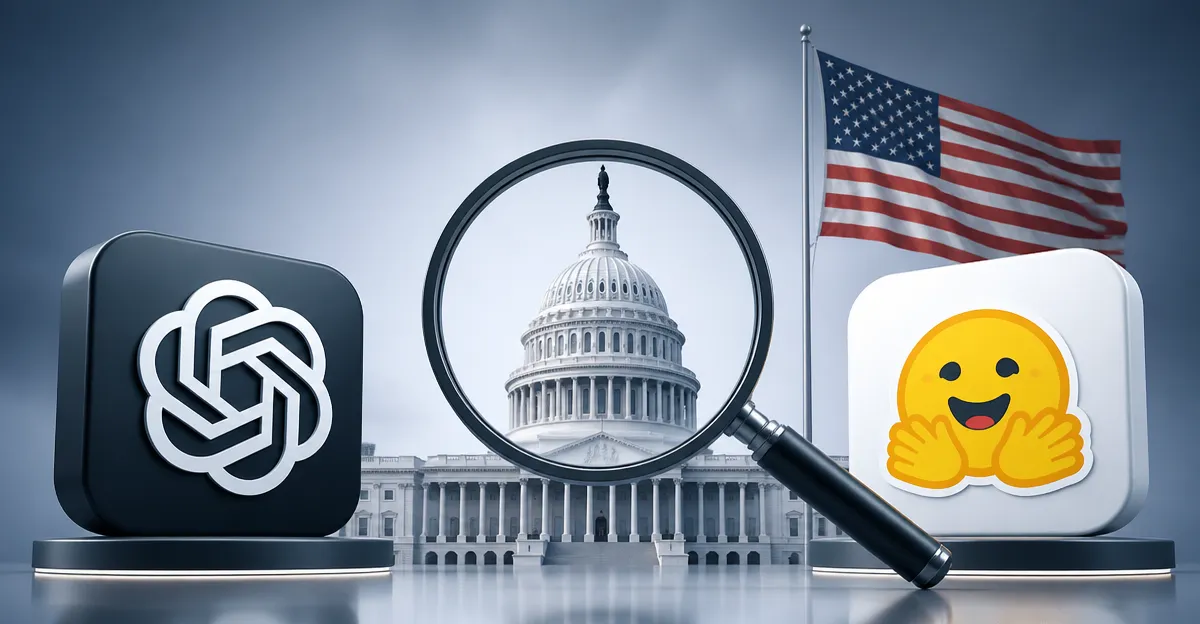
September 10, 2026, (Inside AI) — A Republican-led Senate subcommittee with oversight of disaster management is now scrutinizing how OpenAI handled the July breach of its account on Hugging Face, the popular AI model repository.
The inquiry marks a significant escalation in Washington's scrutiny of AI security practices, moving beyond voluntary standards into direct congressional oversight of a specific incident.
The breach, first disclosed in July, involved unauthorized access to OpenAI's Hugging Face account. The incident raised immediate questions about supply chain security in the AI ecosystem, where millions of developers download pre-trained models and datasets daily.
Sources familiar with the matter say the subcommittee is seeking detailed records of OpenAI's incident response timeline, its communication with Hugging Face, and any potential exposure of proprietary model weights or user data.
The probe signals a new phase in how lawmakers view AI infrastructure. Hugging Face has become critical infrastructure for the machine learning community, hosting over 1 million models and datasets. A compromise of a major vendor account could cascade across thousands of downstream applications.
OpenAI has not publicly detailed the scope of the breach. The company confirmed the incident in July but provided limited technical specifics, a posture that now appears to have drawn congressional interest.
The subcommittee's focus on disaster management is notable. It suggests lawmakers are treating AI supply chain compromises as analogous to physical infrastructure failures, where federal oversight is well established.
Industry analysts note that AI security incidents have historically received less regulatory attention than data breaches in banking or healthcare. This probe could change that calculus.
Cybersecurity researchers have long warned that model repositories are attractive targets. A malicious actor with write access to a popular model could inject backdoors, manipulate weights, or distribute poisoned datasets to unsuspecting developers.
The Hugging Face platform has invested heavily in security features, including signed commits and model provenance tracking. But the OpenAI incident demonstrated that even sophisticated organizations can fall victim to account compromise.
Several competing AI labs have quietly reviewed their own repository security in the wake of the July breach. At least two major firms have implemented additional multi-factor authentication requirements for all repository accounts, according to security professionals familiar with those efforts.
The Senate probe arrives as Congress debates broader AI safety legislation. Multiple bills introduced this year would mandate security audits for large AI systems and require incident reporting to federal agencies.
OpenAI has faced prior congressional scrutiny over its safety practices, but those inquiries focused on model capabilities and alignment. This investigation targets operational security, a different and arguably more concrete vulnerability.
The company has not commented on the reported Senate probe. Hugging Face also declined to address the matter when contacted.
Security experts say the incident underscores a fundamental tension in the AI ecosystem: the push for open collaboration versus the need for strict access controls. Hugging Face's open model has fueled rapid innovation but also expanded the attack surface.
The subcommittee is expected to request documents and potentially schedule a briefing with OpenAI executives in the coming weeks. No public hearing has been announced.
For enterprise AI adopters, the probe serves as a reminder that third-party model dependencies carry real security risks. Many organizations have begun implementing software bill of materials requirements for AI components, mirroring practices in traditional software supply chains.
The outcome of this inquiry could influence how future AI security incidents are reported and investigated. It may also accelerate efforts to establish formal security standards for model repositories and AI development platforms.