TikTok Tests AI Likeness Detection Tool for Creators in the United States

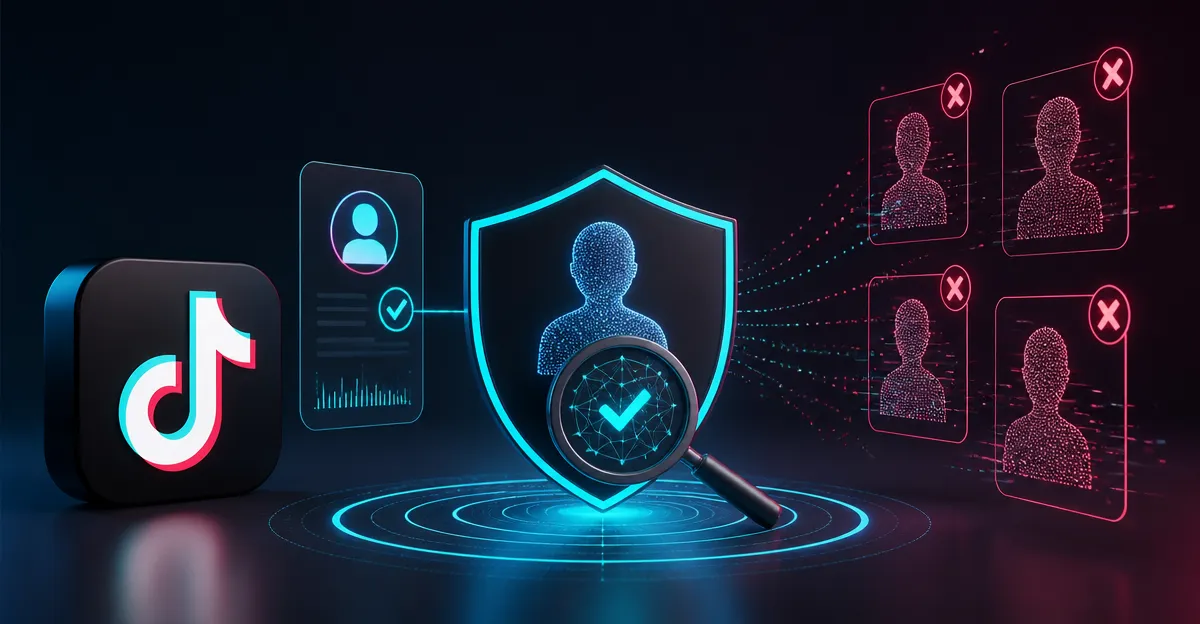
TikTok is testing a new tool that helps creators detect AI-generated videos using their face or likeness without consent. The opt-in feature requires identity verification and is currently limited to a small group of creators in the United States.

Last Updated: July 28, 2026 Editorial Process
Editorial Process
See more of Inside AI's trusted news by adding us as a preferred source on Google.
AI neural network visualization
Published on: July 18, 2026

July 18, 2026, (Inside AI) — TikTok is testing a new tool that lets creators detect AI-generated videos using their face or likeness without consent. The feature was first spotted by social media consultant Matt Navarra and later confirmed by Zachary Kizer, a TikTok US spokesperson.

The test is limited to a small group of creators in the United States. Creators must opt in and verify their identity through Jumio, a third-party verification company, using a real-time selfie and an ID check. Kizer said TikTok does not keep ID documents, and facial data is used only to match a creator's likeness against unauthorized AI-generated content.

Once verified, TikTok scans for AI-generated videos that may include the creator's face. If matches are found, creators can review them and report impersonation. This gives creators a direct way to combat deepfakes and unauthorized digital copies.

TikTok's move follows YouTube's expansion of its own likeness detection tool. YouTube's system uses a selfie-style scan to monitor for resembling videos. If a match is found, users can request removal. YouTube opened access to all eligible users over 18 after earlier tests with creators.

TikTok's opt-in approach stands out as platforms face mounting pressure over consent and AI-generated likenesses. Meta recently pulled a Muse Image feature after backlash over automatically accessing public Instagram photos to create AI images. TikTok's test puts verification and user control at the center, signaling that AI likeness detection is becoming a standard safety feature for major video platforms.

The tool remains a limited test with no announced wider rollout date. Its success may hinge on balancing creator protection with privacy, as the platform navigates the growing threat of AI-driven impersonation.

More from Inside AI

  • AI Safety

    Anthropic Report Details Russian Espionage and AI-Driven Cyberattacks

    September 11, 2026
  • AI Safety

    Altman Tells Staff OpenAI Is Open to Slowing AI Development

    September 11, 2026
  • AI In Business

    OpenAI Launches ChatGPT for Financial Services Industry

    September 11, 2026
  • AI In Business

    OpenAI Launches ChatGPT for Financial Services With GPT-6 Astra

    September 11, 2026
  • AI Policy & Regulation

    ACC Sues The L Suite for Training Chatbot on Copyrighted Legal Materials

    September 11, 2026
  • AI Hardware & Infrastructure

    Finland Risks Strained Power Supply After Google AI Deal, Opposition Warns

    September 10, 2026
  • AI Policy & Regulation

    OpenAI and GSA Announce Free ChatGPT Access for All U.S. Government Levels

    September 10, 2026
  • AI Hardware & Infrastructure

    Positron AI Hits $5 Billion Valuation After $875 Million Round

    September 10, 2026

Never Miss a Breakthrough

Join 50,000+ readers who get our daily AI intelligence briefing. No fluff, just what matters.

Inside AI is an independent publication covering artificial intelligence news, machine learning research, and the tools shaping the future of technology. No hype. Just what's happening in the AI world.

Topics

  • Artificial Intelligence
  • Machine Learning
  • Generative AI
  • Agentic AI
  • Vibe Coding
  • Prompt Engineering
  • AI Policy & Regulation
  • AI Hardware & Infrastructure
  • AI Tools
  • AI In Business
  • Robotics
  • Cybersecurity AI
  • AI Safety
  • AI Tools & Reviews (Coming soon)

Company

  • Editorial Standards
  • Privacy Policy
  • Terms of Service
  • Contact
  • About Us

Others

  • Press Releases
  • Features
  • Sponsored Content

© 2026 Inside AI. All rights reserved.

Designed by Blue Flare Digital