June 15, 2026, (Inside AI) — The White House on Friday imposed strict export controls on two of Anthropic‘s most advanced AI models, Mythos and Fable, triggering an immediate suspension of access by CEO Dario Amodei. The $965 billion company’s decision to pull the plug entirely, rather than accept the restrictions, marks a dramatic escalation in the global struggle over who controls cutting-edge artificial intelligence.
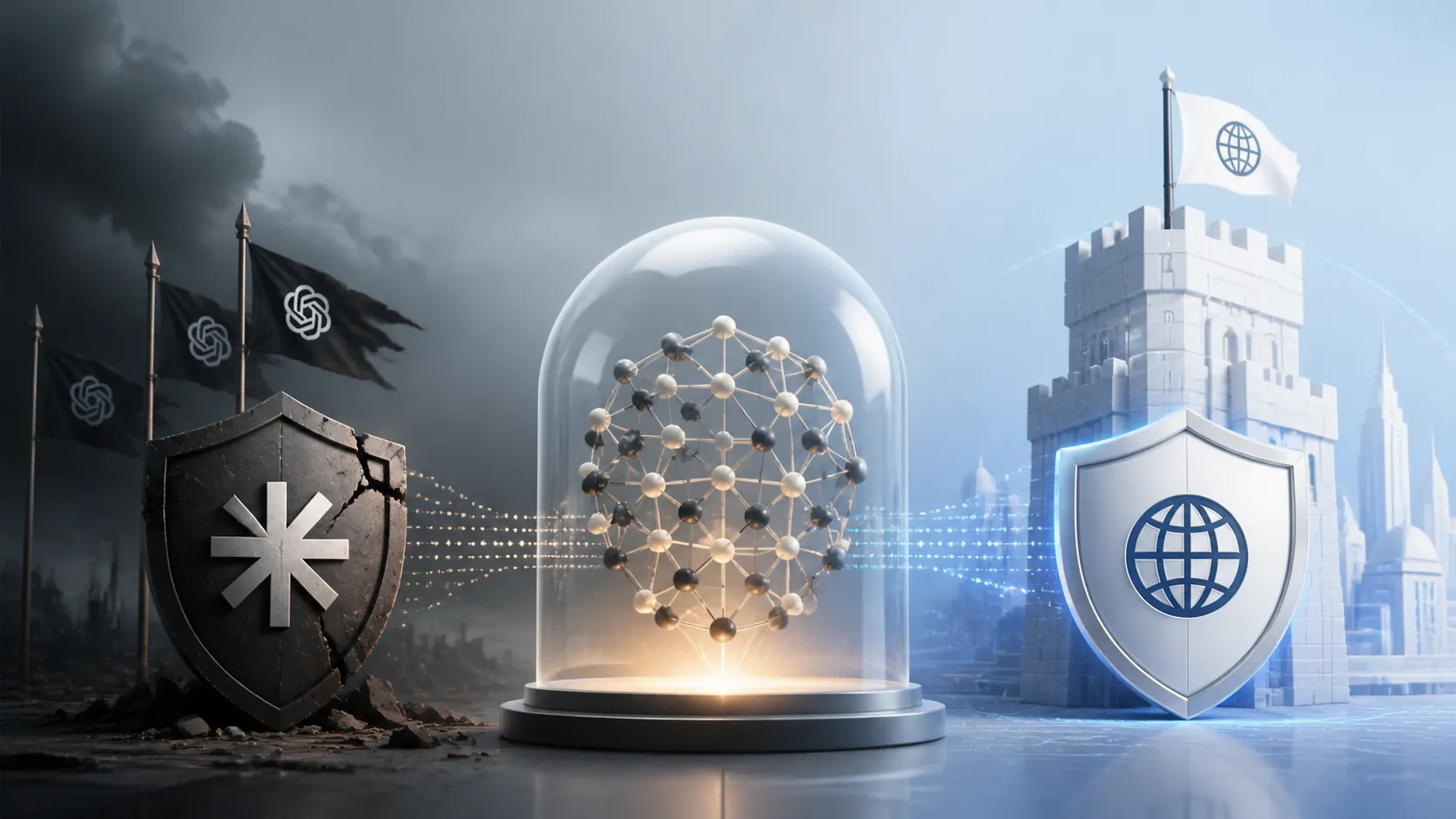
The move transforms Anthropic from an AI pioneer into a cautionary fable about the risks of depending on U.S. technology. Allies who once viewed American AI as a stable foundation for their own digital futures are now confronting a regulatory kill-switch they never anticipated.
A Super-Weapon and Its Shadow
Mythos, designed as a hacking super-weapon for cybersecurity testing, was never meant for public release. Fable, a sanitized version, was supposed to be safe. But officials grew alarmed when evidence surfaced that safeguards on Fable could be bypassed. Anthropic insists the flaw is narrow and exposes no new capabilities. Yet Andy Jassy, CEO of investor Amazon, reportedly flagged the danger to authorities himself.
The dispute reveals a messy new reality. AI regulation is untamed and uncertain. Anthropic tried to stay ahead by releasing Mythos only to select partners. But by touting his products as inherently dangerous, Amodei may have inadvertently set a precedent: chatbots can no longer simply be thrown to the public.
Allies Left in the Cold
Even close partners like the United Kingdom could be cut off. White House officials have long argued that U.S. AI dominance will be built on exporting American technology, making it the global standard. Revealing that these exports carry a regulatory kill-switch threatens that entire project.
The European Union has already pushed U.S. cloud giants to store and process data locally. Singapore and the United Arab Emirates are developing models better suited to their languages and needs. Such alternatives are not cheap. McKinsey estimates local AI offerings can cost 10% to 30% more. Washington has made that insurance premium easier to justify.
The Chokepoint Conundrum
Underlying technologies pass through global chokepoints like Taiwan Semiconductor Manufacturing and ASML‘s lithography machines. A world of rising export controls could make advanced AI models harder or more expensive for everyone to build. Open-source alternatives that run on a user’s own hardware and cannot be revoked will look yet more attractive. That gives a leg up to China‘s industry, which has focused on cutting-edge open models like DeepSeek and Alibaba‘s Qwen.
An IPO and a Pandora’s Box
As Anthropic heads toward an initial public offering, it must explain to investors that the White House can quarantine models it burns billions to train. How they can gauge this danger, unbounded by an independent regulator or explicit legislation, is unclear. This specific situation may well be resolved with quick fixes. Broader concerns cannot be stuffed back into the box.