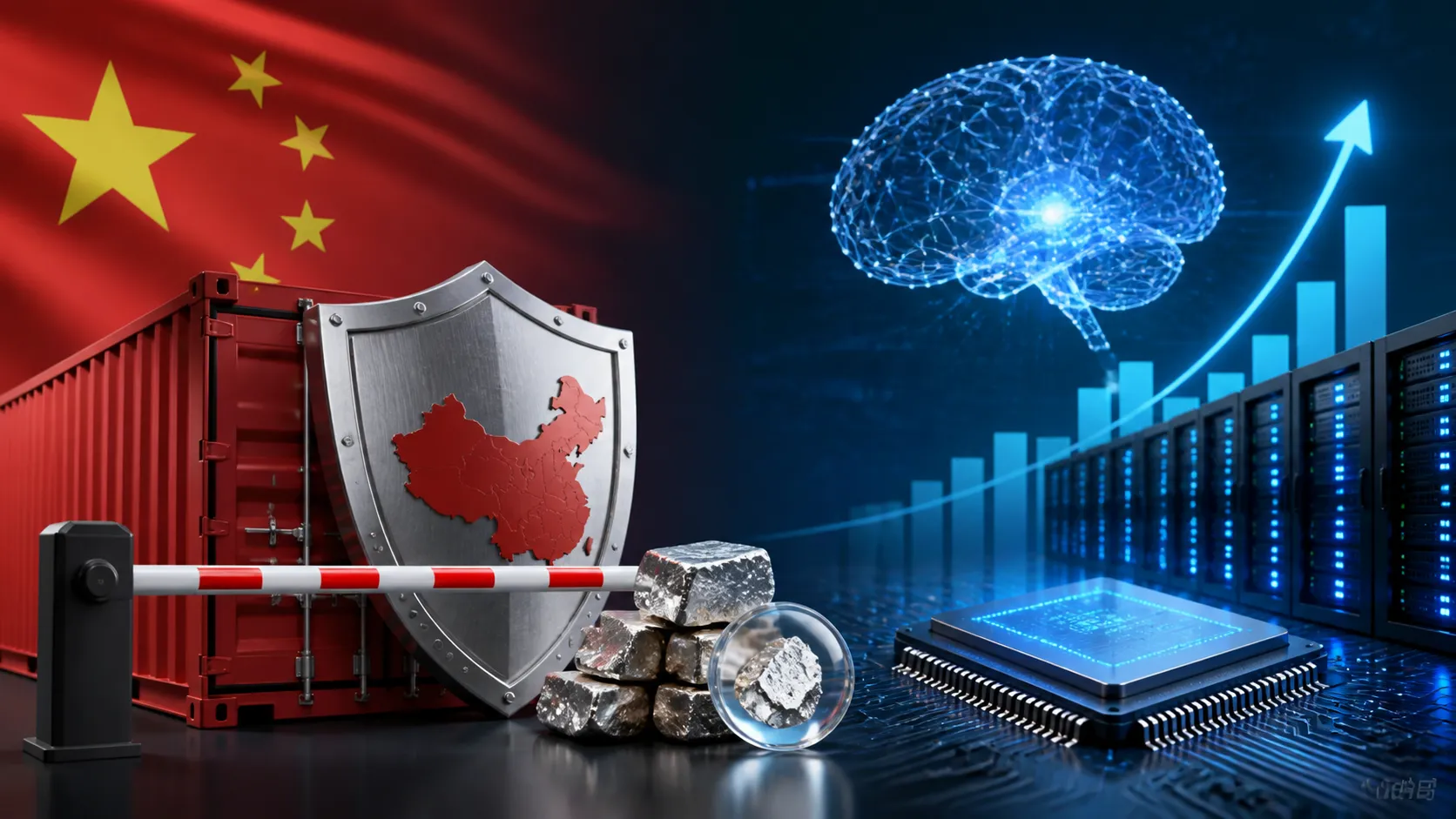
June 19, 2026, (Inside AI) — China is intensifying scrutiny of indium exports, triggering fears among global buyers that the critical metal may soon face formal export controls. Indium is essential for producing indium phosphide, a compound used in high-speed optical chips for AI data centers.
The Growing Friction Over a Niche Metal
Chinese customs officials are now demanding detailed end-user information from some buyers, a shift from past practices. A European purchaser reported being asked for the first time this year to disclose the location and identity of end users. A North American buyer described the approval process as “tense,” with clearance times stretching from same-day to several days.
China produces nearly 70% of the world’s indium, a byproduct of zinc refining. While the metal itself is not yet on Beijing’s export control list, indium phosphide was added in February 2025. That move already prompted Coherent CEO Vincent Mattera to travel to Beijing with President Donald Trump in May to address the hurdles for next-generation data centers.
Read: China’s AI and Rare Earth Leverage Exposes Fragile U.S. Ties, Scholar Warns
The extra scrutiny is not uniform. Two other buyers told Reuters they had heard of the checks but not experienced them. No shipments have been confirmed blocked, but the industry is on edge. A second North American buyer called the reporting requirements
“a precursor to restrictions or outright bans on exports.”
China’s Ministry of Commerce did not respond to a request for comment on a public holiday. All buyers spoke on condition of anonymity due to the sensitivity of the issue.
Why Indium Matters for AI’s Future
Indium phosphide chips enable faster data transmission with lower power consumption than traditional silicon, making them vital for scaling AI infrastructure. As demand for AI computing surges, securing indium supply has become a strategic priority. The U.S. Defense Logistics Agency earlier this year sought proposals to stockpile up to 403 tons of indium over three years, highlighting its vulnerability.
China’s pattern of using export controls as trade leverage is well established. The new customs inquiries may serve to map global supply chains and identify chokepoints, a tactic used by other nations with export regimes. For an industry reliant on a single dominant supplier, even procedural delays signal rising geopolitical risk.
Read: World Doesn’t Have Enough Copper for AI Demand, Prices Hit Record
What Comes Next for the Supply Chain
Industry analysts note that while formal restrictions haven’t materialized, the psychological impact is already reshaping procurement strategies. Some buyers are exploring alternative sources, though indium production outside China remains limited. Recycling and substitution efforts are in early stages but could accelerate if controls tighten.
The situation underscores the fragility of critical mineral supply chains in an era of AI-driven demand. For now, the market watches every customs query as a potential harbinger of a broader crackdown.