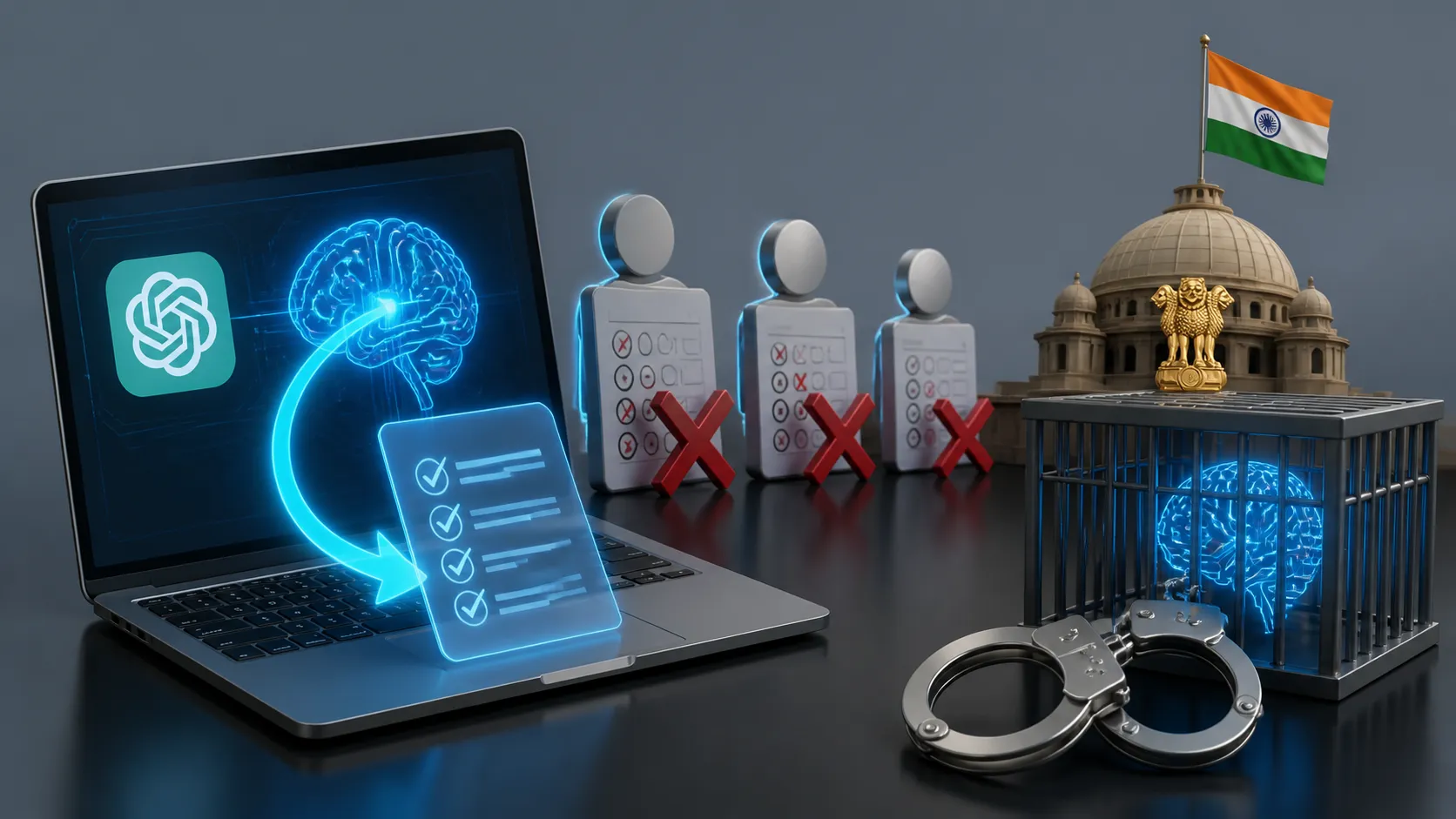
June 22, 2026, (Inside AI) — A mining engineer used artificial intelligence chatbots to breach the Rajasthan Public Service Commission (RPSC) recruitment portal and withdraw three competitors’ applications, police said. Rahul Kumar Meena, 27, allegedly manipulated the provisional list for the 2024 Assistant Mining Engineer exam to boost his own chances.
Ajmer Police arrested Meena after a complaint from RPSC Deputy Director Raghuveer Gurjar. The case reveals how readily available AI tools can be weaponized for cybercrime, even by those without deep technical expertise.
The provisional list, issued in July 2025, had 78 candidates for 24 vacancies. Meena ranked second among six Scheduled Tribe candidates vying for one reserved post. He withdrew the application of top-ranked Ashish Meena, then removed two more names—the fourth and sixth candidates—to avoid suspicion.
Deputy SP Shamsher Khan said an SMS alerted the three candidates that their applications were withdrawn per their request. One, Ravi, contacted RPSC, triggering an investigation. The withdrawal option had already closed, officials noted.
Read: Chhattisgarh Cops Inflated Salaries for 3 Years Until AI Audit Caught Them
A single Single Sign-On (SSO) ID—a unique digital identity issued by Rajasthan—was used for all three withdrawals. The ID, registered under a fake name Rahul Sinha, shared an IP address with Meena’s login credentials. That IP traced back to the Steel Authority of India Limited (SAIL) compound in Jharkhand, where Meena had worked since 2019.
Police tricked Meena’s brother into revealing his Dausa address by posing as a courier service. Meena told investigators he used AI chatbots like ChatGPT, Grok, and DeepSeek to manipulate website code. He exploited ‘inspection mode’ crawling and VPNs but left digital trails. The Department of Information Technology and Communication (DoIT&C) has since patched the security gaps.
AI as a Double-Edged Sword in Cybercrime
Meena’s method underscores a growing trend: AI chatbots lowering the barrier for cyberattacks. He lacked formal hacking skills but leveraged conversational AI to probe and alter the portal’s code. Security experts warn that such tools democratize malicious activity, enabling novices to exploit vulnerabilities once reserved for skilled hackers.
Yet the case also highlights AI’s forensic value. Investigators cross-referenced IP addresses, SSO logs, and device fingerprints to build a timeline. The digital evidence left by AI-assisted actions proved damning. This duality—AI as both weapon and shield—defines modern cybersecurity challenges.
India has seen a 23% rise in AI-enabled cybercrimes since 2024, per national cybercrime data. Recruitment portals remain prime targets due to high stakes. The RPSC breach echoes a 2023 incident where a candidate used AI to scrape exam patterns, but direct sabotage marks an escalation.
Khan stated: “Rahul was looking to get married and settle in Rajasthan after spending so many years in Jharkhand. He was mistaken to think that he would come up to the first position after the first merit candidate was removed.”
Read: AI-Generated Fake Cleanup and GPS Spoofing Cost Gurgaon Officials Their Jobs
Meena remains in custody until June 25. Seized devices will undergo forensic analysis. The disputed vacancy ultimately went to Ashish Meena, whose application was wrongfully withdrawn. The case raises urgent questions about AI ethics, portal security, and the psychological pressures driving such acts.