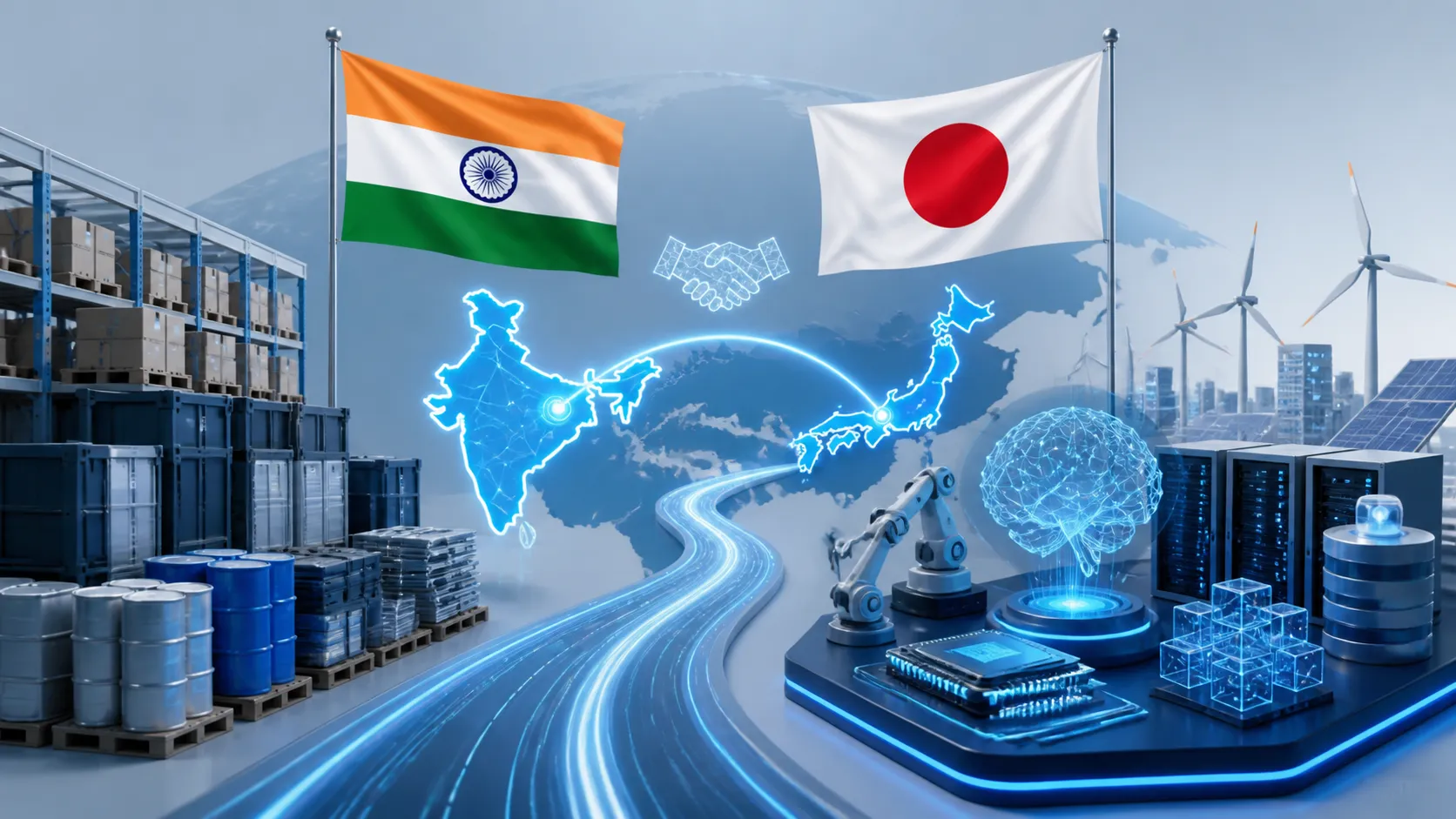
July 3, 2026, (Inside AI) — India and Japan unveiled a dual-pronged roadmap on Thursday to fortify energy resilience and build a joint artificial intelligence ecosystem. The announcements came during Japanese Prime Minister Sanae Takaichi’s visit to New Delhi, where she met with Indian Prime Minister Narendra Modi. The two sides signed joint statements covering strategic oil stockpiling, maritime transport, and AI cooperation aimed at the Indo-Pacific and Global South.
The energy pact tasks India’s Ministry of Petroleum and Natural Gas and Japan’s Ministry of Economy, Trade and Industry with collaborating on national stockpiling systems, industry reserves, and coordination with producing countries. The Ministry of External Affairs said the cooperation will include emergency response and market stabilization mechanisms. The two nations also reaffirmed their commitment to strengthening the voice of oil and gas-consuming countries amid supply disruptions.
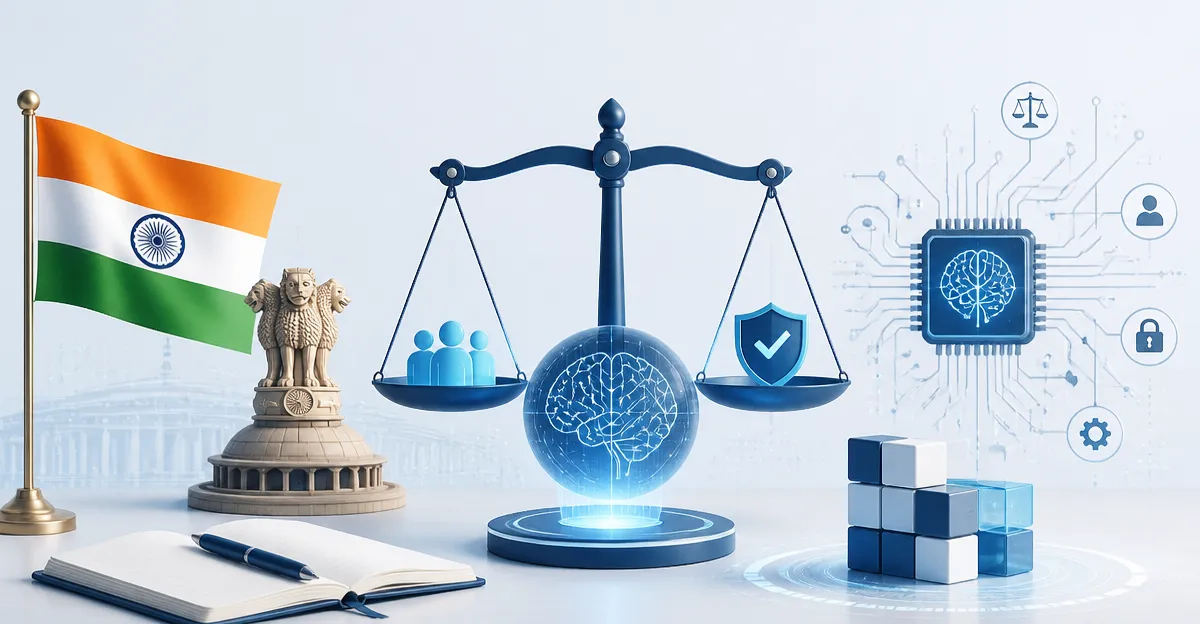
On AI, the leaders committed to building a safe, secure, trustworthy, inclusive, human-centric, sustainable, accountable, and innovation-oriented AI ecosystem. They agreed to align efforts with India’s MAHASAGAR vision and Japan’s updated Free and Open Indo-Pacific strategy. The joint statement said they would work with like-minded countries to support resilient and inclusive AI development in the Indo-Pacific and the Global South.
The Energy-AI Nexus: Stockpiles and Semiconductors
The parallel announcements reflect a growing recognition that energy security and AI supremacy are intertwined. AI data centers consume massive electricity, and Japan’s push into semiconductor fabrication—part of its 17 strategic investment areas—requires stable power. India’s expanding digital infrastructure faces similar demands. By linking oil stockpiling with AI collaboration, the two nations are hedging against future shocks that could cripple tech growth.
Japan’s POWERR Asia initiative and India’s South Asia energy support role will now include joint maritime transport resilience for oil and gas. The joint working group on petroleum and natural gas will share knowledge and explore opportunities. This operational layer is critical: during the 2022 energy crisis, Asian importers competed for spot LNG cargoes, driving prices to record highs. Coordinated stockpiling could dampen such volatility.
The AI statement explicitly mentions the New Delhi Declaration from the India AI Impact Summit in February 2026, which advocated “AI for All.” Both leaders endorsed the principle that AI should benefit all humanity and improve public service delivery. This framing positions the partnership as a counterweight to US-China tech bipolarity, though details on joint research funding or data-sharing protocols remain absent.
Investment Targets Mask Implementation Gaps
The economic backdrop is ambitious: a target of 10 trillion yen in Japanese investment into India over the next decade. Modi noted 120 new business agreements in the past year and $10 billion in committed Japanese investments. Takaichi emphasized co-creation of growth through investment and innovation, tying it to Modi’s Viksit Bharat 2047 goal. Yet past India-Japan infrastructure projects have faced delays—the Mumbai-Ahmedabad bullet train is years behind schedule.
For AI, the roadmap lacks specifics on talent exchange, compute infrastructure sharing, or regulatory alignment. Japan’s AI strategy focuses on trustworthy systems, while India’s approach emphasizes inclusion and scale. Bridging these philosophies will require concrete working groups, not just ministerial statements. The joint working group on petroleum offers a template, but no equivalent body was announced for AI.
Regional context adds urgency. China’s AI exports to the Global South are growing, and the US is pushing its own digital infrastructure through the Indo-Pacific Economic Framework. India-Japan AI cooperation could offer a third way, but only if it moves beyond declarations to funded programs. The mention of “like-minded countries” hints at expanding the partnership to Australia or ASEAN nations, but no timeline was given.
Takaichi’s statement captured the strategic framing: “This is economic growth. I am committed to realising a strong economy and aiming to enhance Japan’s supply capability and technological capabilities through investment in 17 strategic areas. Prime Minister Modi launched Viksit Bharat, a national goal to become a developed nation by 2047 and is strongly driving India’s growth. In this way, we share the goal of making our countries strong and prosperous through investments in the future.”