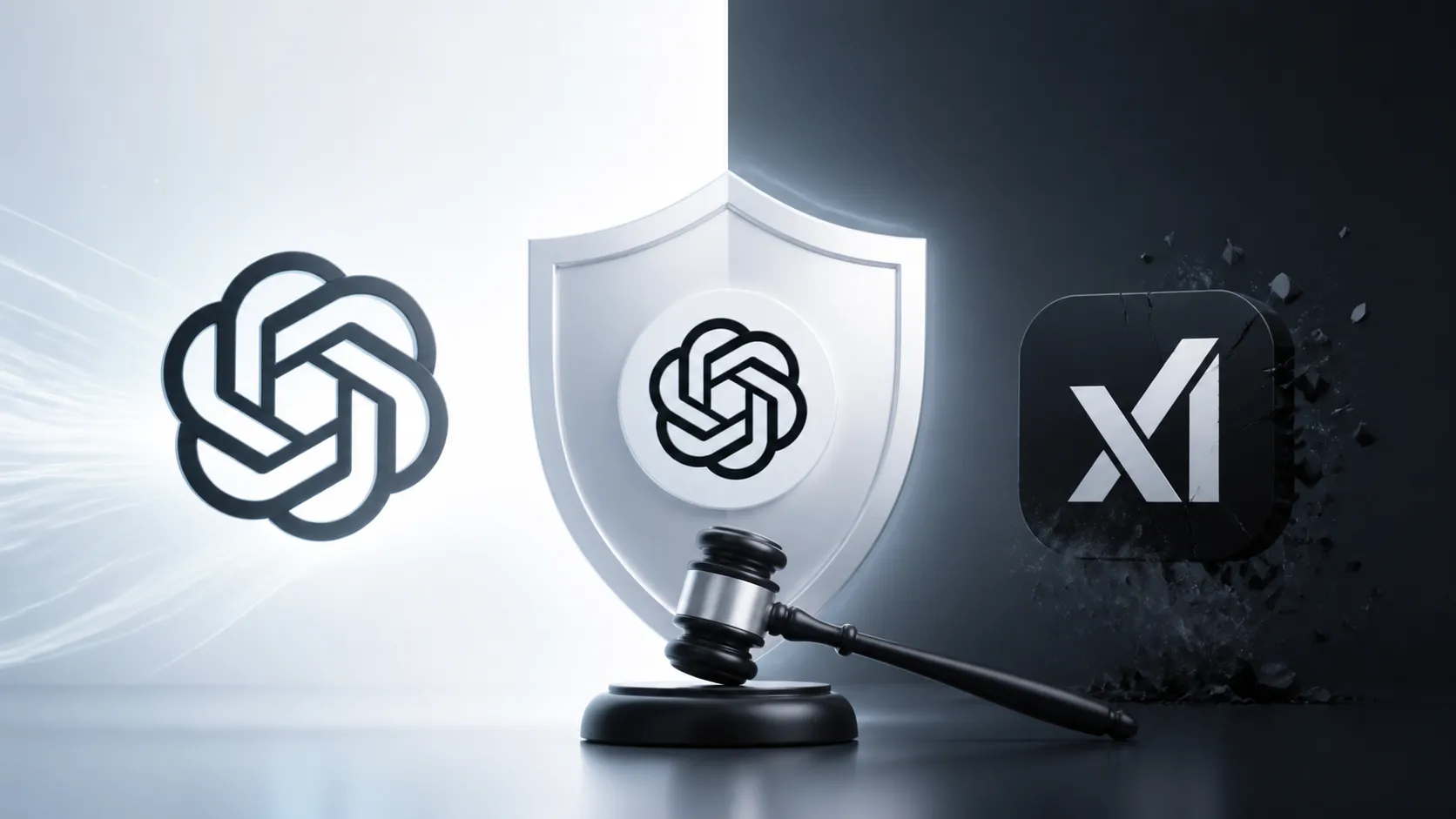
June 16, 2026, (Inside AI) — A federal judge has permanently dismissed a trade secret lawsuit brought by Elon Musk’s xAI against OpenAI, dealing a decisive blow to the high-profile legal clash between two artificial intelligence rivals. U.S. District Judge Rita Lin ruled that xAI failed to prove OpenAI induced former xAI engineer Xuechen Li to steal proprietary information or that Li disclosed any secrets during a recruitment presentation.
The Core Ruling and Its Immediate Fallout
The case, filed last September in San Francisco, accused former xAI employees of taking confidential source code tied to the Grok chatbot when they joined OpenAI. Judge Lin had already dismissed an earlier version of the lawsuit in February, but this time she closed the door with prejudice, calling any further amendments “futile.”
The ruling underscores the steep evidentiary bar for trade secret claims in the fast-moving AI sector. xAI, which operates under Musk’s SpaceX umbrella, alleged that OpenAI’s hiring practices amounted to a coordinated effort to siphon competitive intelligence. Yet the court found no concrete link between Li’s presentation and actual misappropriation.
What xAI Alleged and Why It Crumbled
At the heart of the dispute was the claim that departing engineers carried away sensitive materials related to Grok, xAI’s conversational AI. The lawsuit pointed to a presentation Li gave while being courted by OpenAI, suggesting it revealed xAI’s technical playbook. But Judge Lin determined that xAI never demonstrated the information qualified as a trade secret under the law, nor that OpenAI knowingly used any illicitly obtained data.
Read: Nobel Laureate John Jumper Exits Google DeepMind for Anthropic in AI Talent War
Legal experts note that such cases often hinge on forensic evidence of data exfiltration, which xAI apparently lacked. Without proof of actual disclosure or improper inducement, the complaint collapsed under its own weight.
The Broader AI Talent War Heats Up
This dismissal arrives amid an escalating battle for AI talent, where poaching and rapid job-hopping are common. Musk himself co-founded OpenAI in 2015 before departing and later launching xAI as a direct competitor. The rivalry has since spilled into public spats and multiple lawsuits, including a separate Musk-led challenge to OpenAI’s for-profit pivot.
Industry observers see the ruling as a cautionary tale: companies must secure robust non-disclosure agreements and technical safeguards before litigation. “Trade secret cases are notoriously hard to win without a smoking gun,” said one IP attorney not involved in the case. “Judges expect more than suspicion.”
Neither xAI’s lawyers nor OpenAI immediately responded to requests for comment. The decision leaves OpenAI free to continue its aggressive hiring without the cloud of this particular legal threat, while xAI must regroup after a stinging courtroom loss.
Read: Alphabet Stock Tumbles $225B After Top AI Exits to OpenAI and Anthropic
For now, the ruling reinforces a legal landscape where ambition and talent mobility often outpace the ability of courts to police corporate espionage claims in AI.