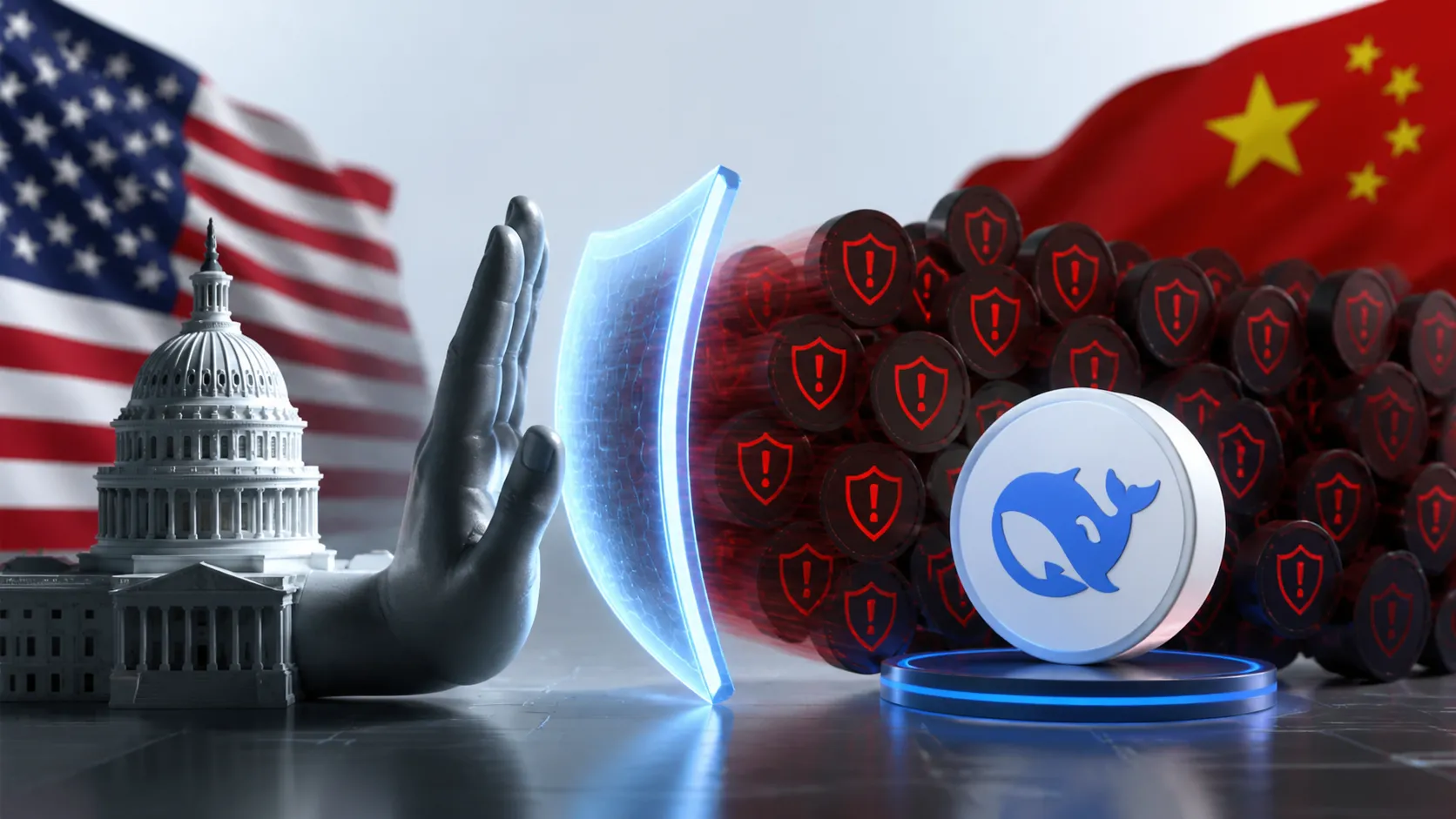
June 17, 2026, (Inside AI) — The U.S. government has paused plans to add Chinese AI startup DeepSeek, memory chipmaker CXMT, and over 100 other firms to a trade blacklist, two sources told Reuters. The delay stems from Trump administration efforts to avoid worsening tensions with Beijing.
A List Frozen in Time
The Commerce Department’s Entity List has not seen new additions since October 2025. That marks the longest gap in more than a decade. DeepSeek, CXMT, and dozens of other companies cleared an interagency review last year but await publication.
Philip Luck of the Center for Strategic and International Studies likened the list to a game. “The Entity List is like whack-a-mole and you’ve got to keep whacking the moles,” he said.
DeepSeek’s Alleged Missteps
DeepSeek’s low-cost AI model shook the tech world in January 2025. A senior State Department official later said the startup supported China’s military and intelligence. It also tried to use Southeast Asian shell companies to get advanced U.S. chips illegally.
Read: DeepSeek Hiring Spree in China Aims to Double Staff, Seeks Newcomers for AGI Push
This year, Anthropic found a campaign by DeepSeek and two other Chinese AI labs. They tried to extract capabilities from its Claude AI platform. OpenAI warned lawmakers that DeepSeek targeted its models too.
CXMT and Other Targets
CXMT is China’s top memory chipmaker. The Defense Department designated it a Chinese military company under Biden. Commerce considered blacklisting it over a year ago. U.S. firms cannot ship goods to listed entities without a license, which is usually denied.
At least 75 Chinese entities in advanced semiconductor production and AI modeling were slated for blacklisting. Others supplied Russian drones found in Poland. Some sold restricted Nvidia chips to Chinese universities. Makers of military drones and robot dogs were also targeted.
Why the Holdup?
Since late 2025, Jeffrey Kessler, under secretary of commerce for industry and security, has avoided listing Chinese parties. He fears escalating U.S.–China tensions, sources said. The inaction reveals a larger problem at the Bureau of Industry and Security under Trump.
Kevin Kurland, a former Commerce official, criticized the freeze. “The fact the U.S. hasn’t put any companies on the Entity List since October demonstrates that trade policy is overshadowing the use of a critical national security tool,” he said.
Regulatory Gaps Emerge
The bureau promised a replacement for a Biden-era rule on global AI chip access. That replacement never came. The old rule is not enforced. This loophole may let chips reach Chinese companies outside China. The bureau said it uses many tools daily to combat bad actors but did not comment on specific cases.
What Comes Next
Read: US Lawmakers Cast China as AI ‘Supervillain’ in Global Race
The interagency committee includes Commerce, Defense, Energy, State, and sometimes Treasury. It approved the companies, but Commerce has not published them. Without new listings, U.S. technology may reach adversaries who could use it against America, Luck warned. The delay leaves suppliers unaware of risky customers and keeps critical tools on the shelf.