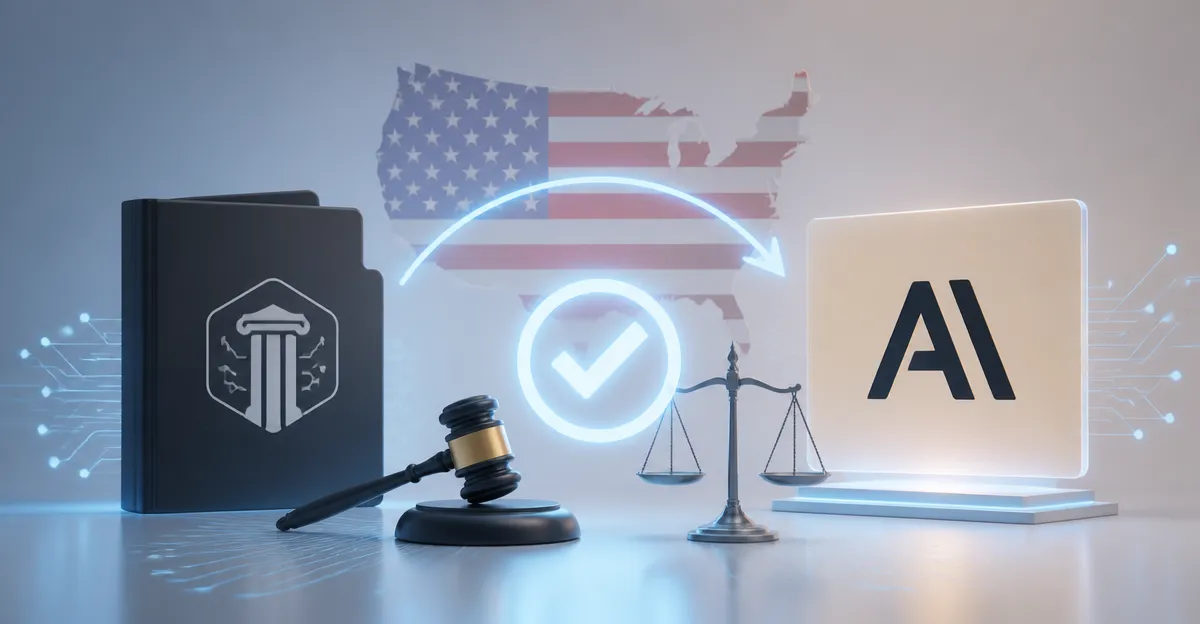
July 7, 2026, (Inside AI) — A legal technology startup has voluntarily dismissed its lawsuit against the United States government after federal officials rescinded restrictions on access to Anthropic’s most advanced AI models, Fable and Mythos. The case, filed in a Washington, D.C. federal court, challenged rules imposed by the U.S. Department of Commerce that limited the startup’s ability to use these frontier models.
The startup, which develops AI-powered tools for legal research and document analysis, argued the restrictions were arbitrary and harmed its business. The government’s reversal came without public explanation, but sources familiar with the matter suggest it followed internal reviews of export control policies. The dismissal was filed on July 6, 2026, ending a months-long legal standoff.
This resolution marks a significant moment for the AI industry, where access to cutting-edge models is increasingly governed by national security concerns. Anthropic’s Fable and Mythos models represent the latest in language and reasoning capabilities, placing them at the center of a global debate on AI regulation.
The Core of the Conflict: Export Controls on AI
The restrictions stemmed from the Commerce Department’s Bureau of Industry and Security (BIS), which added Anthropic’s Fable and Mythos models to its Entity List in early 2026. This move required U.S. companies to obtain special licenses to provide access to these models, citing risks of misuse by foreign adversaries. The legal tech startup, which relied on cloud-based API access, found itself blocked without warning.
In its lawsuit, the startup claimed the BIS failed to provide adequate justification and that the rules violated the Administrative Procedure Act. The company argued that its domestic operations posed no export risk, yet it was caught in a broad regulatory net. The government’s decision to lift the curbs effectively moots the case, but it leaves unresolved questions about how such controls are applied.
Anthropic, known for its safety-focused approach, has not commented on the lawsuit. However, the company has previously emphasized the need for responsible deployment. Industry observers note that export controls on AI models are a blunt instrument, often ensnaring innocent parties while doing little to stop determined adversaries.
Wider Implications for AI Governance
The case highlights a growing tension between innovation and security. As AI models become more powerful, governments worldwide are grappling with how to prevent their misuse without stifling progress. The U.S. has led with export controls, but critics say these measures lack transparency and consistency.
Legal experts point out that the startup’s victory may be pyrrhic. While access is restored, the underlying regulatory framework remains unchanged. Future restrictions could emerge with little notice, creating uncertainty for businesses that depend on frontier AI. The episode also underscores the vulnerability of small firms in navigating complex federal rules.
Meanwhile, the European Union is advancing its AI Act, which takes a risk-based approach, and China has implemented strict licensing requirements. The U.S. approach, by contrast, relies heavily on ad hoc export controls, leading to a patchwork of rules that can shift with political winds.
The startup’s legal team issued a brief statement:
“We are pleased that the government has restored our access, but the process revealed deep flaws in how these decisions are made. Clarity and due process are essential for American innovation.”
Anthropic’s Fable and Mythos models are designed for complex reasoning tasks, making them valuable for legal analysis, scientific research, and strategic planning. Their restriction had immediate effects on the startup’s product offerings, which relied on the models’ ability to parse dense legal texts and generate nuanced summaries.
The BIS has not issued a formal statement on the reversal, but a spokesperson confirmed the restrictions were lifted after a “routine review.” This lack of transparency has fueled calls for reform. Industry groups, including the Software Alliance, have urged the government to establish clearer criteria for AI export controls.
Looking ahead, the case may influence pending legislation on AI governance. Lawmakers are considering bills that would mandate impact assessments and public reporting for high-risk AI systems. The startup’s experience could serve as a cautionary tale for crafting rules that balance security with economic vitality.
For now, the legal tech firm can resume its work, but the episode serves as a reminder that in the age of AI, access is never guaranteed. As one industry analyst noted, “The models are the new oil, and everyone is fighting over the pipelines.”