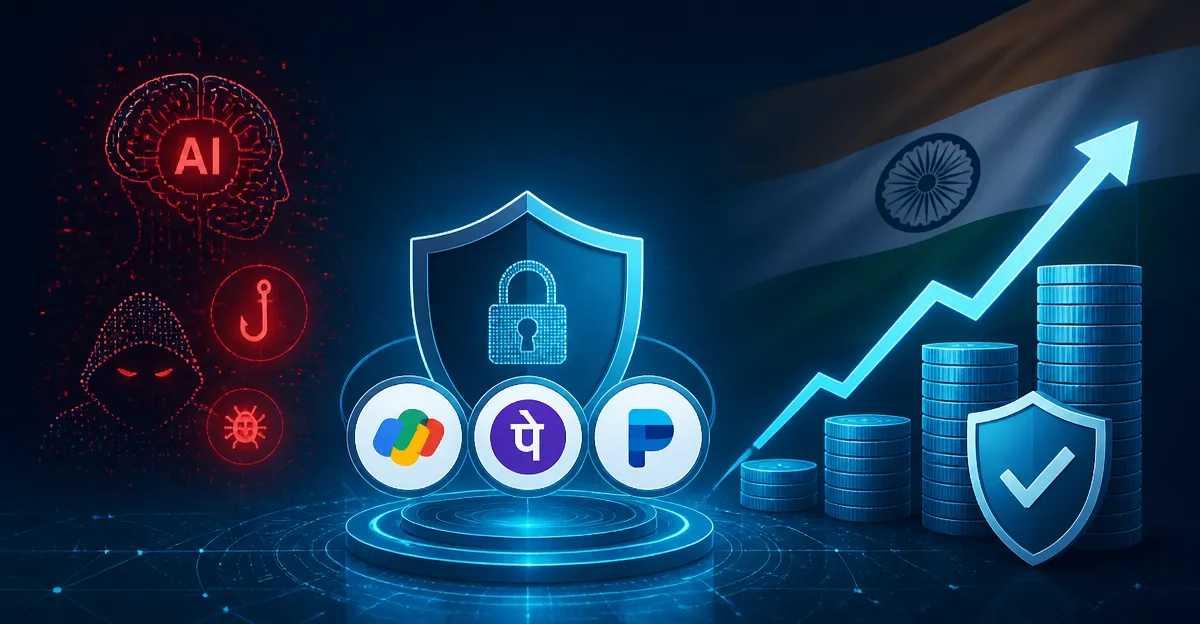
August 12, 2026, (Inside AI) — India’s real-time payments backbone is under new pressure, and the culprit is not traditional fraud rings but frontier artificial intelligence. Operators of Unified Payments Interface platforms have privately warned the government that security costs are ballooning, driven by emerging AI systems that can outmaneuver existing defenses.
The firms specifically cited Anthropic’s Mythos Preview as a threat vector, arguing that increasingly capable AI tools demand a step change in investment to protect the network. The warnings came during closed-door meetings where the industry reiterated its long-standing demand for a merchant discount rate on UPI transactions to offset mounting expenses.
This is the first time a specific next-generation AI model has been named in connection with UPI security risks, moving the debate from hypothetical to operational. Mythos Preview, Anthropic’s latest experimental release, has demonstrated advanced reasoning and planning capabilities that security researchers say could be weaponized for social engineering, synthetic identity fraud, and real-time payment manipulation at scale.
The timing is critical. UPI processes over 15 billion transactions monthly, a volume that makes it a high-value target. While the National Payments Corporation of India has built robust fraud detection layers, the industry’s private admission suggests those layers are being tested by AI that learns and adapts faster than rule-based systems can be updated.
Read: Z.ai’s GLM-5.3 Nears Anthropic’s Mythos 5 in Cyber-Defence Tests
AI Arms Race Hits Transaction Rails
The concern is not theoretical. Cybersecurity firms have documented a 40% rise in AI-assisted fraud attempts on payment platforms globally in the past year. In India, the Indian Cyber Crime Coordination Centre reported a 300% jump in UPI-related fraud complaints since 2024, though it has not broken out what share involved AI. The industry’s private flagging of Mythos Preview suggests the threat is now acute enough to warrant direct government intervention.
Anthropic’s model, still in limited preview, is designed to handle multi-step tasks with minimal human guidance. Security experts warn that such autonomy could automate the entire fraud chain: scraping personal data from breaches, generating convincing phishing messages in regional languages, and executing transactions across multiple mule accounts in seconds.
The industry’s push for MDR is not new. UPI transactions have been zero-cost for users since 2020, with the government subsidizing the infrastructure. But banks and payment firms argue that without a revenue stream, they cannot sustain the escalating cybersecurity arms race. The AI threat, they contend, makes the need for sustainable funding urgent.
Mythos Preview: A Known Unknown
Anthropic has not publicly commented on the UPI industry’s concerns. The company has previously stated that Mythos Preview includes safety mitigations and is being released gradually to researchers. However, the model’s capabilities are precisely what make it dangerous in adversarial hands. Unlike earlier AI, it can chain together complex instructions, reason about obstacles, and even write its own code to bypass security filters.
A senior security architect at a major Indian bank, speaking on condition of anonymity, said: “We are seeing probes that look like automated reconnaissance. The patterns are too fast, too adaptive for human operators. It’s either a very sophisticated botnet or an AI agent testing our perimeter.”
The government has so far resisted reintroducing MDR, fearing it could slow UPI adoption. But the AI threat may force a recalibration. The Reserve Bank of India has separately warned about AI risks in its latest Financial Stability Report, noting that “adversarial AI could undermine the integrity of digital payment systems.”
Read: India’s AI Cyber Threat Gap Widens as Autonomous Attacks Rise
For now, the industry’s private meetings signal a shift from quiet concern to explicit alarm. Whether that translates into policy change will depend on how policymakers weigh the abstract risk of AI-enabled fraud against the concrete benefits of a free payments network.
Meanwhile, global regulators are watching. The Bank for International Settlements recently urged central banks to develop AI-specific stress tests for payment systems. India’s experience with UPI, the world’s largest real-time payments platform, could become a bellwether for how AI threats reshape the economics of digital public infrastructure.