July 3, 2026, (Inside AI) — A new breed of romance scam is exploiting real-time AI deepfake technology to impersonate Dubai’s Crown Prince Hamdan bin Mohammed, known as Fazza, leaving victims emotionally and financially devastated.
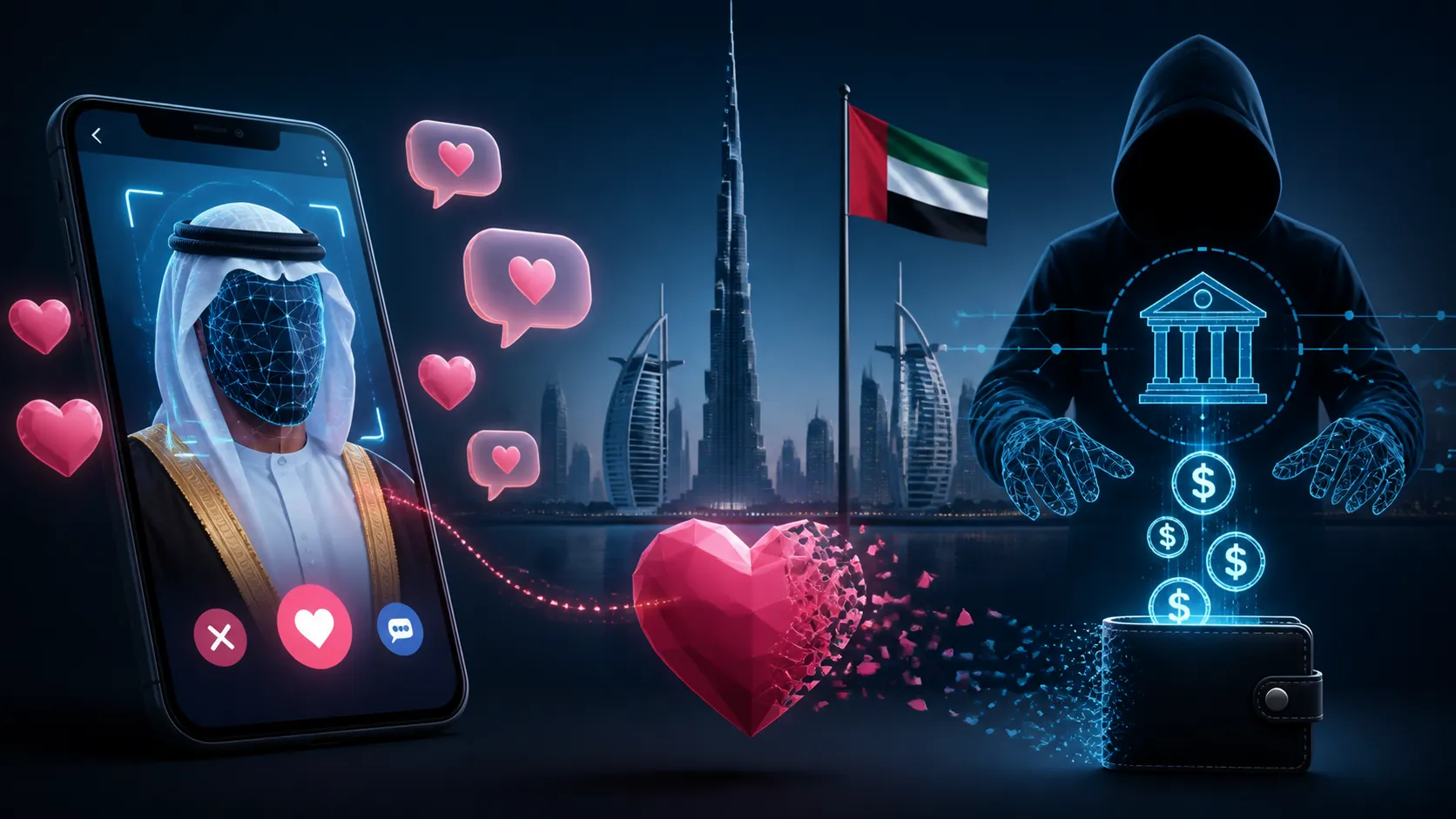
Fraudsters are using live face-swapping tools to pose as the royal during video calls, building trust through constant messaging before requesting money. One victim, a Filipino domestic worker named Maria, described the experience as a “love spell.”
Agence France-Presse obtained a recording of a WhatsApp video call showing the scammer’s lifelike appearance, with lip movements synced to speech—though the voice did not match the prince’s. Researchers have traced some operations to crime syndicates in Nigeria.
The scam begins on dating sites, where victims encounter profiles using stolen images of Fazza. Conversations quickly move to encrypted apps like WhatsApp, where fraudsters deploy AI models capable of real-time face-swapping, a technique previously limited to high-budget productions but now accessible via open-source tools.
Read: Singaporean Man Traumatized by AI-Generated Family Photos with Ex-Schoolmate
“He kept on messaging me even when I was sleeping,” Maria said. “It felt like there was a love spell that connected our minds.”
This case highlights a dangerous evolution in cyber fraud. Traditional romance scams relied on static photos and text; now, deep learning algorithms can animate a target’s likeness in real time, making deception far more convincing. The technology behind such scams often uses generative adversarial networks (GANs) to map facial expressions onto a source video, requiring only a single image of the target.
Security experts warn that the barrier to entry has collapsed. Tools like DeepFaceLive and Avatarify, originally designed for streamers, are being repurposed by criminal networks. These applications run on consumer-grade hardware, enabling scammers to conduct multiple video calls simultaneously.
The financial impact is severe. The U.S. Federal Trade Commission reported that romance scams cost victims $1.3 billion in 2025, with a median loss of $4,400. Cases involving deepfakes are harder to trace because victims are less likely to report them due to embarrassment.
Law enforcement faces significant challenges. The cross-border nature of these crimes, with perpetrators often in West Africa and victims in Asia or the Middle East, complicates investigations. Interpol has launched a dedicated task force, but arrests remain rare.
Tech platforms are scrambling to respond. Meta recently expanded its deepfake detection systems to Messenger and WhatsApp, but end-to-end encryption limits proactive scanning. Meanwhile, Dubai’s media office has issued warnings about impersonation scams, urging the public to verify identities through official channels.
Read: Trump Shares AI-Altered Obama Images in US Political Deepfake Escalation
For victims like Maria, the scars are deep. “I lost my savings and my trust in people,” she said. Her story is a stark reminder that in an age of synthetic media, seeing is no longer believing.