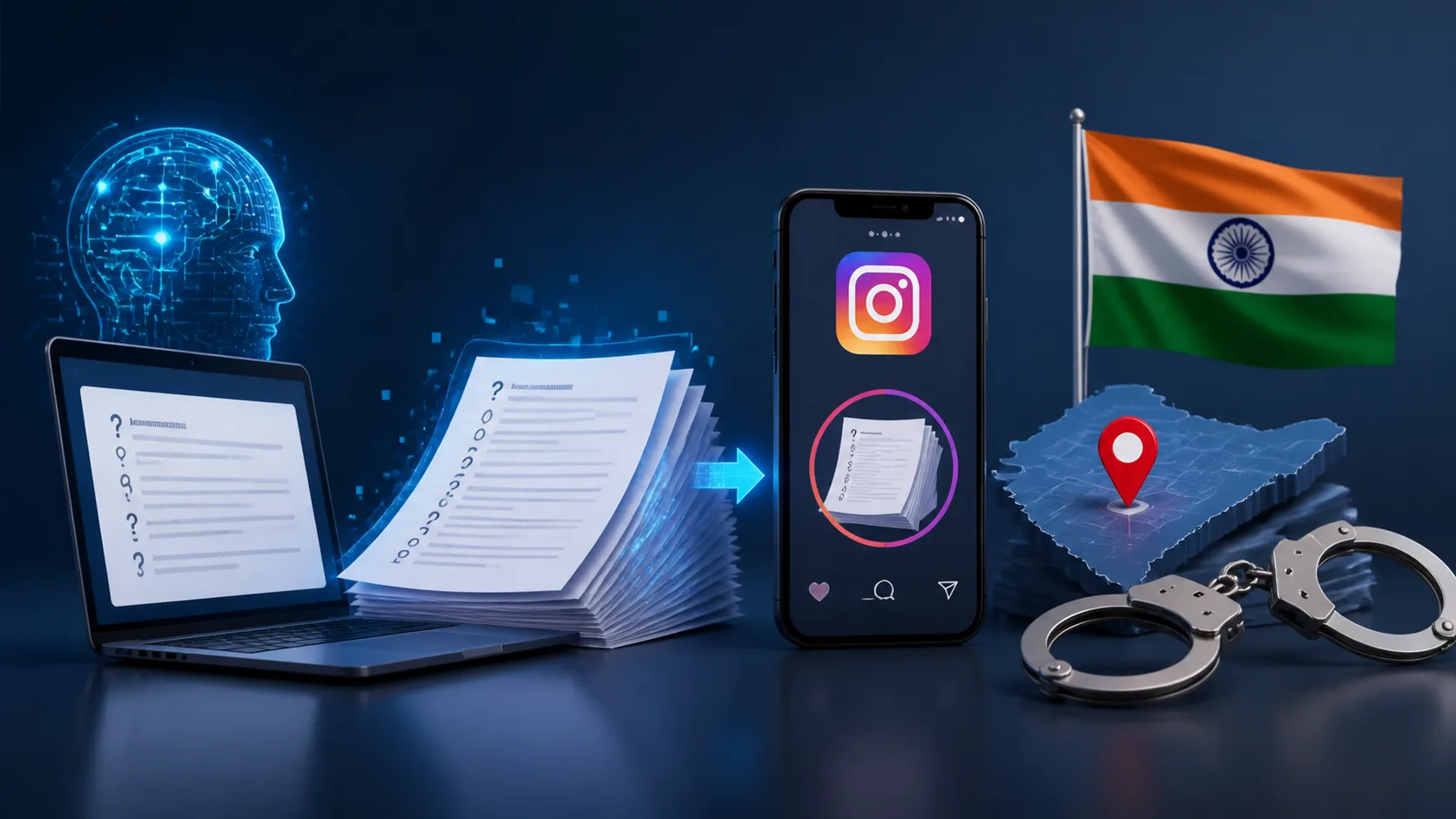
June 22, 2026, (Inside AI) — A 19-year-old law student in Indore, Akshay Malviya, was arrested for allegedly selling AI-generated question sets to NEET aspirants on Instagram, falsely claiming they were leaked exam papers. Police said Malviya used tools like ChatGPT to create the content, charging students Rs 50 to Rs 200 via UPI.
The arrest followed a tip from Rajasthan’s Kota police, a major coaching hub. Malviya operated an Instagram account advertising exclusive access to the National Eligibility cum Entrance Test (NEET) paper, directing students to payment links. Investigators estimate 20 to 35 students may have paid for the fake papers.
A senior Crime Branch officer stated:
“We arrested one person who was spreading false claims on Instagram that he had access to the NEET examination paper. During investigation, it was found that he had no access to any original paper. He used AI tools, including ChatGPT, to generate questions and sold those question sets to students by presenting them as leaked papers.”
Read: AI Use Slashes Chinese Students’ Exam Scores by 20% in 30-Month Study
The generated PDFs blended old NEET questions, public study material, and AI output, packaged as authentic papers. Police seized Malviya’s phone and devices, uncovering PDFs, chats, and transaction records. A case was filed under the Information Technology Act.
Authorities kept the operation quiet until after the NEET retest to avoid panic. The investigation now probes whether Malviya acted alone or as part of a broader network exploiting social media platforms.
AI-Generated Deception in a High-Stakes Exam Environment
The scam highlights how generative AI tools can be weaponized to exploit anxious students. By leveraging ChatGPT, Malviya rapidly produced plausible question sets, lowering the barrier for fraud. This case underscores a growing trend of AI-enabled misinformation in education, where synthetic content mimics official materials.
Competing viewpoints note that while AI detection tools are improving, they struggle to identify context-specific fakes like exam papers. Some experts argue for proactive education on AI literacy among students, while others call for stricter platform moderation. The incident also raises questions about Instagram’s role in facilitating such scams through easily created accounts and payment links.
Historically, exam paper leaks in India have relied on human insiders. The AI twist marks a shift, as no actual breach was needed—only the illusion of one. This mirrors earlier cases where AI-generated text was used for phishing or fake news, but applied to the education sector’s vulnerabilities.
Read: ChatGPT Tricked into Generating Disturbing Images with Simple Prompt
Broader Security Crackdown and Exam Integrity
The arrest comes amid heightened scrutiny after the NEET-UG 2025 exam on May 3 was canceled due to alleged leaks in Rajasthan, triggering a CBI probe. Three subject experts involved in paper-setting have been arrested. Ahead of the retest, the Centre blocked Telegram, citing its use by cheating syndicates.
Investigators warn that fake leaked papers proliferate during exam uncertainty, exploiting student desperation. The case serves as a cautionary tale: as AI tools become more accessible, the line between legitimate preparation and fraudulent claims blurs, demanding new safeguards and awareness.