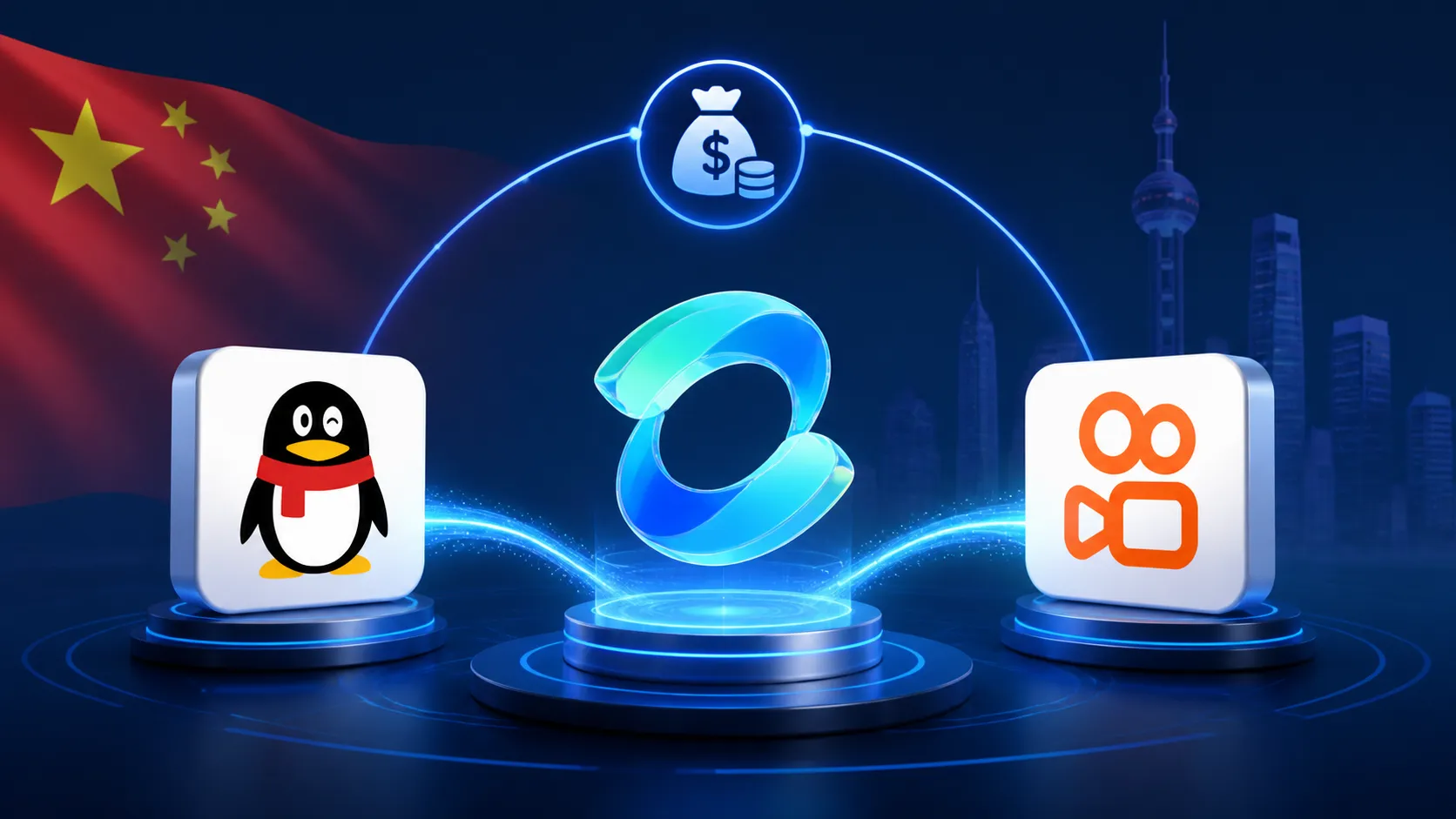
July 3, 2026, (Inside AI) — Kuaishou’s AI video generation platform, Kling AI, is reportedly finalizing a $3 billion funding round, with Chinese tech giant Tencent among the investors. The deal would value the unit at $18 billion, according to sources cited by TechWeb. This marks a significant step toward a planned spin-off and initial public offering, expected as early as Q1 2027.
The funding round is a pre-IPO financing move. Kuaishou had initially sought a valuation of $20 billion for Kling AI, but settled at $18 billion. The company confirmed in a Hong Kong Stock Exchange filing that it is evaluating a restructuring plan, which may involve bringing in external investors. This signals a strategic push to unlock value from its AI assets.
Kling AI launched in June 2024 as Kuaishou’s in-house text-to-video and image-to-video generation model. It quickly gained traction in China’s competitive AI video market, rivaling offerings from ByteDance and Baidu. The platform’s ability to generate high-quality, short-form videos aligns with Kuaishou’s core business of short-video and live-streaming content.
Tencent’s involvement is notable. The company already operates its own AI video tools, such as the Hunyuan Video model. Its investment suggests a strategic interest in Kling AI’s technology or market position. For Tencent, this could be a hedge against rivals or a way to integrate advanced video generation into its massive ecosystem, which includes WeChat and Tencent Video.
The $3 billion injection would give Kling AI significant runway. It could accelerate model development, expand compute infrastructure, and scale commercial applications. Kling AI has already been used for advertising, e-commerce, and content creation. A spin-off would allow it to operate with more agility, free from Kuaishou’s broader corporate structure.
Yet, the valuation drop from $20 billion to $18 billion raises questions. It may reflect investor caution amid a crowded AI video market. Competitors like Pika, Runway, and Sora are all vying for dominance. In China, ByteDance’s Jimeng and Baidu’s Wenxin Yige pose direct threats. The lower valuation could also signal concerns about monetization timelines or regulatory hurdles.
Kuaishou’s filing with the Hong Kong Stock Exchange confirms the restructuring is under evaluation. The exact terms of the funding round are not yet public. Tencent’s participation, however, adds credibility. The tech giant has deep pockets and a history of strategic AI investments. Its backing could attract other investors and bolster Kling AI’s IPO prospects.
Industry analysts note that spinning off AI units is becoming a trend. Companies like Alibaba and Baidu have restructured their AI divisions to attract external capital. This allows parent firms to reduce risk while giving AI units the focus they need. For Kuaishou, the move could help Kling AI compete more effectively on a global stage.
Kling AI’s technology has drawn attention for its speed and quality. It can generate 2-minute videos at 1080p resolution. The model uses a diffusion transformer architecture, similar to Sora. Its text-to-video capabilities have been particularly praised for maintaining coherence across frames. The platform also offers editing tools, making it a one-stop shop for creators.
Despite the buzz, challenges remain. AI video generation is computationally expensive. Scaling to millions of users requires massive infrastructure. There are also ethical concerns around deepfakes and misinformation. Kling AI has implemented content safety measures, but regulatory scrutiny in China and abroad could impact growth.
The reported funding comes as global AI investment shows signs of cooling. After a frenzy in 2024 and 2025, investors are becoming more selective. They want clear paths to profitability. Kling AI’s ability to monetize through enterprise deals, advertising, and subscriptions will be key. The spin-off and IPO could provide the transparency needed to attract public market investors.
Kuaishou’s stock has been under pressure amid slowing user growth. Unlocking Kling AI’s value could provide a much-needed boost. The company has not commented on the funding round beyond the regulatory filing. Tencent has also remained silent. However, the deal is expected to close in the coming weeks, according to TechWeb sources.
This development underscores China’s ambition to lead in generative AI. The government has designated AI as a strategic priority. Companies are racing to build sovereign models. Kling AI’s success could influence how other Chinese tech firms structure their AI ventures. It may also set a benchmark for valuations in the sector.
Looking ahead, Kling AI’s IPO will be a test of investor appetite for AI video. The market is still nascent, but the potential is enormous. From personalized entertainment to automated marketing, the applications are vast. If Kling AI can execute, it could become a major player in the next wave of AI-driven content creation.