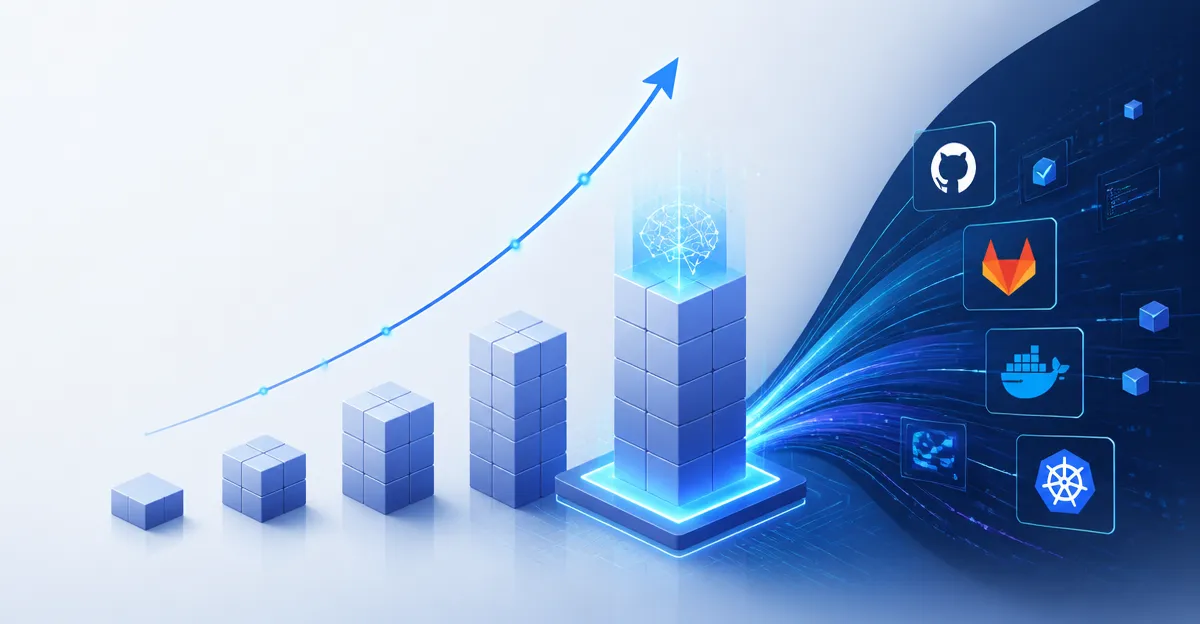
July 13, 2026, (Inside AI) — For decades, the engineering productivity formula was simple: add more compute, tools, and people. That linear model is breaking. As systems grow more complex and interconnected, increasing inputs often yields diminishing returns. More tools create fragmentation. More people increase coordination overhead. More compute generates more data to interpret.
The bottleneck has shifted. Productivity is now limited less by execution capacity and more by the ability to manage complexity. The challenge is not just doing the work, but orchestrating it effectively across tools, teams, and iterative cycles. This is where AI is beginning to fundamentally reshape how productivity scales.
From Compute Scaling to Workflow Orchestration
Traditional gains relied on faster simulation engines, higher-capacity systems, and GPU-accelerated workloads. These advances remain important, but they address only part of the problem. In modern semiconductor and system design, workflows are no longer linear. They are iterative, adaptive, and deeply interdependent. A single change can cascade across multiple domains, triggering re-validation, reconfiguration, and re-analysis.
This creates a coordination burden that grows exponentially with complexity. Engineers spend significant time managing workflows rather than executing core tasks. They interpret outputs, align dependencies, resolve inconsistencies, and ensure continuity across fragmented toolchains. As this overhead increases, the marginal gains from faster tools diminish.
Scaling productivity therefore requires a new approach: scaling workflows, not just compute. AI, particularly in its agentic form, introduces a new model. Instead of focusing on isolated tasks, AI systems can operate across entire workflows. They observe system states, interpret context, plan action sequences, execute tasks across multiple tools, and synthesize results into actionable insights.
For example, in a complex verification workflow, an AI system can automatically configure tools, run simulations, analyze outputs, correlate results across iterations, and identify likely failure points. It can then recommend next steps or execute them directly within defined boundaries. The impact is not just faster execution—it is reduced friction. By minimizing manual coordination, AI enables engineers to focus on high-value activities like decision-making, architecture design, and risk management. Productivity gains come from eliminating inefficiencies, not just speeding up tasks.
Breaking the Coordination Bottleneck in India's Engineering Sector
At scale, coordination is the hidden cost of engineering. As teams grow and workflows expand, the number of interactions increases dramatically. Each handoff introduces potential delays, misalignment, or errors. Each additional tool adds another layer of integration and validation. These inefficiencies are often invisible in traditional productivity metrics but significantly impact outcomes.
AI addresses this by acting as an orchestration layer. Through structured interfaces and domain-specific context, AI systems can manage interactions across tools and teams with consistency and precision. They maintain continuity across workflows, ensuring each step builds on prior outcomes without loss of context. Equally important is the ability to operate within constraints. Effective AI systems do not operate with unrestricted autonomy. They function within defined boundaries, with clear validation mechanisms and human oversight at critical decision points. This ensures productivity gains do not come at the cost of quality or reliability.
India stands at a pivotal moment in this transformation. The country has already established itself as a global engineering hub, with a large and highly skilled workforce supporting critical functions across industries. The rapid expansion of Global Capability Centres (GCCs) has further strengthened India's role in delivering complex, high-value engineering work. At the same time, India is investing heavily in AI capabilities and digital infrastructure. Organizations are increasingly adopting advanced AI systems to enhance productivity, improve speed, and drive innovation.
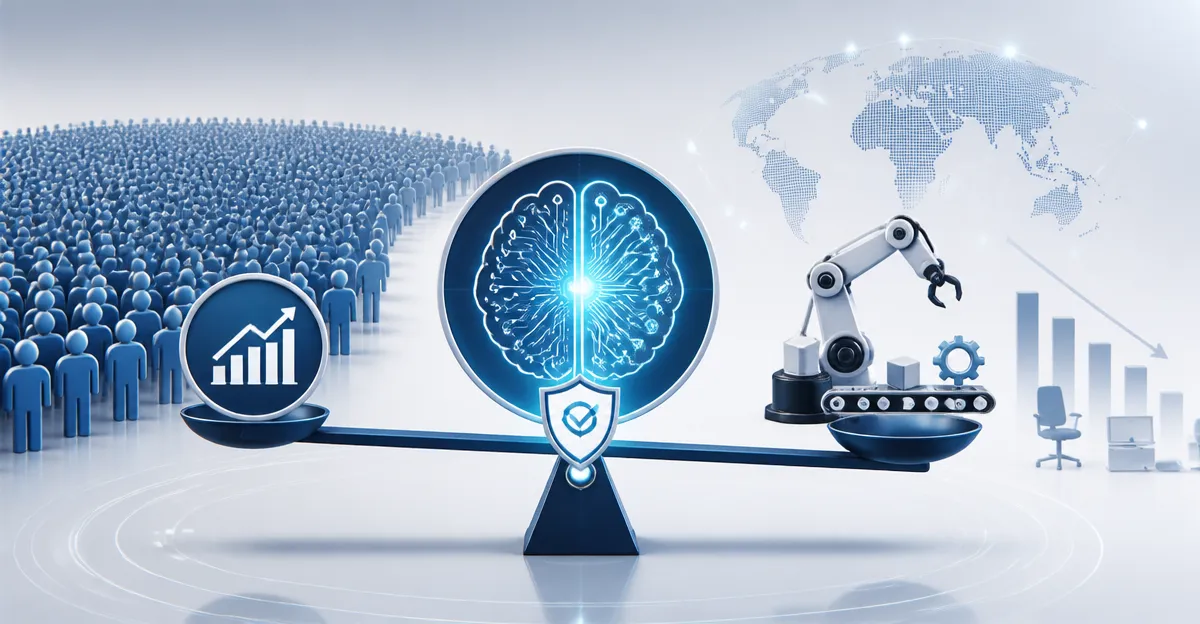
This creates a unique opportunity. As engineering workloads become more complex, the ability to scale productivity non-linearly with human resource growth becomes a key differentiator. AI provides a mechanism to achieve this by augmenting existing teams and optimizing workflows. For Indian enterprises and GCCs, this is not just about efficiency. It is about moving up the value chain. By leveraging AI to manage complexity, organizations can take on more strategic responsibilities, accelerate innovation cycles, and deliver outcomes that go beyond cost advantages. In a global market where speed and precision are critical, this capability can define competitive advantage.
In large enterprises, particularly those managing global engineering operations, productivity is often constrained by fragmentation. Distributed teams, diverse toolchains, and complex workflows create silos that are difficult to integrate. AI-driven orchestration offers a way to unify these environments. By creating a common intelligence layer across workflows, organizations can standardize processes, improve visibility, and accelerate decision-making. AI systems can operate continuously, handling repetitive and coordination-heavy tasks at scale while maintaining consistency across geographies and teams.
Over time, as AI capabilities mature, organizations may move toward multi-agent systems where multiple AI agents operate in parallel across different aspects of the workflow. Engineers oversee these systems, guiding strategy and validating outcomes while AI handles execution at scale. This model fundamentally changes how productivity is measured and achieved. The rise of AI in engineering forces a rethinking of what productivity means. It is no longer just about output per engineer or tasks completed per unit time. It is about how effectively an organization can manage complexity, coordinate workflows, and make decisions. AI shifts the focus from execution to orchestration.
Engineers are no longer measured solely by their ability to perform tasks, but by their ability to define intent, guide systems, and ensure outcomes align with strategic goals. AI becomes an integral part of the workflow, enabling engineers to operate at a higher level of abstraction. This redefinition has long-term implications for how teams are structured, how roles evolve, and how success is measured. The next phase of productivity growth will not come from faster tools or larger teams alone. It will come from smarter workflows, better coordination, and intelligent orchestration. AI provides the foundation for this shift. As agentic systems continue to evolve, they will enable organizations to manage complexity at a scale that was previously unattainable. They will reduce friction, improve efficiency, and unlock new levels of innovation.
For engineering leaders, the question is no longer whether to adopt AI. It is how quickly they can integrate it into the fabric of their workflows. Because in the future of engineering, productivity will not be defined by how much work gets done. It will be defined by how intelligently it is orchestrated.