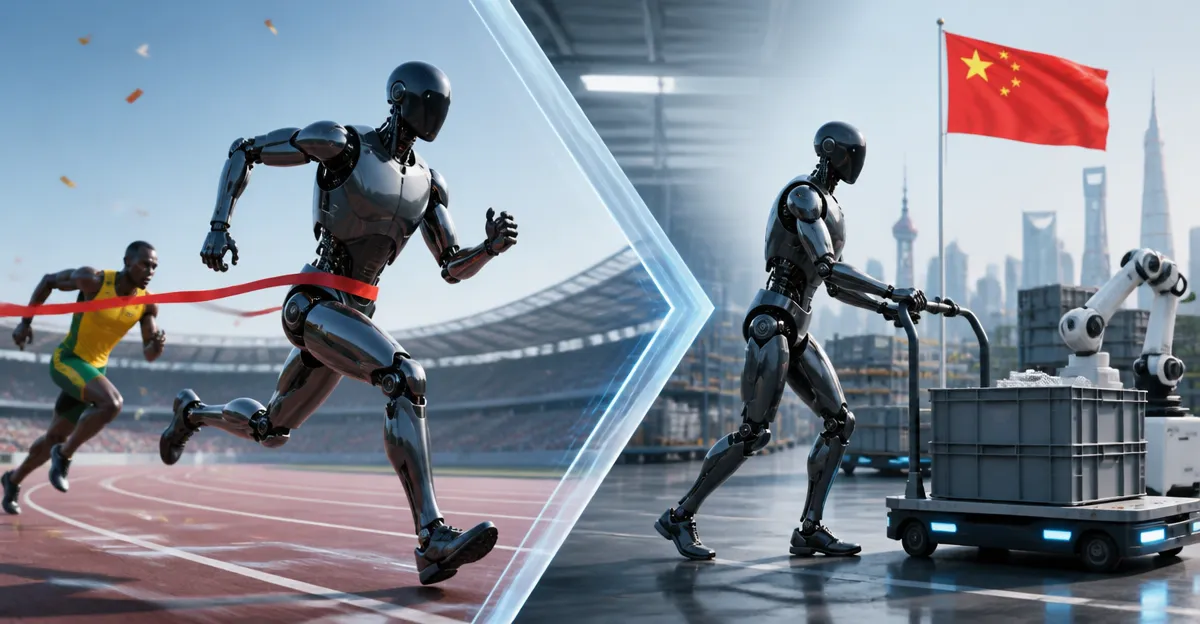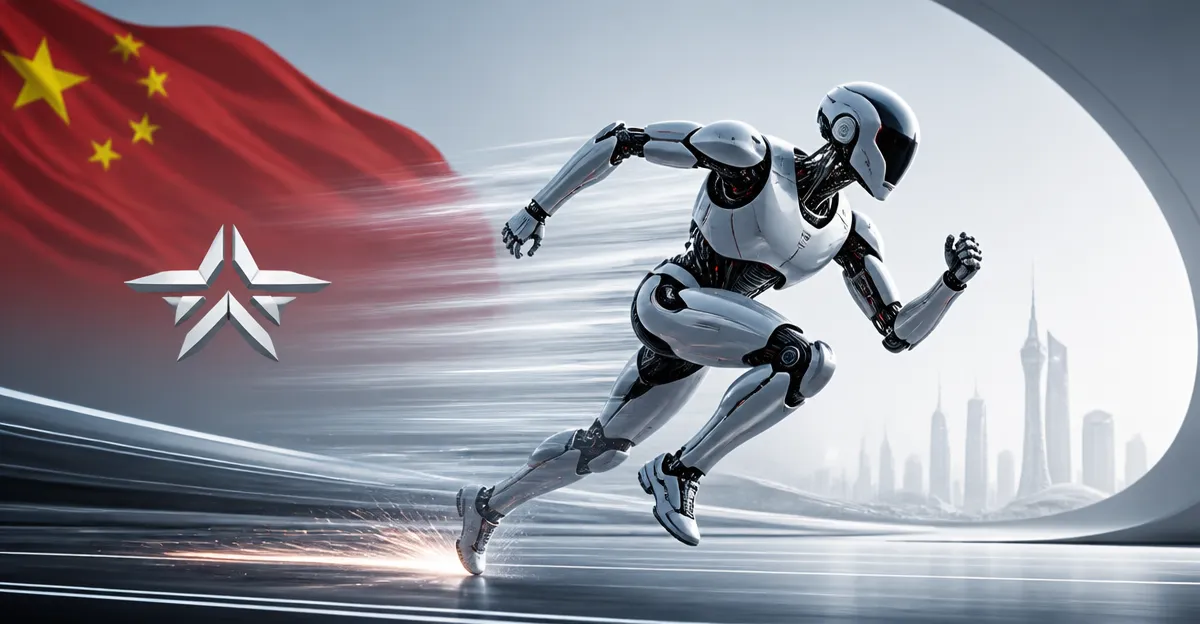
September 10, 2026, (Inside AI) — A bipedal machine sprinted across a Beijing track in August, clocking speeds that no humanoid robot had ever reached. Tiangong Ultra, developed at the Beijing Humanoid Robot Innovation Center, shattered multiple records at the World Humanoid Robot Games.
The performance was not a laboratory stunt. It happened on a public stage, before judges and cameras. The robot's sprint time and agility scores reset the competitive baseline for humanoid athletics.
Engineers at the center granted behind-the-scenes access after the event. They described a singular focus: converting raw speed and balance into tasks that matter outside the arena. That shift marks a new phase for humanoid robotics in China.
Speed Alone Cannot Carry A Robot Into Daily Life
The Beijing Humanoid Robot Innovation Center sits inside a broader state-backed push to dominate embodied AI. Tiangong Ultra is its flagship. The machine uses high-torque actuators and a lightweight frame to achieve its pace.
But the team's real challenge is not another record. It is reliability. A robot that falls after a sprint is useless in a warehouse or hospital corridor. Engineers are now testing recovery algorithms and terrain adaptation.
Eduardo Baptista, Greater China Chief Technology Correspondent for Reuters, observed the testing firsthand. He noted that the center's engineers are racing to turn athletic feats into real-world usefulness. The phrase captures a tension felt across the industry.
Humanoid competitions have existed for decades. Japan's Asimo impressed crowds in the early 2000s. Boston Dynamics' Atlas performed parkour. None became commercial products at scale. Tiangong Ultra faces the same gap between spectacle and service.
China's State Backing Changes The Competitive Calculus
The Beijing center is not a private startup. It operates with government support and national robotics strategy alignment. That backing gives it access to testing facilities, talent pipelines, and component suppliers that smaller firms lack.
Rivals include Tesla's Optimus, Figure AI, and Unitree. Each pursues different paths. Tesla emphasizes manufacturing utility. Figure targets logistics. Unitree sells lower-cost platforms. Tiangong Ultra's athletic focus is distinctive but unproven commercially.
Industry analysts caution that speed records do not equal market demand. A humanoid robot must justify its cost through labor savings or safety gains. The Beijing team is aware. They are testing the robot in simulated factory and eldercare settings.
The World Humanoid Robot Games drew teams from multiple countries. Tiangong Ultra's wins included sprint and obstacle navigation categories. Exact times were not disclosed in full. Sources familiar with the event said the margins were significant.
Battery life remains a constraint. High-speed locomotion drains power quickly. Engineers are exploring hot-swappable packs and more efficient motor designs. These details will determine whether Tiangong Ultra leaves the demo floor.
For now, the robot stands as a symbol of intent. China wants leadership in humanoid hardware, not just software. Tiangong Ultra is the proof point. The next test is whether it can walk, not just run, into the economy.