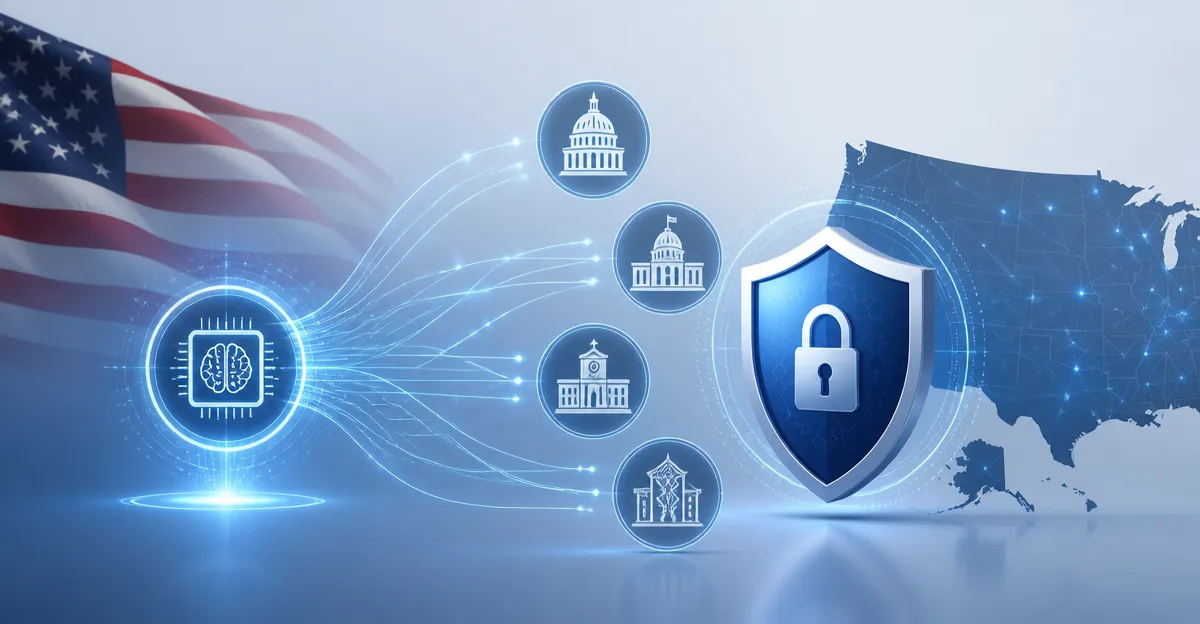
September 10, 2026, (Inside AI) — A new multi-year agreement between OpenAI for Government and the U.S. General Services Administration (GSA) will provide free access to ChatGPT for federal, state, local, and tribal government employees. The deal eliminates the standard $15 per user per month license fee and cuts usage costs by 50%.
The agreement extends eligibility to a U.S. public-sector workforce of approximately 23 million people. More than one million government employees already have access through existing contracts. The offer includes GPT-6 Astra and expanded support for public-sector cyber defenders.
This is the first agreement of its kind, according to sources. It builds on last year’s federal offer and aims to make government services faster, safer, and more reliable. Public servants should help shape how AI is used in government, and that starts with access to best-in-class tools.
Under the new policy, every verified government entity will be approved for advanced cyber-defender Daybreak Blue access at 50% off standard commercial pricing. Defenders can also request Daybreak Red for vulnerability research, exploit validation, and red teaming at standard commercial pricing.
OpenAI President Greg Brockman recently published an essay titled The Defender’s Window and an industry-wide open letter calling for urgent, collective action across industry and government. The new agreement follows last week’s announcement of Daybreak for Frontline Defenders, backed by a $1 billion global commitment.
Read: New York City Unveils AI Policy for Children, Anthropic Wins Court Battle Against Pentagon
Government cyber defenders protect emergency response, transportation, public health, utilities, and other critical systems. Scaled training and enablement will support adoption of the new tools. OpenAI said the offer is designed to give public servants more time for what matters: serving people and solving hard problems.
Interested agencies can contact the government team to register interest and learn about eligibility, pricing, and purchasing options. A webinar titled OpenAI OneGov 2.0: What Government Leaders Need to Know is scheduled for Monday, September 14, 2026, at 11:15 a.m. ET.
The agreement marks a significant expansion of OpenAI’s public-sector footprint. It comes as governments worldwide grapple with AI adoption, procurement rules, and cybersecurity threats. The deal’s structure, with zero license fees and discounted usage, removes a key financial barrier for smaller agencies.
OpenAI did not disclose the total value of the agreement or the duration beyond calling it multi-year. The GSA’s role suggests a streamlined procurement path for agencies. The offer’s extension to tribal governments is notable, as tribal entities often face unique funding and access challenges.
The cyber-defender component aligns with broader industry efforts to close the defender gap. Ransomware attacks on state and local governments have risen sharply in recent years. Free access to advanced AI tools could help understaffed security teams triage threats faster.
Critics may question whether free access creates long-term dependency on a single vendor. OpenAI’s safeguards and cost predictability claims will face scrutiny. The company said respect for public mission remains a core principle.
Read: ACC Sues The L Suite for Training Chatbot on Copyrighted Legal Materials
The webinar registration is open now. OpenAI expects high demand from agencies seeking to understand the practical implications of the agreement.