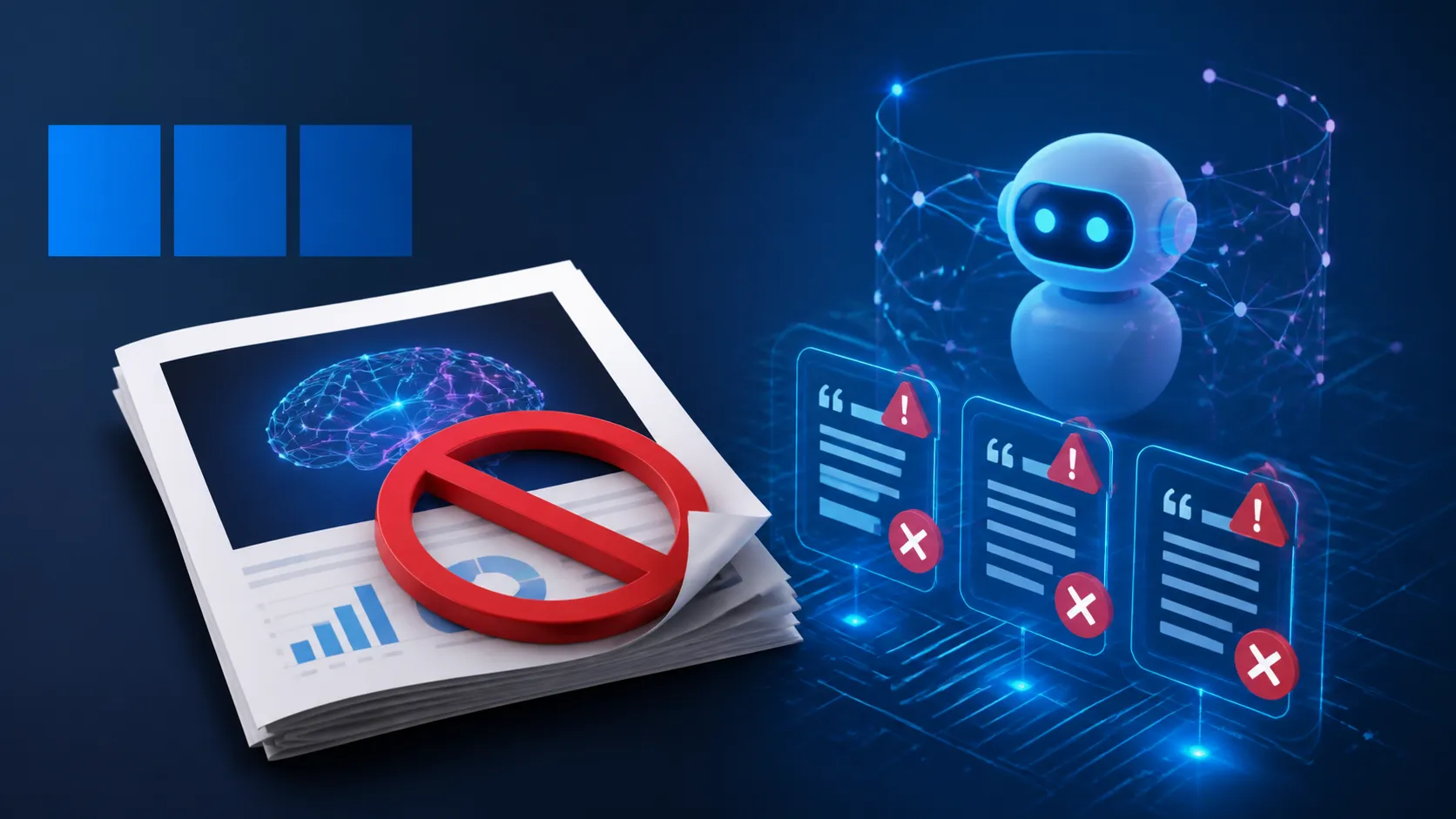
June 14, 2026, (Inside AI) — KPMG has retracted a high-profile study on agentic AI after an independent audit uncovered widespread hallucinations, fabricated citations, and false claims. The report, titled Total Experience: Redefining Excellence in the Age of Agentic AI, was published in October 2025 and pulled months later when organizations named in it denied the stated facts.
The withdrawal marks the third major incident in a year where a Big Four consulting firm has been embarrassed by AI-generated errors in its own publications. It raises urgent questions about the industry’s ability to police the very technology it sells to clients.
A Forensic Audit Exposes Deep Flaws
Research group GPTZero conducted a forensic review of the report and found that only five out of 45 citations accurately pointed to the claimed source. The rest were misleading, partially fabricated, or too vague to verify. This pattern of AI tools stitching together real and invented references has been dubbed “vibe citing” by GPTZero.
Nearly half of the report’s assertions were false, unsupported, or attributed to the wrong source. Several case studies highlighting cutting-edge agentic AI deployments were largely creative fabrications. Organizations including UBS, the UK’s National Health Service, Swiss Federal Railways, and Transport for London all stated that KPMG’s claims about their AI usage were either untrue or misleading.
Read: How Agentic AI Is Repeating the Consulting Industry’s Big Con
One striking example involved Emirates airline. The report claimed it had adopted a mobile chatbot named Sara that could converse with passengers and change their flights. GPTZero researchers countered: “Sara is a robot assistant introduced by Emirates in 2023 (not a chatbot) that lacks the ability to alter flight bookings.”
A Pattern of Consulting Oversights
This incident follows a string of similar failures. Just one month earlier, EY withdrew a report on loyalty rewards programs that contained fake footnotes and AI hallucinations. Last year, Deloitte refunded the Australian government after AI-generated content infiltrated a taxpayer-funded report.
Consulting firms have aggressively marketed AI assurance services while struggling to apply the same rigor internally. The irony is stark: KPMG’s own 2025 CEO Outlook, released the same month as the retracted study, reported that 71 percent of CEOs ranked AI as their top investment priority. Yet the agentic AI report cited a contradictory figure of over 55 percent, undermining its own data integrity.
A KPMG spokesperson told The Register: “KPMG International takes the accuracy and integrity of its published content seriously. The report has been removed and we are reviewing the circumstances surrounding its publication. We expect all our people to follow our guidelines on the responsible use of AI, including human oversight to validate content and verify independent sources.”
What This Means for Enterprise AI Trust
The episode exposes a fragile oversight chain. Even firms with deep expertise in AI governance can fall prey to the technology’s tendency to hallucinate. For clients, it erodes trust at a time when regulatory scrutiny is intensifying globally.
GPTZero’s findings suggest the problem goes beyond sloppy editing. The sheer volume of fabricated content indicates a systemic reliance on generative AI without adequate human review. As AI agents become more autonomous, the risk of unchecked outputs infiltrating business decisions grows exponentially.
Read: Enterprise AI Agents Fail Without Employee Trust, Wharton Blueprint Finds
Industry observers note that “vibe citing” is not a harmless quirk. In regulated sectors like finance and healthcare, a hallucinated citation could lead to misinformed strategy or compliance failures. The KPMG case may accelerate calls for mandatory disclosure when AI is used in professional reports.
For now, the retraction serves as a cautionary tale. Even the architects of AI transformation are not immune to its flaws.