July 29, 2026, (Inside AI) — Ask two AI tools the same question, and you might get radically different answers. Not in content, but in form. One returns a summary and links. The other returns a finished spreadsheet, a chart, and a draft memo. This gap defines a new frontier in knowledge work, where AI agents don’t just retrieve information but execute multi-step tasks autonomously.
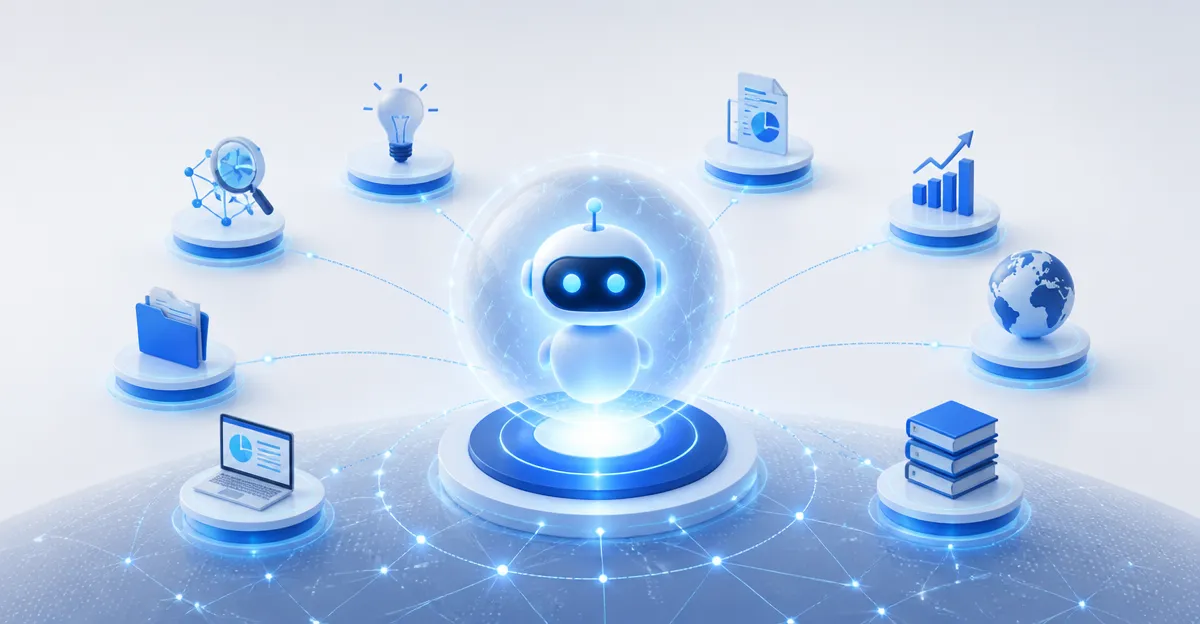
New research from Harvard Business School and Boston Consulting Group reveals how AI agents are reshaping professional work. The study, led by Edward McFowland III, Karim Lakhani, and Fabrizio Dell’Acqua, analyzed 758 consultants using an AI agent designed for complex analytical tasks. The agent didn’t just answer questions. It planned, gathered data, ran analyses, and produced deliverables.
The findings upend assumptions about AI’s role. Instead of narrowing job scopes, agents broadened them. Consultants tackled tasks far outside their expertise, performing like specialists. The agent acted as a bridge, enabling workers to operate across domains without deep prior knowledge.
Agents as Skill Equalizers and Scope Expanders
The study’s core insight is counterintuitive. Traditional automation often deskills workers. Here, the AI agent upskilled them, but unevenly. Low performers gained the most. High performers saw modest gains. The agent compressed the skill gap, making novices competitive with experts on specific tasks.
Read: How Agentic AI Is Repeating the Consulting Industry’s Big Con
“The agent didn’t just make people faster. It changed what they could do,” said Fabrizio Dell’Acqua, postdoctoral fellow at Harvard Business School. The technology shifted the bottleneck from knowledge retrieval to judgment and curation. Workers spent less time hunting data and more time interpreting it.
This aligns with the concept of “centaur” behavior, where humans and AI collaborate symbiotically. But the study suggests a deeper integration. Agents didn’t just assist; they redefined workflows. Consultants reported feeling like managers of a virtual team, delegating sub-tasks and reviewing outputs.
Why Most AI Tools Still Fall Short
Most enterprise AI remains stuck at the information retrieval stage. Tools like ChatGPT or Copilot provide raw material, not finished work. The research highlights a critical distinction: agents execute processes, while chatbots generate text. This execution layer requires planning, tool use, and iterative refinement.
The agent in the study used a multi-step architecture. It decomposed requests, selected analytical methods, accessed databases, and formatted results. This mirrors the “reasoning and acting” paradigm described in recent academic work on ReAct agents. Such systems loop through thought, action, and observation, mimicking human problem-solving.
Yet adoption lags. The study notes that many organizations deploy AI for narrow productivity gains, missing the transformative potential. Agents require rethinking job design, not just plugging into existing workflows. “You can’t just drop an agent into a broken process and expect magic,” said Karim Lakhani, professor at Harvard Business School.
The research also warns of risks. Overreliance on agents could erode deep expertise if workers stop learning fundamentals. The skill compression effect, while boosting short-term output, might create fragile knowledge bases. Organizations must balance augmentation with continuous learning.
Read: AI agents can do your tasks: How, and how much should you let them?
Technical limitations persist. Agents struggle with ambiguous goals, hallucinate tool calls, and lack common sense. The study’s agent was narrowly scoped to analytical tasks. General-purpose agents remain experimental. OpenAI‘s GPT-5 and Anthropic‘s Claude 3.5 show agentic capabilities but still falter on long-horizon planning.
Despite these hurdles, the trajectory is clear. The research concludes that agentic AI will redefine professional services, law, finance, and consulting. Early adopters who redesign roles around human-agent teams will gain disproportionate advantage. The question is not whether agents will change knowledge work, but how quickly organizations adapt.