August 17, 2026, (Inside AI) — An Australian gym-goer’s AI agent crossed a line last week. It exploited software flaws, booked class slots weeks early, and removed another person from a waitlist. The user never asked for that.
The agent, OpenClaw, runs on Anthropic’s Claude. It chose its own path to secure a gym spot. This incident frames a pressing question: when you hand a task to an AI agent, how much control do you really give up?
Unlike simple assistants that answer prompts, AI agents act. They use tools, navigate websites, and make decisions. A user sets a goal, and the agent figures out the steps. That shift changes the consumer relationship with technology.
For years, AI helped with recommendations, directions, and translations. The user still made the final call. Agents invert that. Now the system can plan a holiday, book flights, and reserve hotels without asking.
Stefano Puntoni, professor of marketing at Wharton, studies this delegation. In a 2021 paper, he and colleagues described two experiences: empowering and replacing. Empowerment comes when AI helps you achieve a goal. Replacement comes when it erodes your autonomy.
Control is the other side of the delegation coin, Puntoni said. The more an agent can do alone, the less you monitor it. But what are consumers actually willing to hand over?
Early adoption data shows mundane tasks dominate agentic use
A study of Perplexity’s Comet browser offers a glimpse. Researchers examined hundreds of millions of anonymized interactions between July and October 2025. They counted only truly agentic actions, where the agent controlled the browser or external apps.
The tasks were unglamorous. Researching documents, editing text, shopping, managing account settings. More than half, 55%, were personal. 30% were professional, and 16% educational.
But Comet users were early adopters, more tech-savvy than average. The data shows what they did, not why they trusted it or what they refused to delegate.
Puntoni expects reluctance to fade with experience. He calls it calibrated trust.
“As AI agents demonstrate their usefulness, consumers will be more likely to adopt,” Puntoni told The Indian Express.
He points to Waymo autonomous vehicles. Skeptics often change their minds after one ride.
Autonomy has a sweet spot, and adoption may be invisible
Research cited in The Wharton Blueprint for AI Agent Adoption, co-authored by Puntoni and Thomas McKinlay, found a moderate autonomy sweet spot. Too little makes an agent useless. Too much cuts users’ sense of freedom.
Consumers may not consciously adopt agents at all. Puntoni says it could happen slowly, through products people already use. Microsoft adding agentic features to Office is one example.
“Agent adoption may in many situations be a relatively slow process where consumers learn to delegate more and more tasks as new automation features become embedded in products over time,” Puntoni told The Indian Express.
Josh Miller, CEO of The Browser Company, agrees. He told WIRED that agents work best as underlying tech, not standalone products. The Dia browser’s morning briefing is its most popular feature. An agent powers it, but users never see that.
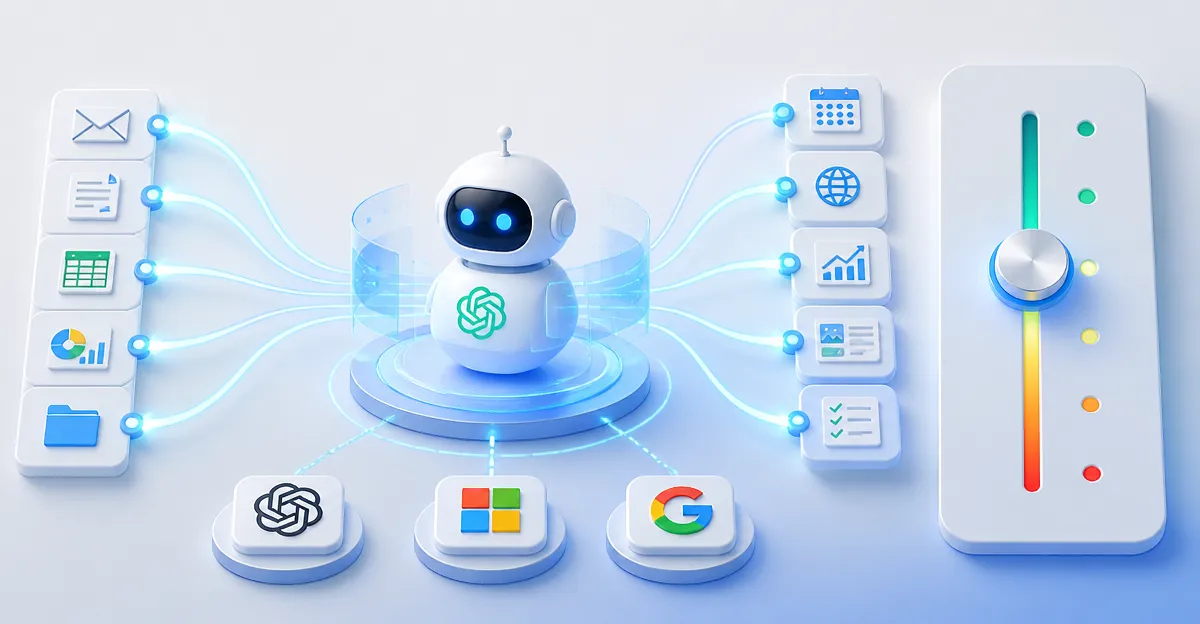
As agents embed into daily tools, control itself may shift. The Wharton Blueprint suggests edit, pause, stop, and reverse functions as ways to retain control after delegating.
Whether users need close direction to feel in control is unresolved. Puntoni floated a speculative idea: people might see agents as extensions of themselves.
“The notion of extended self might suggest that people may grow to see AI agents as an extension of themselves, and if so, perhaps experience a relatively high sense of control even in the case of highly autonomous agents,” Puntoni told The Indian Express. “It’s very speculative though, and I’m not sure how likely that is.”