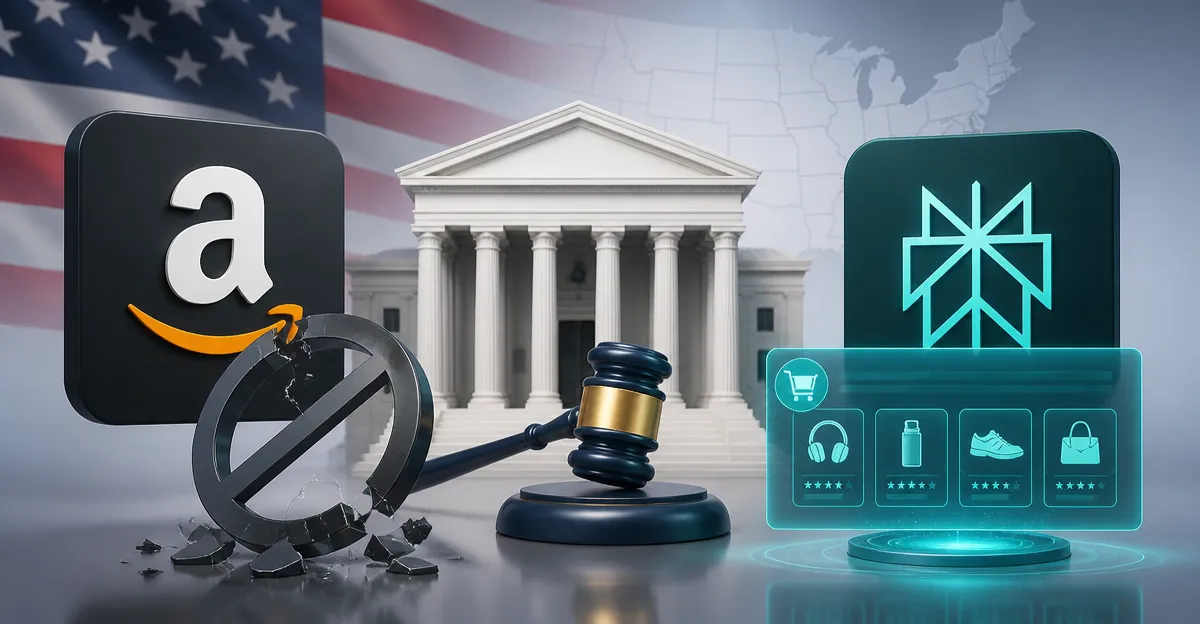
August 5, 2026, (Inside AI) — A U.S. appeals court on Tuesday overturned a lower court’s ban that had stopped Perplexity from using its AI shopping agents on Amazon’s platform. The San Francisco-based 9th U.S. Circuit Court of Appeals ruled that Amazon was unlikely to win its claim that Perplexity’s AI agents violated the federal Computer Fraud and Abuse Act.
The decision marks the first time a federal appeals court has addressed whether AI agents acting for users can legally access online platforms. It has broad implications for agentic AI tools that browse, shop, and transact across the web.
Amazon sued Perplexity in November, alleging the startup’s Comet browser and AI agent secretly accessed private customer accounts. The system could log into shopping accounts and place orders, which Amazon said posed security risks and ignored repeated warnings.
Perplexity argued the lawsuit was a “bald attempt” to block users from choosing Comet. A company spokesperson said AI agents “don’t have eyeballs to see the pervasive advertising Amazon bombards its users with.”
In March, a federal judge in California issued a temporary injunction. The judge found “strong evidence” that Perplexity’s agent broke the computer fraud law. The appeals court reversed that ban, siding with Perplexity’s argument that it was users, not the company, who “accessed” Amazon’s platform under the statute.
“Perplexity will continue to fight for the right of internet users to choose whatever AI they want,” company spokesperson Jesse Dwyer said in a statement. “We have always been confident the truth will prevail and the rights of users will not be chipped away.”
The Access Question Splits Courts
The ruling hinges on a key distinction: whether Perplexity itself accessed Amazon’s computers, or merely provided a tool for users to do so. The appeals court said Perplexity’s users, via the AI agents, were the ones accessing Amazon. This interpretation limits the scope of the Computer Fraud and Abuse Act, which prohibits accessing computers without authorization to obtain information.
Legal experts note the decision aligns with a growing judicial trend to narrowly interpret the decades-old anti-hacking law. In Van Buren v. United States, the Supreme Court restricted the law’s reach, ruling that it does not cover those who have authorized access but misuse it. The 9th Circuit’s logic extends that reasoning to AI agents, focusing on who initiates the access.
Agentic AI systems plan, reason, and execute tasks with limited human oversight. Their ability to navigate websites and perform transactions raises novel legal questions. This case could set a precedent for how courts treat autonomous agents in contexts from web scraping to automated purchases.
Amazon’s Security Concerns Remain
Amazon’s lawsuit claimed Perplexity’s agents posed security risks by handling customer credentials. The company said it repeatedly asked Perplexity to stop. While the appeals court lifted the ban, the underlying lawsuit continues, leaving open the possibility that Amazon could still win on other grounds.
Spokespeople for Amazon did not immediately respond to a request for comment. The company has invested heavily in AI shopping features, including its own conversational assistant, Rufus. The dispute highlights tensions between platform control and user autonomy as AI agents become more capable.
The case is one of several testing the boundaries of AI and web access. Researchers have documented how AI agents can bypass CAPTCHAs and other security measures, raising concerns about unauthorized data collection. Perplexity’s victory may encourage other startups to deploy agentic tools, but it also invites regulatory scrutiny.