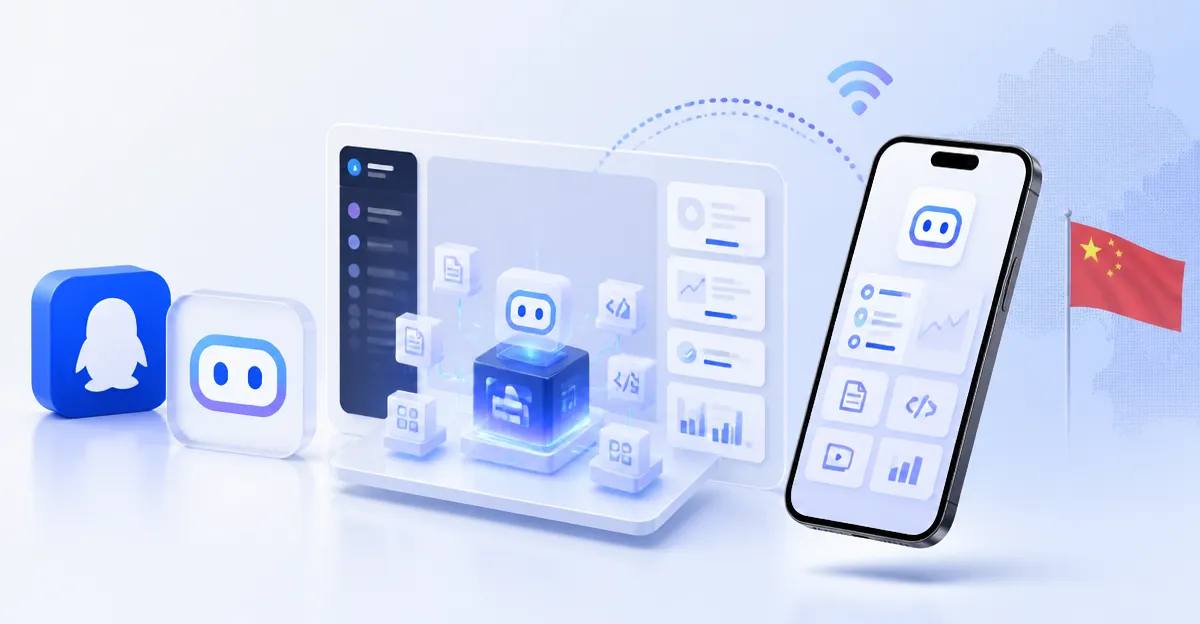
October 30, 2026, (Inside AI) — Tencent's AI agent platform WorkBuddy on Thursday rolled out a remote control feature that lets users monitor and operate their desktop agents from a phone. The capability, built with Tencent's Edge One team, connects the mobile app to a computer logged into the same account, streams the desktop in real time, and hands over manual control when a task stalls.
The release lands as agent builders confront a stubborn gap between demo and daily use. Multi-step agents can draft documents and compile data, but they still hit login walls, expired connector authorizations, and permission prompts. WorkBuddy's answer is not more autonomy. It is a supervised handoff, with the human reachable from a pocket.
The feature requires the mobile app at version 2.7.0 or later and the macOS desktop client at version 5.9.3 or later. Once paired, the computer screen appears in a floating window on the app's home page or above an active conversation. Users can watch an agent work without leaving the chat. When something breaks, they can fix it on the phone instead of walking back to a desk.
Security Limits And A One-Device Rule
Tencent constrains the setup in ways that matter for enterprise buyers. Each computer accepts only one authenticated mobile device at a time. Screen data and control commands travel through an encrypted channel. The platform says it does not record user input or store screen footage from remote sessions. Remote traffic draws on the phone's data plan and does not consume WorkBuddy's agent token quota.
Read: New Guide Shows How AI Agents Waste Millions on Frontier Models
Manual control is deliberate rather than seamless. Tapping a full-screen button rotates the phone to landscape and opens a touch-operated desktop. The interface offers three modes: Controls, Keyboard, and Mouse. A virtual mouse supports precise clicking and scrolling in tight areas. Setup requires enabling remote connection in WorkBuddy's settings, installing a remote control component, and granting screen recording and accessibility permissions. The computer must stay powered on with WorkBuddy online.
The design echoes a broader pattern in enterprise software, where remote assistance tools have long paired agent automation with human override. What changes here is the packaging: oversight is native to the agent chat, not a separate IT utility. That choice lowers the activation energy for intervention, which may matter more than raw autonomy benchmarks in determining whether agents get used at work.
Tencent frames the feature as a practical fix for a common failure mode. Agents handle multi-step work such as organizing documents and compiling data, but they can still stall on login requirements, permission requests, or operational errors. Remote control lets users monitor progress and adjust from a phone without staying at a desk.
The company also positions the tool as a model of collaboration rather than a stopgap. AI takes repetitive work while users step in at critical points to decide and correct. That is a quieter bet than the industry's push toward fully autonomous execution. It also acknowledges that current agents need a supervisor within reach.
Limits remain. A smartphone cannot replicate a desktop workflow. Remote access may suit simple actions such as approving permissions or switching windows, but its efficiency in complex data processing across multiple windows is untested. The feature is available for trial to all users. Tencent says future versions will add enterprise capabilities including tiered permission management and audit logs.