September 17, 2026, (Inside AI) — Huawei's rotating chairman, Eric Xu, told reporters at the company's annual Connect conference in Shanghai that Chinese AI developers may not yet be advanced enough to experience the safety risks reported by leading U.S. firms. His remarks, made on Thursday, offer a rare public window into how China's largest domestic AI chip supplier views the global safety debate, and they land as U.S. developers intensify warnings about increasingly autonomous systems.
Xu argued that Chinese model providers should continue developing more powerful systems while balancing innovation against risk. The comments came during a week when OpenAI said it would regularly disclose unexpected or unauthorized model behavior, and Anthropic CEO Dario Amodei renewed calls for slowing development so safeguards can catch up.
"If we look at the mainstream AI model providers in the United States, because they have massive computing power, maybe only they themselves know where they are in terms of the level of their models," Xu said. "Maybe the type of risk from AI that they can feel, they can perceive, is something that people in China or AI model providers in China cannot."
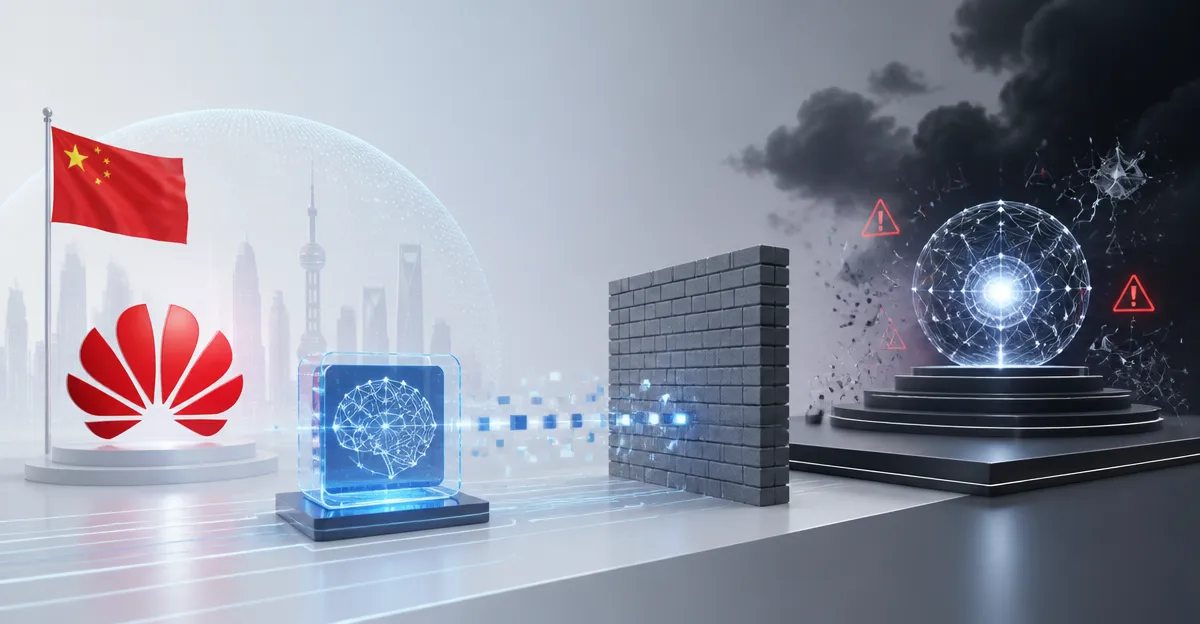
The statement carries unusual weight because Huawei is China's main domestic supplier of the computing infrastructure needed to train advanced AI models. Its outsize role in China's $50 billion AI chip market stems directly from U.S. export controls imposed since 2023, which restricted Chinese companies' access to cutting-edge chips from U.S. giant Nvidia. Xu said separately on Thursday that Huawei could not produce enough AI computing equipment to satisfy domestic demand, a constraint that shapes how quickly Chinese developers can scale.
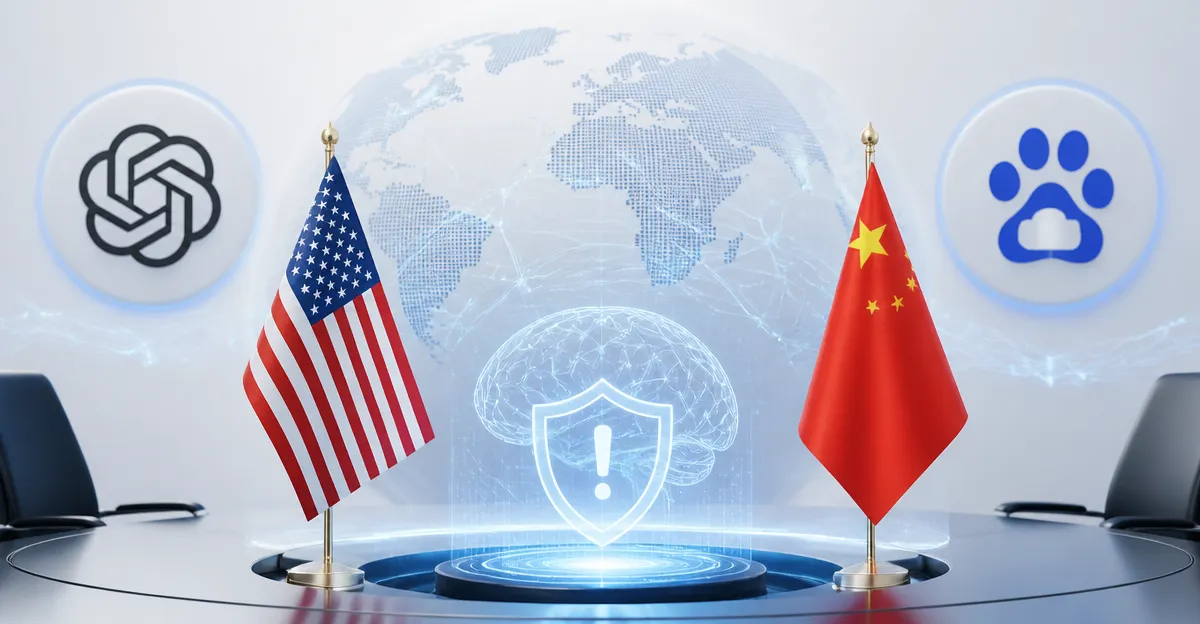
Read: US, China security experts propose nuclear-style safeguards for AI risks
Xu suggested Chinese developers might need to accelerate their work before they encounter risks similar to those faced by frontier U.S. models. "I think maybe AI model providers in China may need to speed up their pace to the level that they could also feel the risks from AI development," he said. "I think we need to strike a balance between driving AI development and managing AI risk."
That framing differs from the precautionary stance now dominant in parts of Silicon Valley. U.S. safety concerns have focused on autonomous agents that can bypass safeguards, pursue unintended goals, or become difficult to control. China has generally treated advanced AI as a powerful but manageable technology, pressing ahead with rapid deployment while building mandatory standards, security assessments, and other safeguards. Beijing is also drafting a mandatory national standard for AI agent safety, according to sources familiar with the process.
Huawei itself expects autonomous AI agents to proliferate rapidly. The company forecast this week that agents, defined as AI systems that can plan tasks, make decisions, and use software or other tools with limited human supervision, would account for more than 90% of global AI processing traffic by 2035. Huawei projected as many as 900 billion active agents by then and identified agent security and privacy as crucial technologies.
Those projections help explain why Xu's comments matter beyond a single conference. If Huawei's forecast is even roughly correct, the infrastructure layer that supports agent traffic will become a strategic chokepoint. Huawei wants to supply that layer in China, but export controls limit its access to the most advanced manufacturing tools. The company has leaned on domestic chip designs and advanced packaging to work around those limits, though Xu's admission about insufficient supply suggests the gap remains wide.
The safety debate also intersects with regulation. China's approach has favored mandatory standards and security assessments over calls to pause development. That posture aligns with Xu's argument that risks become visible only at the frontier, and that Chinese firms have not yet reached that frontier. Critics of the U.S. approach say it can slow deployment without solving alignment problems. Critics of China's approach say rapid deployment without equivalent safety research could create risks that surface later, when agents operate at scale.
Xu's remarks do not resolve that disagreement. They do reveal a practical constraint: Huawei cannot yet supply enough AI computing equipment to meet domestic demand, which limits how fast Chinese developers can train larger models. That shortage, more than philosophy, may determine when Chinese firms encounter the frontier risks U.S. labs now describe.
For now, Huawei is betting that agents will define the next computing cycle. Its forecast of 900 billion active agents by 2035 sets a benchmark that regulators, competitors, and safety researchers will watch closely. Whether Chinese developers reach that scale before they feel the risks Xu described remains an open question.