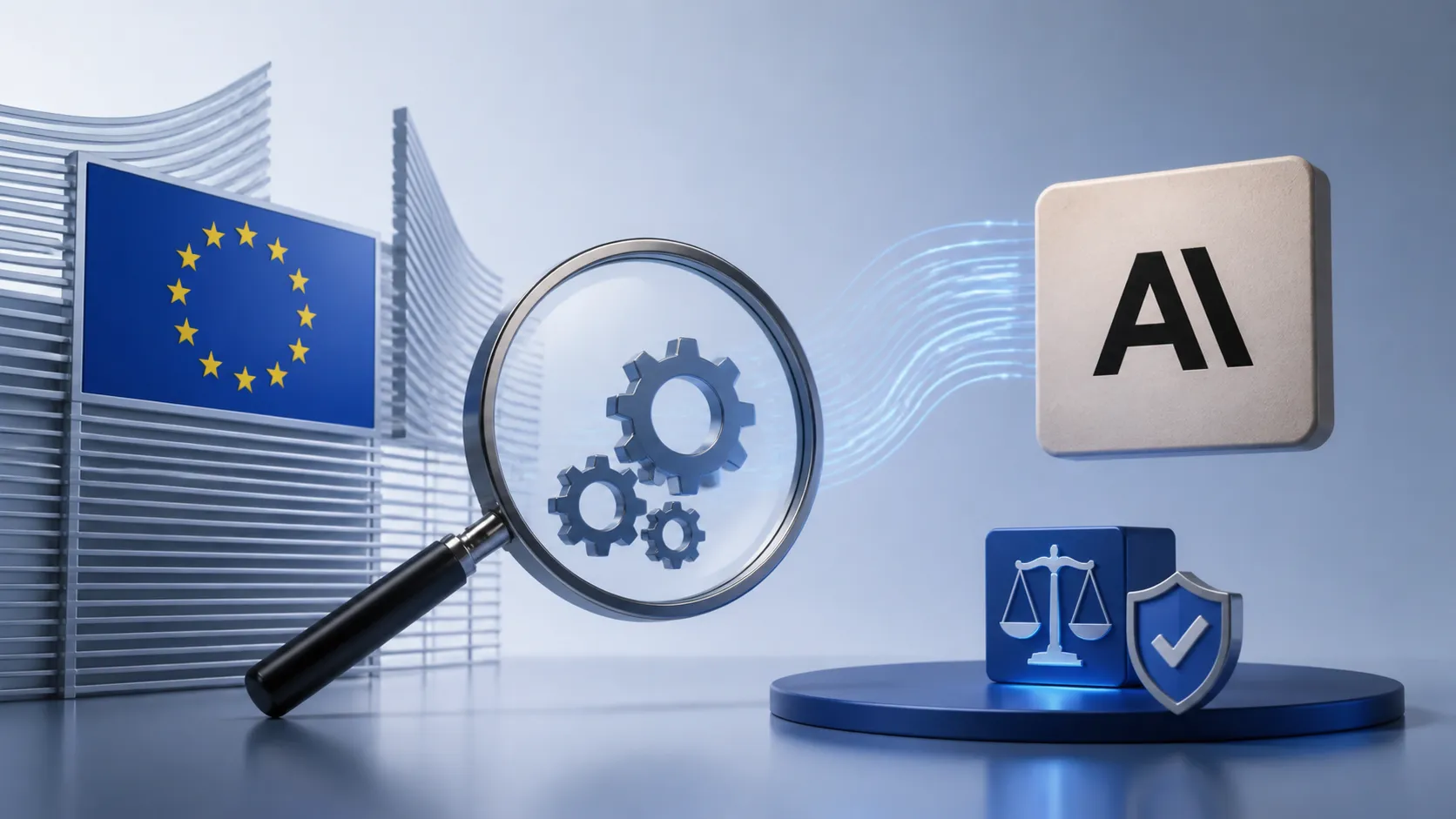
June 15, 2026, (Inside AI) — The European Commission is scrutinizing the fallout from a U.S. export control order that forced AI firm Anthropic to abruptly pull its most advanced models from all users. A spokesperson confirmed the EU is analyzing practical consequences for European customers and insists any security measures must not discriminate against allies.
Brussels Pushes Back on Sudden AI Blackout
The move by Anthropic, disclosed on Friday, came after Washington directed it to suspend foreign national access to its frontier AI systems, citing national security risks. The company said it would “abruptly disable” the models for everyone, a blanket action that blindsided European businesses and researchers reliant on the technology.
European Commission spokesperson Thomas Regnier said the bloc recognizes the dual-use nature of powerful AI. “We are seeing a new generation of highly capable AI models reach the market. These models offer significant benefits, including for cyber-defence, but they also raise serious cybersecurity concerns that need to be addressed,” he stated.
But Regnier pushed back on the scope of the U.S. directive. “We believe that contingency measures taken in this light should not be discriminatory against partners,” he added, signaling Brussels’ unease with Washington’s unilateral approach.
A Sovereignty Wake-Up Call
The incident has reignited European debates over digital autonomy. Regnier framed the disruption as a stark reminder of the continent’s dependency on foreign AI infrastructure. “This development is a further illustration of why Europe needs to strengthen its technological sovereignty,” he said.
The Commission is now mapping the immediate impact on European users of Anthropic’s services, which include Claude, a popular large language model used by enterprises for tasks ranging from code generation to content analysis. Officials are gathering data on affected sectors, contractual obligations, and potential workarounds.
Anthropic’s decision to cut off all users, rather than implementing a targeted geofence, has drawn criticism. Legal experts note that broad service shutdowns may violate existing EU cloud and data processing agreements. The company has not clarified whether it will offer refunds or transition support.
Export Controls Meet Global AI Supply Chains
The U.S. order reflects a hardening posture on AI technology transfers, extending controls that previously targeted semiconductor equipment and chip designs. Anthropic, founded in 2021 by former OpenAI researchers, has positioned itself as a safety-focused developer. Its sudden compliance highlights the vulnerability of global AI supply chains to unilateral national security actions.
Analysts note that the U.S. move could accelerate European efforts to build homegrown alternatives. The EU’s AI Act, set to take full effect next year, already includes provisions for high-risk system oversight, but lacks mechanisms to counter foreign supply disruptions. France and Germany have recently boosted funding for sovereign AI projects, though none yet match the capabilities of leading U.S. models.
Regnier’s statement stopped short of threatening retaliatory measures, but the Commission is expected to raise the issue in transatlantic trade and technology dialogues. The episode underscores a growing rift: while the U.S. tightens controls, Europe seeks to insulate its digital economy from geopolitical shocks.
Anthropic has not responded to requests for comment on the EU’s assessment. Meanwhile, European cloud providers are scrambling to assess whether any cached or locally deployed instances of the affected models remain operational.